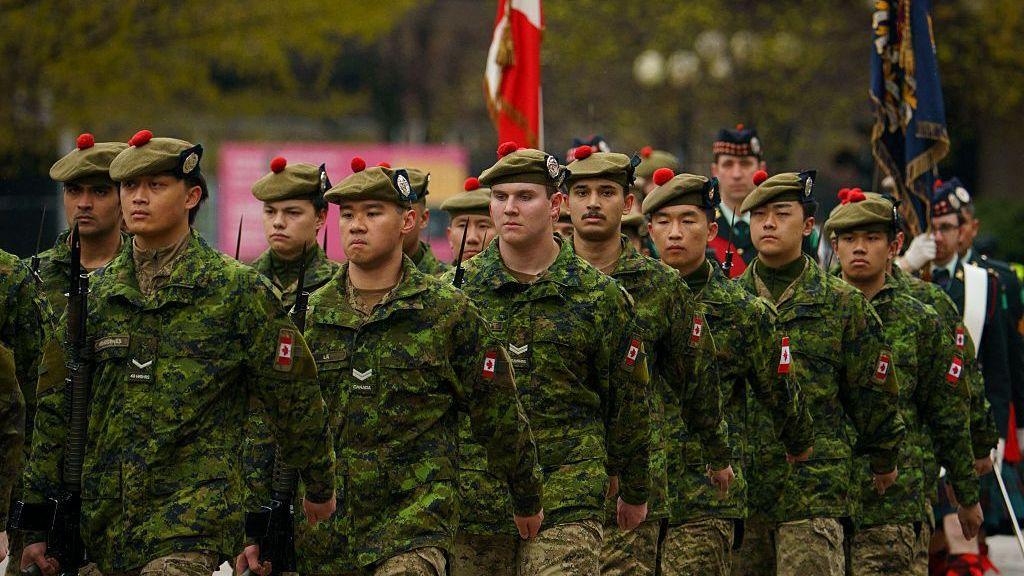
Canada’s War Game for a Rare U.S. Invasion
Prime Minister Mark Carney said earlier this year that his government has “prepared” for the possibility of a U.S. invasion – a scenario that many analysts describe as a long shot but that has become part of Canada’s risk‑management toolkit under President Trump’s administration. The comment sparked debate about the depth of U.S.–Canada ties and how much the two countries still depend on one another.
Trump’s emphasis on tariffs and his occasional remarks about Canada becoming the 51st American state forced Canadian officials to re‑examine defence readiness. “It’s risk management,” Carney told the New York Times, noting that the government must plan for all possibilities even when the likelihood is very small.
Military Experts Weigh In
Lt‑Gen Christopher Coates, a former Royal Canadian Air Force officer, explained that a ground invasion would not be straightforward due to Canada’s integration with U.S. and NATO forces. Both nations share advanced intelligence and conduct joint Arctic operations under NORAD.
Coates cautioned that “Canada and the US conduct joint missions and share intelligence, so a U.S. attack would likely start with cyber or economic pressure rather than a conventional assault.”
Harder than the Smartest Minds Predict
Associate Professor Matthew Schmidt of the University of New Haven said the simple fact that Canada is preparing for such an event signals broader shifts in global power dynamics. “Canadian leaders have to decide how closely they want to keep working with the American military,” he added.
Schmidt highlighted that, while Trump has never been taken seriously by most Americans as an aggressor toward Canada, Canadians remain cautious. The model that the Canadian military uses suggests that a U.S. attack could bring Canadian forces to the brink within a week, forcing a rapid transition to guerilla‑style defence and the urgent arrival of allies such as France and Britain.
Historical Roots of Racial Tension
Canada’s identity has long included a wariness of U.S. expansion: from the 18th‑century border skirmishes to the 1812 war and beyond. Early Canadians were loyal to the British crown, while the U.S. pursued aggressive territorial claims. Even during the Cold War, Canadians maintained a defensive posture, compiling intelligence on American military capabilities.
Still, today’s strong economic integration and shared border have produced a narrative of cooperation that contrasts sharply with the war‑game exercises.
Public Perception and Media Coverage
Despite expert consensus on the improbability of a U.S. invasion, a Leger poll from January noted that over 30 % of Canadians believed it was likely after U.S. action in Venezuela. The comment shows how international events and political rhetoric influence public sentiment.
In practical terms, a U.S. strategic strike would likely target Canada’s natural resources and key infrastructure, mirroring tactics seen in recent U.S. operations in Latin America. Yet Canadian forces would endure a formidable surge in combat readiness, with plans to involve third‑country allies.
In sum, the scenario remains unlikely but not impossible. Canada’s strategic planning illustrates how nations prepare for low‑probability but high‑impact events even as they navigate complex transnational alliances and historical rivalries.