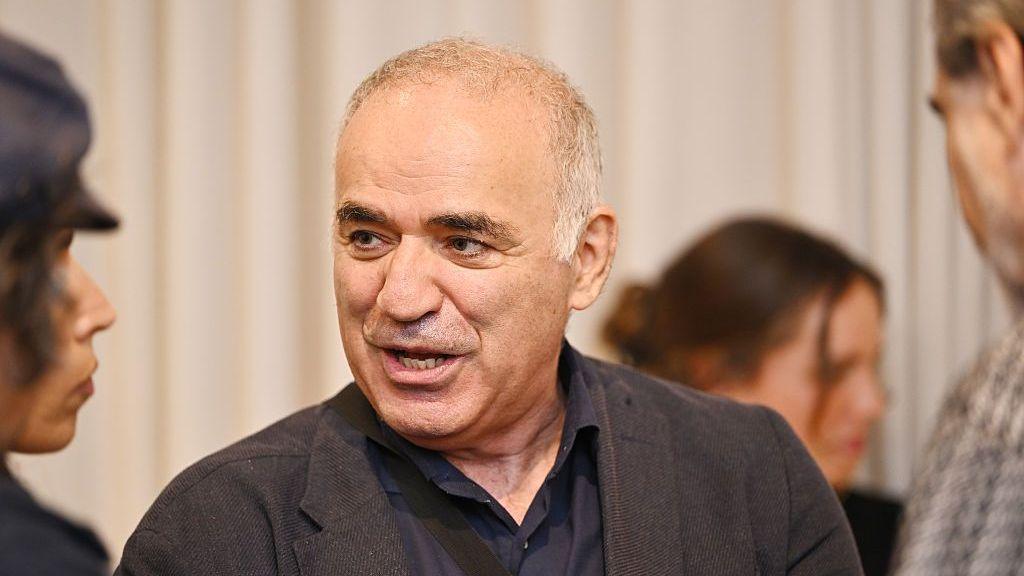
Former world chess champion Garry Kasparov, a vocal critic of Vladimir Putin, has confirmed that U.S. and Lithuanian security agencies warned him that his life was at risk. The warning came after the U.S. Justice Department unsealed an indictment this month charging five individuals who allegedly work for the Kremlin with plotting attacks and murders targeting Russian dissidents and defectors around the world.
Kasparov issued the disclosure on his Substack newsletter. He said that neither he nor co‑founder of the Free Russia Forum, Ivan Tyutrin, were explicitly named as targets, but they had been advised to take precautionary measures. He wrote: “I will not stop and I will not hide, even if I thought it was possible to do so. My family and I will not truly be safe as long as Putin is in power in Russia.”
The indictment lists five alleged members of what the Justice Department calls the “RIS Network” – Yuri Khrameev, Kirill Khrameev, Oemis Romagoza Durruthy, Yaidel Delgado Suarez and Angel Eduardo Castro – who are accused of operating a global assassination ring that has reached into the U.S. and sought to recruit American citizens and other foreigners to carry out killings on behalf of Russian intelligence.
The U.S. accuses these operatives of planning and executing attacks on Russian exiles such as Kasparov and Ilya Ponomarev, the only former Member of Parliament to vote against the annexation of Crimea in 2014. Ponomarev, who now lives in exile in Ukraine, said the allegations constitute “a new level of escalation” by Russia.
Kasparov retired from competitive chess in 2005 to focus on politics. He has been living in the United States since 2013 and refuses to return to Russia, where he has been designated a foreign agent, added to a terrorist list in 2024, and otherwise persecuted. He maintains that these designations are without merit and politically motivated.
The case reflects rising tensions over allegations that the Kremlin orchestrates covert attacks on its critics abroad. U.S. officials remain skeptical of the indictment’s evidence, while Kremlin spokesman Dmitry Peskov declined to comment until “tangible facts” emerge.