Air India crash investigation report ready by October, say investigators
The Indian agency investigating last year’s Air India plane crash that killed 260 people has said a draft final report could be ready in October.
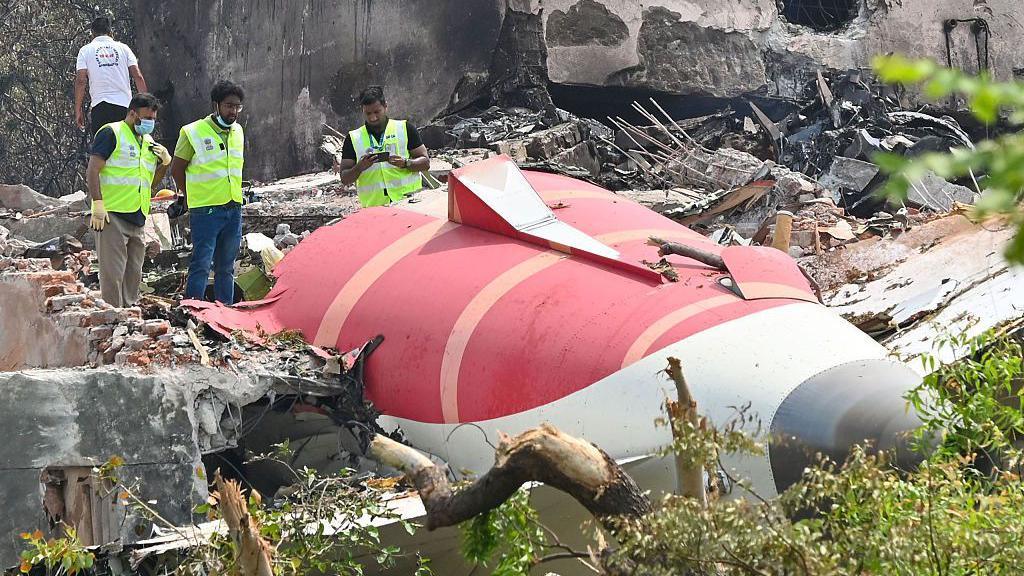
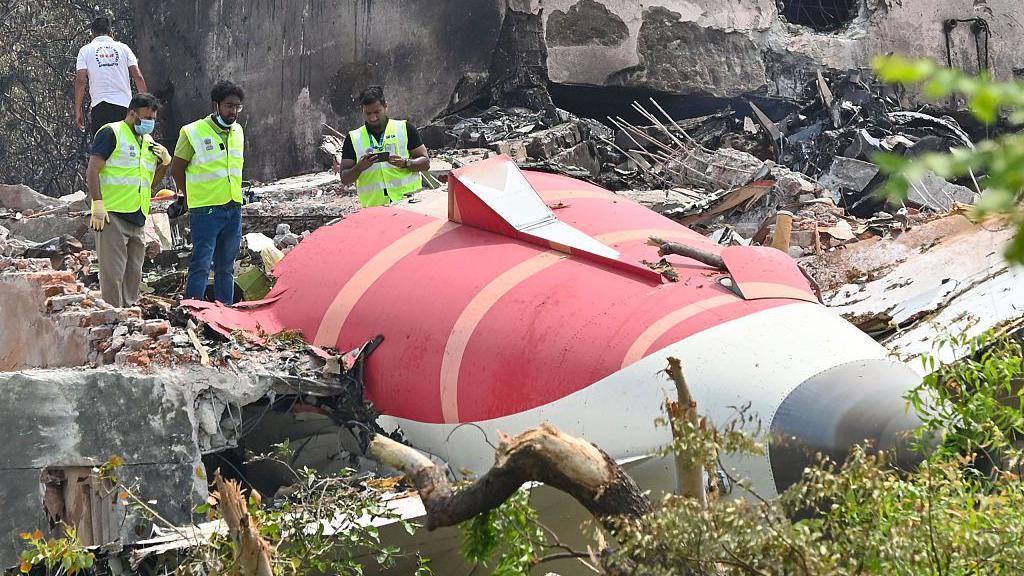
Forensic experts and DGCA officials search for evidence at the crash site on June 13 in Ahmedabad, India. Investigation authorities note that the wreckage, a broken nose, and other debris continued to be examined by investigators.
The Aircraft Accident Investigation Bureau (AAIB) filed an affidavit in the Supreme Court on Tuesday, stating it is in the analysis stage of the investigation, expected to be completed in roughly six weeks. The affidavit does not yet disclose when the report will be released to the public or its findings.
The crash happened on 12 June 2025, when an Air India Boeing 787 Dreamliner heading to London fell seconds after departure, crashing about 6 km from the airport into a doctors' accommodation at a medical college, creating a fatal explosion. 260 people—241 on board, 19 on the ground—lost their lives, sparing only one passenger, a British citizen from Leicester, who survived.
The AAIB launched its investigation immediately and issued a preliminary report a month later. The first anniversary update highlighted “significant progress” in analysing the evidence, with limited details beyond that.
In the Tuesday filing, the AAIB said it had completed 49 of 66 mandated steps for investigating a serious aircraft accident, covering site examination, wreckage, flight recorders analysis, relevant records review, crew medical and training files, personnel interviews, and a psychological autopsy assessing crew factors. The agency also prepared a cockpit voice recorder transcript, but further details remain confidential.
Earlier preliminary findings linked an abrupt fuel-control switch movement to engine power loss, with cockpit audio showing one pilot questioning the other's action. Speculation about pilots’ roles, especially senior pilot Capt Sumeet Sabharwal, has fueled media debate. The AAIB’s affidavit criticized narratives that have caused witnesses to become restrictive and non-responsive.