
In brief
Anwar Ibrahim, Malaysia's Prime Minister, recently negotiated a significant deal with Donald Trump, aimed at reducing tariffs and enhancing diplomatic relations during a regional summit. His political career has been marked by resilience, overcoming personal and political adversities to assume leadership. While Anwar has brought stability to Malaysia and advocated for the Palestinian cause, he faces rising domestic pressures and economic challenges. His ability to balance international diplomacy with domestic demands will be crucial in the run-up to the next election.
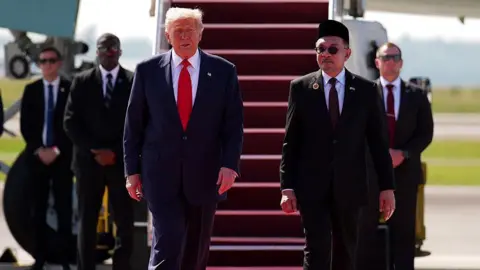
In an unexpected turn of events, Malaysian Prime Minister Anwar Ibrahim recently welcomed former US President Donald Trump to Kuala Lumpur, where they signed a crucial deal aimed at lowering tariffs on Malaysian exports to the US. This partnership is particularly significant as it promises a decrease from 24% to 19%, along with reassurances that these rates would not increase further amidst ongoing global economic uncertainties.
At the core of Anwar's diplomatic victory was a high-profile regional summit of the Association of South East Asian Nations (ASEAN), during which he orchestrated a peace deal between Thailand and Cambodia. This was necessitated by escalating tensions and fighting that had erupted earlier in the year, with Trump leveraging potential tariffs as a means to broker peace.
Anwar's journey to this moment has been fraught with challenges, characterized by over two decades of political struggle, including imprisonment during tumultuous political times. As he remarks, waiting for 25 years to lead the nation has been pivotal in shaping his political identity.
The recent tariff agreement with the US is expected to bolster Malaysia's export-driven economy, which has faced significant pressure, not least due to rising living costs and international economic conditions. Anwar's leadership comes during a pivotal moment for Malaysia, shifting from a turbulent political landscape—to one that many perceive as relatively stable compared to its recent history, having cycled through three prime ministers in just two years.
Despite political stability, Anwar's administration faces criticism over rising living costs and a lack of substantial economic reforms, with sizable protests erupting from citizens demanding action. The balance between maintaining economic growth and addressing public grievances is becoming increasingly tenuous.
On the international stage, Anwar has navigated complex diplomatic relations, positioning Malaysia amidst the competing influences of the US and China. While he promotes a proactive Malaysia within ASEAN, his government must also manage internal dissent fueled by economic frustrations and social unrest.
The response from his constituents to his enhanced advocacy for Palestine since the onset of conflict in Gaza underscores the duality of his position—between popular sentiment and the necessities of international diplomacy. Anwar's challenge will lie in effectively marrying these conflicting demands to secure both domestic support and international legitimacy as he prepares for the next electoral cycle in 2028.
