
In brief
As Brics welcomes new members and strengthens its global presence, India stands to gain strategically by enhancing its partnerships while navigating its complex relationships with both Western and non-Western powers.
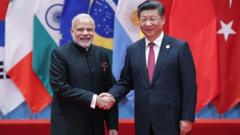
The recent Brics summit in Russia marked a notable turning point for the bloc, as it welcomed four new members: Egypt, Ethiopia, Iran, and the United Arab Emirates. This expansion has raised the profile of Brics, traditionally viewed by Western critics as insignificant, into a more formidable player capable of addressing global challenges and serving as an alternative to Western-led institutions. Notably, this shift serves India’s interests remarkably well, given its established ties with most of the new members and its ambitions on a global scale.India has nurtured strong relationships with countries like the UAE and Egypt, making the inclusion of these nations valuable for enhancing trade and security in the region. Additionally, India’s longstanding partnership with Ethiopia illustrates its strategic footprint in Africa. Despite being perceived as the most Western-aligned member of Brics, India stands to derive substantial benefits from the group's evolution.Central to India’s strategy is its commitment to maintaining strong ties with Russia, a key member of Brics. The group provides an avenue for India to assert its partnership with Russia amidst the ongoing tensions and sanctions imposed by Western nations. Notably, the recent summit allowed Prime Minister Narendra Modi to engage with Chinese President Xi Jinping on the sidelines, reflecting India’s cautious approach to easing tensions with its neighbor, even as it navigates a complicated relationship marked by border disputes.Brics also aligns with India’s core foreign policy principle of strategic autonomy. By engaging in this coalition, India can balance its relationships across a spectrum of geopolitical stakeholders without being drawn into any singular alignment. Meanwhile, its participation in Brics complements its partnerships within frameworks like the Indo-Pacific Quad and with Western allies, providing a comprehensive diplomatic approach.The collective vision articulated at the summit resonates deeply with India’s objectives. Brics’ goals of promoting multilateralism, enhancing the Global South, and advocating for reform in international institutions align with Delhi's strategic aspirations, including its desire for a permanent seat on the UN Security Council. The pushback against Western sanctions frameworks also dovetails with India's interests, especially concerning its trade with Russia and infrastructural commitments in Iran.However, the growing momentum of Brics raises concerns about its potential to adopt an anti-Western stance. The inclusion of members like Iran and the speculation surrounding future members, which may include countries with contentious relations with the West, poses a dilemma for India, which seeks to avoid aligning with anti-West frameworks. Yet, most new members maintain substantial ties with Western countries, which could alleviate fears of Brics assuming an overtly adversarial position.Despite ambitions for an independent payment system and other initiatives discussed at the summit, many doubts linger regarding Brics’ capacity to implement concrete solutions. The complex intra-group dynamics—highlighted by the tensions between some of the new entrants—suggest that fostering consensus within an expanded bloc could prove challenging. That said, the achievements discussed at the summit may focus on collaborative areas like climate change and public health, steering clear of contentious issues that could provoke conflict with the West.Ultimately, Brics presents India with an advantageous setting to strengthen its diplomatic standing, navigate a multipolar world, and preserve cooperative relations with both Western and non-Western nations. This trajectory not only supports India’s strategic objectives but also ensures that Brics can promote initiatives that foster collaboration without creating friction with Western powers. As such, Brics is evolving into a platform that bolsters India's global reach while reaffirming its desire for a balanced role in international relations.
