In brief
Chinese robotics firm Geek+ is deploying autonomous mobile robots across major UK retail warehouses, speeding up order fulfilment and cutting labour gaps. The robots glide under shelves, lift pallets, and operate on QR‑coded floors, adapting quickly to existing layouts. analysts say the move follows China’s push to use EV technology in robotics, while UK businesses seek rapid, cost‑effective automation amid a persistent productivity slump. Human‑oriented debates over job impacts persist, yet the technology offers a complementary boost for lean warehouse operations.
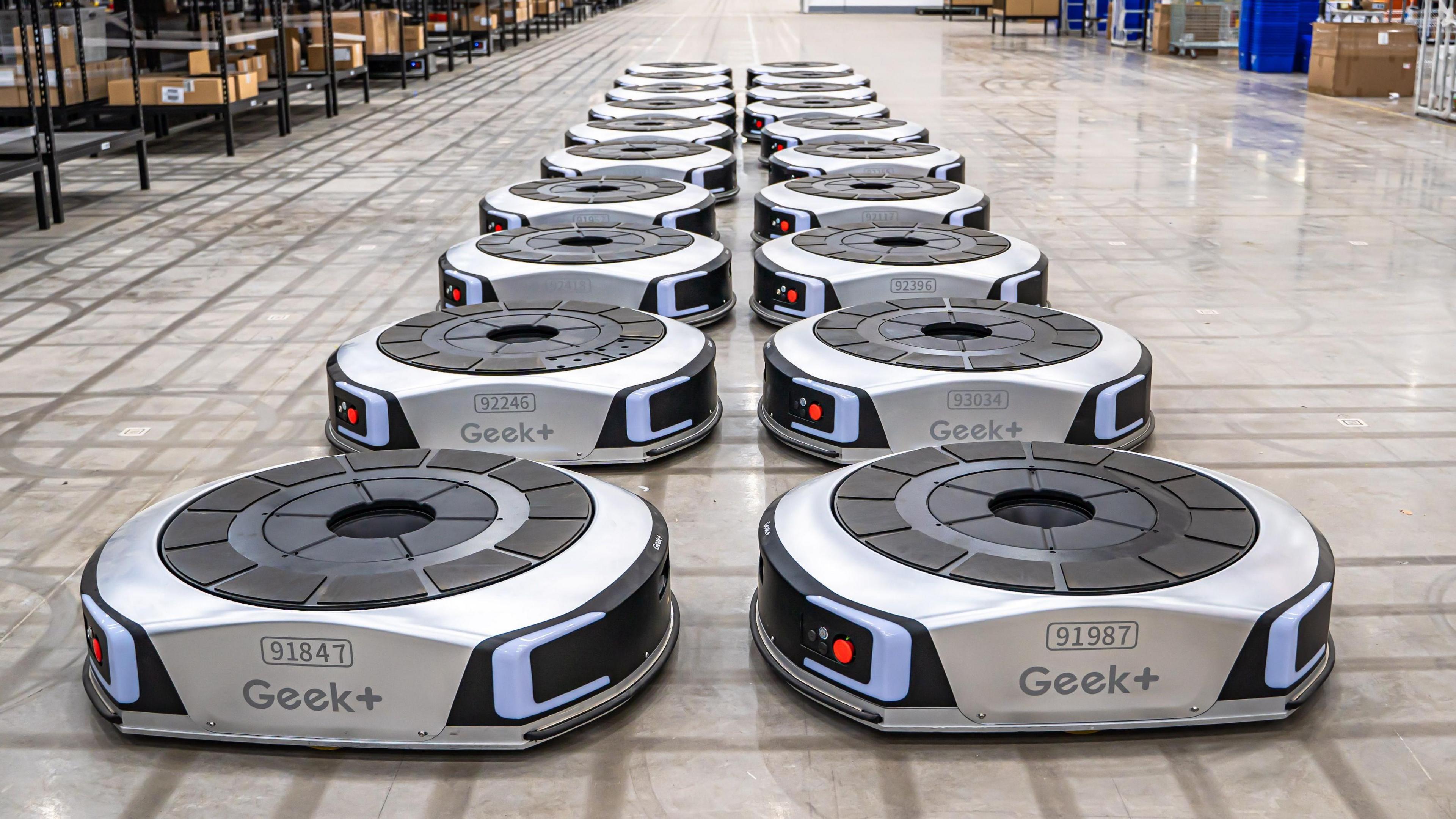
Every time a customer clicks "buy" on an e‑commerce site, the connection to a warehouse turns into a dance of wheeled machines—and this dance is choreographed by Chinese firm Geek+. The company’s sleek, silver floor robots access shelves, lift pallets, and ferry goods to packing lines with fewer human participants.
Geek+ builds its fleets in Hefei, China, testing and refining the technology before dispatching it to warehouses across the world. In the UK, retailers such as Tesco, Asda and Next have already installed its robots, citing faster picking speeds and space‑saving capabilities for high‑volume fulfilment.
Unlike fixed conveyor systems, Geek+ robots navigate through QR‑coded floor markers and safety fencing, enabling rapid, low‑cost deployment. The flexibility matches UK businesses’ urgent need to accommodate unpredictable demand spikes without extensive infrastructure investments.
The UK’s productivity challenges have drawn attention to robotics as a catalyst for efficiency, with the OECD citing the sector as key to closing a decade‑long lag. In contrast, Chinese policymakers see automation as essential to counterbalance a shrinking working‑age population and to sustain manufacturing competitiveness.
The partnership with UK tech firm MotionTech has delivered over 2,000 robots to 10 sites, showing that quick implementation is possible even in complex warehouse environments. Barry Pemberton of MotionTech notes that companies now demand high‑volume, small‑footprint solutions that reduce headcount—a goal met by these autonomous units.
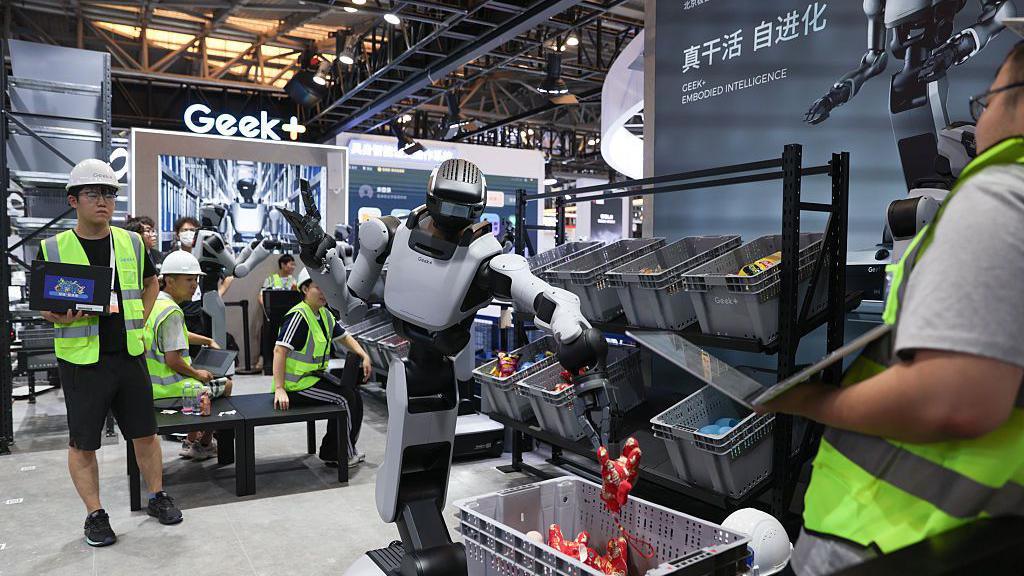
While robots can already move goods, the next frontier lies in full unmanned operations, including picking, packing and potentially delivery. Geek+ is developing humanoid models for more delicate tasks, although experts warn that humanoid robots have yet to match wheeled machines in efficiency for repetitive operations.
The UK labour market’s limited pool of skilled workers has fostered a narrative that robotics should complement—not replace—human roles. The Trades Union Congress calls for worker involvement in automation decisions and for retraining programmes to safeguard future employment.
Additional reporting by Jaltson Akkanath Chummar