In brief
The election for the clerk of the criminal court in New Orleans has turned intensely personal with Calvin Duncan, a former inmate who spent decades in prison before having his murder conviction vacated, facing strong opposition from incumbent clerk Darren Lombard and Louisiana Attorney General Liz Murrill. Accusations center around Duncan's exoneration status, a topic that could heavily influence voters as they head to the polls this Saturday. Duncan, claiming that his experiences give him a unique understanding of the justice system, has emerged as a controversial figure in this political landscape filled with competing narratives.
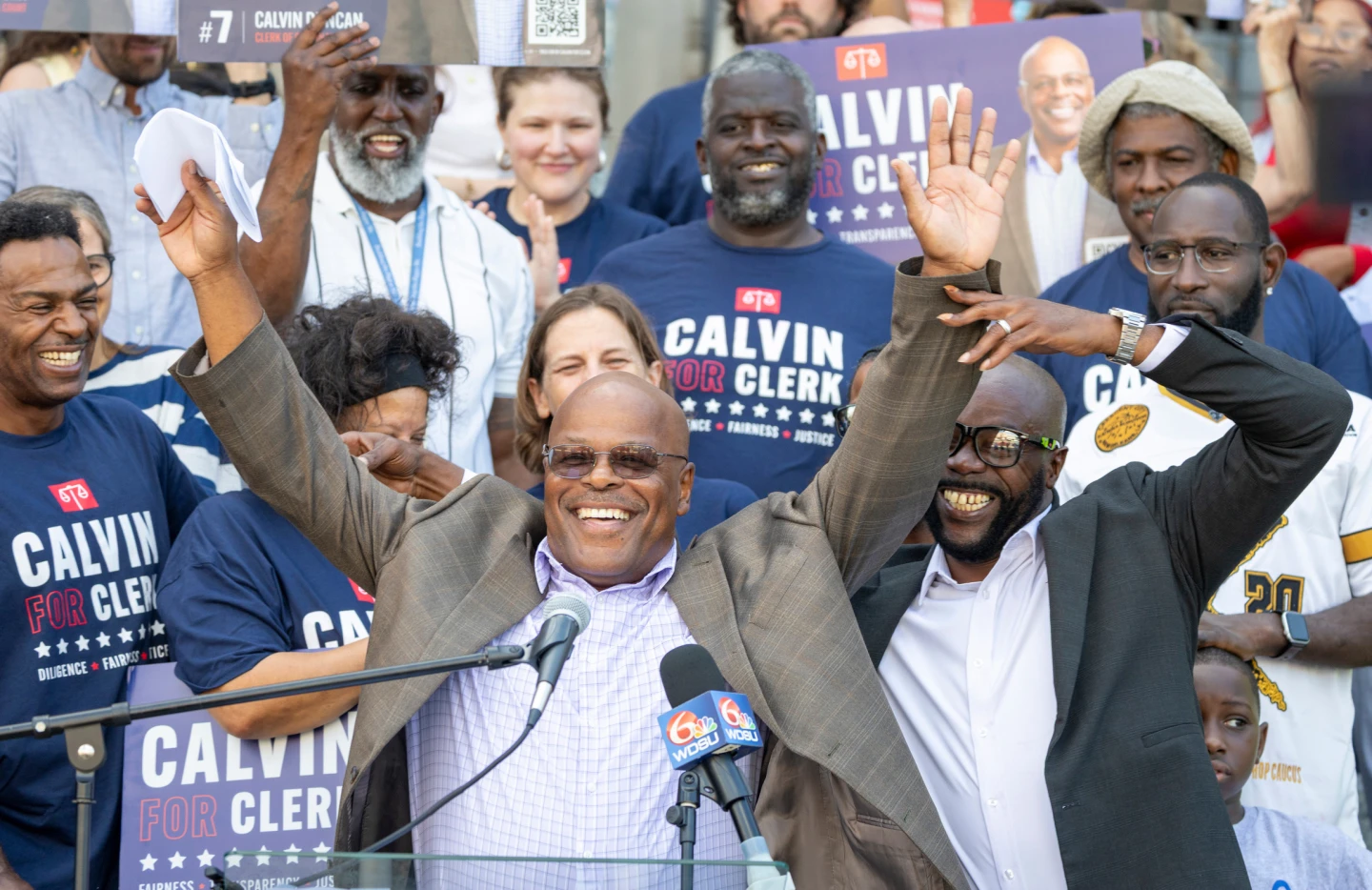
NEW ORLEANS (AP) — A heated race for the clerk of criminal court in New Orleans is becoming increasingly personal and contentious. Calvin Duncan, 62, who spent over three decades behind bars before his murder conviction was vacated, is facing serious allegations from Louisiana’s attorney general and the incumbent clerk regarding the legitimacy of his exoneration claims.Duncan, who self-taught himself law while incarcerated, says his journey makes his candidacy to be the city's chief criminal recordkeeper not just a political ambition, but a personal mission to prevent others from suffering similar injustices. “I don’t never want to have what happened to me happen to nobody else,” Duncan asserted, highlighting the emotional stakes involved in the position. He is recognized in the National Registry of Exonerations alongside other notable figures like “Central Park Five” member Yousef Salaam.Disputes regarding the term 'exoneration' have overshadowed Duncan's campaign as both Attorney General Liz Murrill and incumbent clerk Darren Lombard have openly questioned his innocence, pointing to a plea deal for manslaughter that Duncan claims was made under duress to facilitate his release. The political climate is charged as voters prepare to head to the polls Saturday.Duncan has accused his opponents of misleading the public, a claim that his supporters echo as they describe the campaign as an instance of intense and aggressive local politics, especially with numerous candidates vying for the soon-to-be vacant mayoral seat left by LaToya Cantrell amid corruption allegations.Jessica Paredes, executive director of the exoneration registry, supports Duncan’s inclusion in the list of exonerated individuals, stating that his case clearly meets the organization’s criteria for exoneration. “We err conservatively to maintain the integrity of the database,” she confirms. Duncan’s new evidence of innocence in a 1981 homicide case—demonstrating police misconduct—led to the vacating of his conviction.The legitimacy of Duncan’s claims has drawn considerable scrutiny from state officials, with Murrill issuing threats against Duncan's law practice as he sought state compensation for his wrongful conviction. In a recent public letter, Murrill condemned Duncan for what she characterized as a ‘gross misrepresentation’ concerning his exoneration status. In response, over a dozen Louisiana attorneys have refuted Murrill’s claims.As a self-taught legal expert, Duncan has gained respect within legal circles, particularly for his pivotal role in a landmark Supreme Court ruling that abolished non-unanimous jury convictions in Louisiana and Oregon. Duncan's experiences have uniquely shaped his views on the integrity of criminal records, a focus he aims to bring to the clerk’s office—a position that currently struggles with the challenges of outdated record-keeping amidst the remnants of Hurricane Katrina's devastation.Duncan's supporters believe his profound understanding of the justice system equips him to address the shortcomings of the office effectively, while opponents like Lombard continue to undermine his qualifications. Duncan is adamant about reforming the system to protect future generations from experiencing what he endured.