
In brief
With the Danube’s water levels hitting record lows, the bodies of two German soldiers were found in Budapest’s river, accompanied by identification tags, a DKW motorcycle, a wedding ring and a Kuban shield. The German War Graves Commission has begun work to identify the men, hoping to give their families final answers after 80 years. The well‑preserved artefacts were protected by river sludge and oil, turning a drought‑driven tragedy into a historical discovery. The find highlights the lingering echo of World War Two in Hungary’s capital.
A record low in the Danube’s water level near Budapest has revealed the bodies of two German soldiers from the Second World War, along with a collection of wartime artefacts. The remains were found on 2 August after a passerby reported a section of a motorcycle protruding from the riverbank.
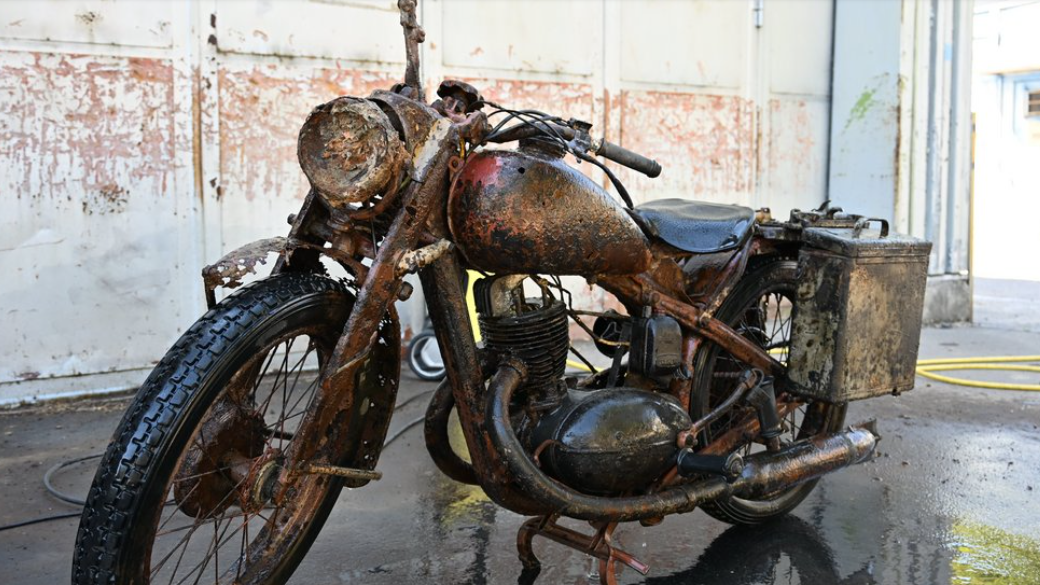
The German War Graves Commission confirmed the recovery of identification tags belonging to one Wehrmacht soldier and one Waffen-SS soldier, a largely intact DKW NZ 350‑1 motorcycle, a wedding ring and a Kuban shield. The items were remarkably well preserved, thanks to a mix of harbour sludge and oil that had settled on the riverbed.
The Commission is now working to identify the two men. According to Arne Schrader from the Commission, the first phase involves matching the tags and badge to the soldiers’ service records, after which bone analysis may be required to confirm identities. Families who had been waiting in vain for official notification of their relatives’ deaths may finally receive closure.
Those who wish to search the Commission’s database for missing personnel can visit the online search tool. The site allows users to look up names and cross‑reference the recovered items.
The discovery adds to a series of wartime relics appearing in the Danube during this dry spell, including a broken hull found near Prahovo in Serbia. While the motorcycle is believed to be a wartime model produced beginning in 1944, the prevailing conditions in the river make it clear how dry weather can bring hidden history to light.
Once the soldiers’ identities are confirmed, their remains will likely be buried at the German war cemetery in Budaörs, just outside Budapest, ensuring a dignified final resting place. The event underscores the continuing relevance of World War Two for Hungary, a region that endured heavy fighting from the Soviet Red Army and the German Wehrmacht in the war’s final months.
Image:


