
In brief
Equatorial Guinea’s government has resigned following President Teodoro Obiang’s statement that the ministry did not reach 10% of its goals, citing corruption, misuse of state resources and stagnant economic development. Prime Minister Manuel Osa Nsue Nsua led the cabinet that was appointed the previous year. The president, who has ruled since 1979 and frequently appoints family members to key posts, said the resignation aligns with the principle that public responsibility must be coupled with results. A new government is expected to form soon as the country continues to depend heavily on oil while workers and the public struggle with poverty.
Vice‑President Teodoro Nguema Obiang Mangue announced that the entire cabinet under Prime Minister Manuel Osa Nsue Nsua has resigned because the administration "barely reached 10% of its targets". The statement was issued after the president expressed dissatisfaction with the ministry’s performance, citing corruption, misuse of state resources and stagnation of development projects.
Obiang, who has ruled Equatorial Guinea since 1979 and is the son of President Teodoro Obiang Nguema Mbasogo, highlighted the lack of economic diversification, especially in agriculture. The country remains heavily dependent on oil and gas, with the majority of its exports and revenue coming from petroleum. Despite this wealth, poverty rates remain high as output has been falling due to lower global oil demand.
The ruling Democratic Party of Equatorial Guinea (PDGE) confirmed that a new government would be appointed. The resignation aligns with a stated principle that public accountability must be accompanied by tangible results.
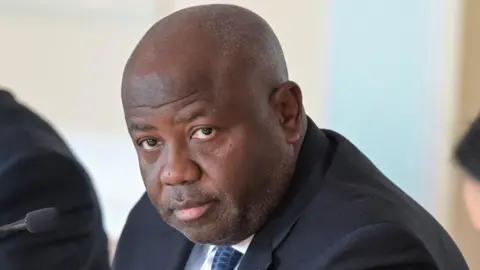
AFP via Getty Images


