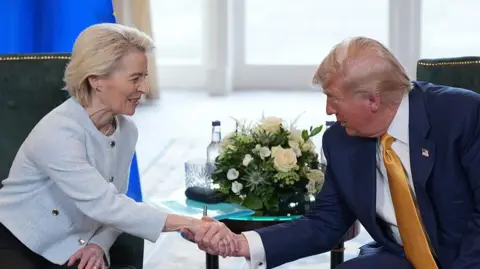
The European Parliament has suspended the approval of a key US trade deal agreed in July in protest against Donald Trump's demand to take over Greenland.
The suspension was announced in Strasbourg, France, on Wednesday, as the US president addressed the World Economic Forum in Davos.
The move followed renewed trade tensions between the US and Europe sparked by Trump's bid to acquire Greenland, which had rattled financial markets, reviving talk of a trade war and the possibility of retaliation against the US.
Hours later, Trump said on social media he had reached a 'framework' deal on Greenland's future and would not carry out threats to put new tariffs on eight NATO members.
Trade tensions between the US and Europe had eased since the two sides struck a deal at Trump's Turnberry golf course in Scotland in July.
That agreement set US levies on most European goods at 15%, down from the 30% Trump had initially threatened as part of his 'Liberation Day' wave of tariffs in April. In exchange, Europe had agreed to invest in the US and make changes on the continent expected to boost US exports.
The deal would have still required approval from the European Parliament to become official.
But on Wednesday, days after Trump threatened fresh US tariffs over Greenland, Bernd Lange, chair of the European Parliament's International Trade Committee, said it was 'left with no alternative but to suspend work on the two Turnberry legislative proposals'.
He said work to implement the trade plans would be on hold 'until the US decides to re-engage on a path of cooperation rather than confrontation, and before any further steps are taken'.
The move renewed the possibility that the EU might move forward with tariffs on a possible €93 billion ($109 billion, £81 billion) worth of American goods it announced last year in response to Trump's 'Liberation Day' tariffs.
Lange, speaking before Trump announced the 'framework deal' and backed off the tariff threat, said there would be 'no possibility for compromise' until Trump's threats ended.
He also raised the prospect of using the 'anti-coercion instrument' of retaliatory measures, nicknamed a 'trade bazooka', an idea also backed by French President Emmanuel Macron.
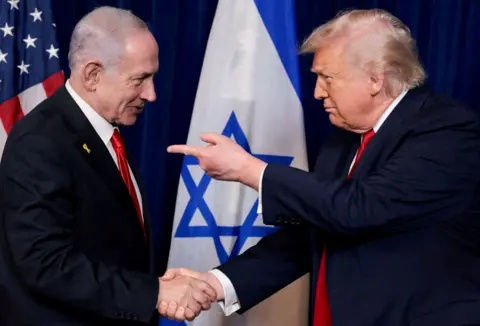
In a speech in Davos, Trump reiterated his interest in acquiring Greenland, stating, 'I don't have to use force, I don't want to use force, I won't use force'. He called for 'immediate negotiations' with Denmark about how he could take over the island.
Trump's speech helped to calm financial markets on both sides of the Atlantic, which had sunk in previous days. Shares in the US gained further on the deal announcement, with the Dow Jones, S&P 500, and Nasdaq rising more than 1% in afternoon trading on Wednesday.
The US and the 27-nation EU are each other's biggest trade partners, with over €1.6 trillion ($1.9 trillion, £1.4 trillion) in goods and services exchanged. The current standoff could significantly impact their economic relationship amid ongoing global trade challenges.