
In brief
David "Davey" Hearn, a 67‑year‑old former Olympic canoeist, has been charged with felony vandalism for allegedly damaging the Reflecting Pool at the Lincoln Memorial after a $14 million renovation. US Attorney Jeanine Pirro announced a $1,000 loss and the indictment at a press conference, while Hearn’s attorneys argue the charge is politically motivated. President Trump blamed vandals for peeling paint, and the National Park Service reports ongoing damage and algae problems. The incident has sparked debate over vandalism, accountability and the care of national landmarks.
Former Olympic canoeist David "Davey" Hearn, 67, has been charged with felony vandalism after allegedly damaging the Reflecting Pool at Washington’s Lincoln Memorial. The incident followed a $14 million renovation that aimed to protect the historic basin from leaks and erosion.
US Attorney Jeanine Pirro announced the charge at a press conference, saying Hearn’s actions caused a $1,000 loss and violated property‑damaging statutes. Hearn’s attorneys released a statement accusing the indictment of being “a politically motivated indictment” that seeks to shift blame for their own failures.
President Donald Trump has weighed in on the matter, describing the damage as the work of “sick, deranged people” and pledging swift repairs. Trump’s remarks have amplified the political discussion around accountability for public spaces.
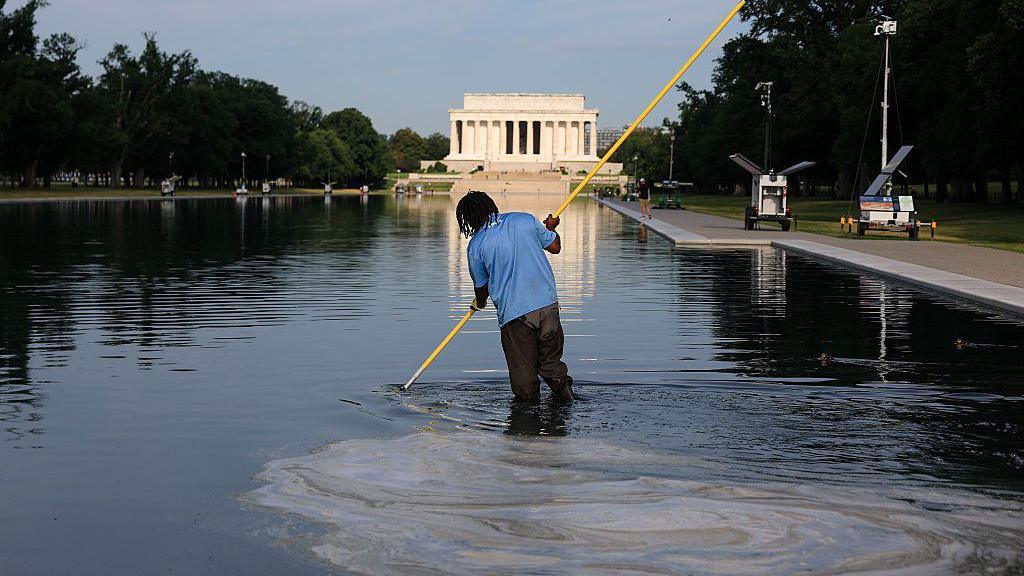
The Reflecting Pool, a 2,030‑foot stretch between the Lincoln Memorial and the Washington Monument, has long suffered from leaks, faulty pipes, algae growth and bird droppings. A National Park Service official noted that the new liner had been cut with a sharp object, raising concerns about the durability of the recent refurbishment.
Five people were arrested for vandalism connected to the pool, and five others received federal citations, according to US Park Police. The allegations against Hearn add to a series of incidents that have highlighted the need for increased security and maintenance.
Public opinion is split: some view the indictment as a necessary deterrent against vandalism, while others argue that the legal action is disproportionate to the physical damage. The case raises broader questions about how national landmarks are treated and protected in the political climate of Washington DC.
Further coverage of the incident can be found under related topics such as Washington DC, Donald Trump, and United States politics, and more on this story is available in accompanying reports and video analyses.


