In brief
Argentina celebrated a 2‑1 semi‑final win with a banner demanding sovereignty over the Falkland Islands, sparking a swift FIA investigation. FIFA is reviewing match reports under its disciplinary code, with precedent fines for political messages. The incident has drawn criticism from the UK government, support from President Milei, and debate over the relevance of sport as a political stage. While no impact on the final is expected, sanctions could include fines or player suspensions. The banner echoes a long‑standing dispute rooted in the 1982 war and a 2013 referendum that reaffirmed the islands’ desire to remain a British territory.
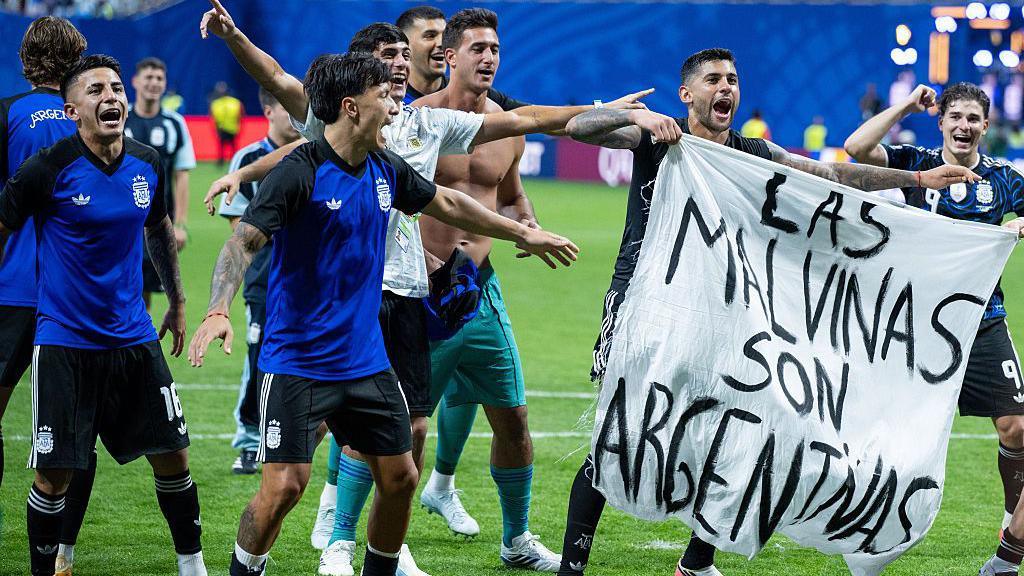
Argentina lifted a banner reading "Las Malvinas son Argentinas" (“The Falklands are Argentine”) after a 2‑1 victory over England in the 2026 World Cup semi‑final in Atlanta. The gesture has drawn criticism for involving a long‑standing sovereignty dispute between the United Kingdom and Argentina.
FIFA is currently assessing the match reports from the game and is taking standard disciplinary procedure into account. As it notes, the governing body will consider the circumstances before determining any action in line with its code of conduct.
Background of the incident
During the post‑match celebration, Argentina’s players held up the Falklands banner, a message that the Argentine Football Association (AFA) had previously been fined £20,000 for in 2014 after a similar display in a friendly against Slovenia. The earlier fine was criticized for breaching FIFA’s rules on political activity.
Reactions from governments and officials
The UK’s Downing Street affirmed its commitment to the Falklands, calling the World Cup “not ours” but the islands “definitely ours”. Prime Minister’s spokesman stated that the UK would not waver in its stance. Argentine President Javier Milei praised the players’ expression as “understandable” but insisted sports and diplomacy should be distinct, noting that the return of the islands would occur in the diplomatic arena, not on the pitch.
British Conservative politicians, such as Trade Secretary Peter Kyle and party leader Kemi Badenoch, urged FIFA to investigate the ban. They emphasized the importance of keeping politics out of the sport.
Historical context of the Falklands dispute
Argentina’s 1982 invasion of the Falkland Islands triggered a 74‑day conflict, resulting in 649 Argentine and 255 British deaths. Since the 2013 referendum, the Falkland Islands’ residents voted overwhelmingly to remain a UK overseas territory. These events continue to influence political sensitivities surrounding the islands.
Possible FIFA sanctions
While FIFA has no indication that Argentina’s qualification for the final is affected, it may impose sanctions such as fines or player suspensions. Previous cases—most notably the 2012 Olympic sign by South Korean midfielder Park Jong‑woo—illustrate FIFA’s willingness to suspend players for political displays.
Like the UEFA ban of Spanish players for a Gibraltar chant, FIFA could suspend Argentine players for the final, although this would be unprecedented at the World Cup.
Conclusion
As FIFA’s disciplinary committee reviews the evidence, the situation highlights the intersection of sport, national identity and international law. The outcome will inform not only the Argentine team’s immediate future but also the global discussion about politics on the football field.
Image credit: Getty Images; Argentina players holding a Falklands banner after the semi‑final win over England.