
In brief
Amid reports of heavy police deployment across Shanghai, the city’s Halloween festivities were notably subdued this year. Many revelers faced restrictions and dispersal by officers enforcing a crackdown on public gatherings, highlighting tensions surrounding freedom of expression.
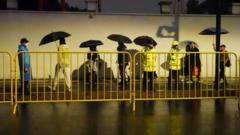
In an unusual turn of events, Halloween celebrations in Shanghai this past weekend were met with a heavy police response, which some view as an attempt by authorities to suppress large gatherings and expressions of dissent. Witness accounts suggest that costumed party-goers were dispersed and even detained, despite the absence of an official ban on Halloween festivities.Throughout the weekend, eye-witnesses reported an increased police presence in popular districts, including Julu Road and Zhongshan Park, where crowds gathered to celebrate. According to media sources, police units engaged with individuals in costumes, asking them to leave and at times requiring the removal of face paint and accessories. An alleged incident of a man clashing with law enforcement further exemplified the tension. Authorities had been rumored to implement restrictions leading up to Halloween, with some business owners receiving warnings to avoid hosting large events. Universities in the area also advised students against participating in gatherings, resulting in concerns over potential repercussions from school officials.While costumes deemed innocuous—like comic book characters—were also targeted, it remains unclear what specific criteria led to individual police interventions. Reviewers noted that at times, the number of officers surpassing the costume-clad attendees raised eyebrows amongst locals, who remarked that such a policing presence was atypical for the city's festive atmosphere.This incident occurs within a broader context of government caution, likely influenced by prior events that sparked public dissent, particularly following the White Paper Protest movement that challenged COVID-19 restrictions. The crackdown on Halloween merriment signals an ongoing struggle between personal expressions in public and state authority, reflecting deeper societal pressures on freedoms in the face of governance in contemporary China.

