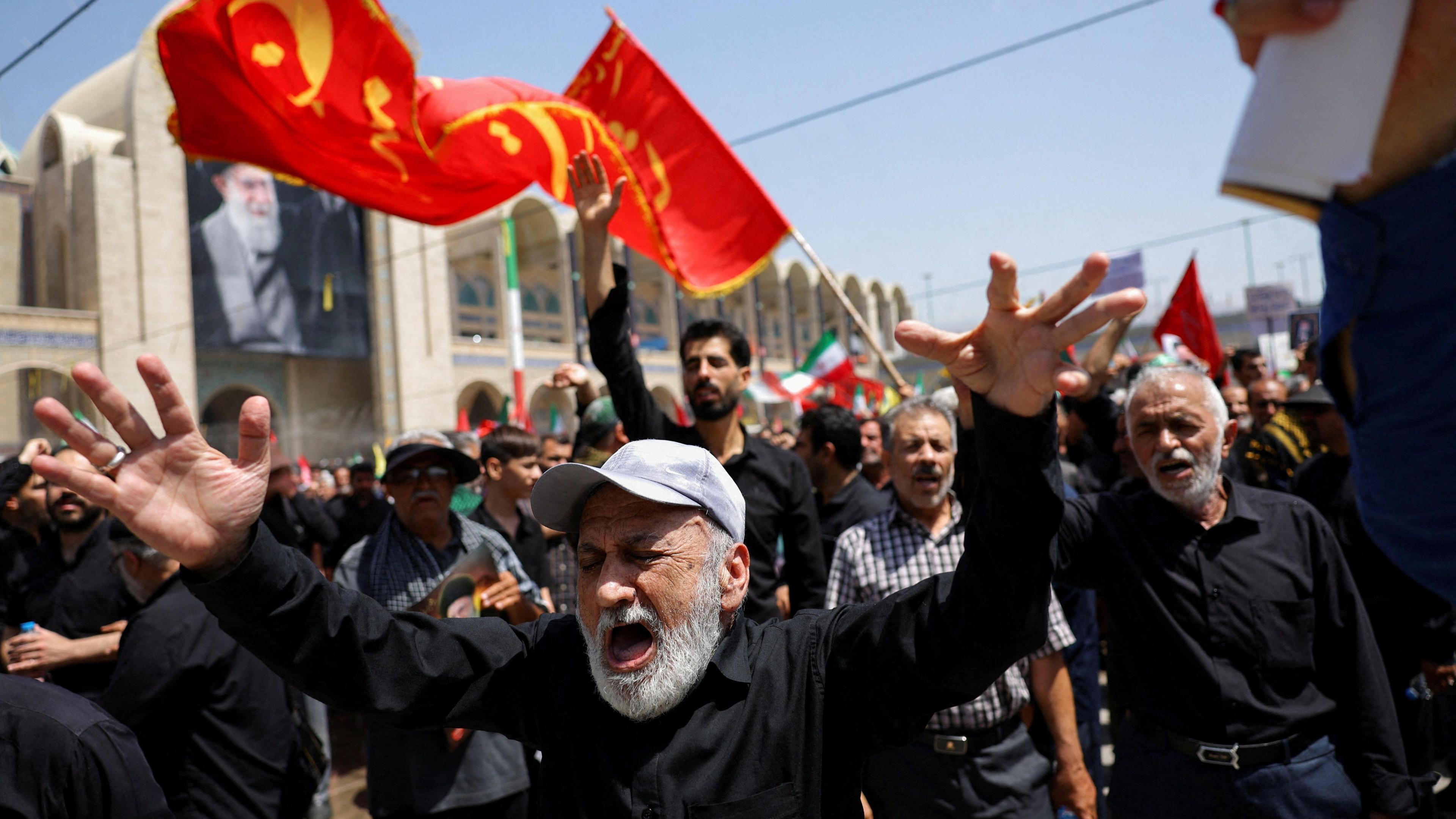
Large crowds in black clothing have gathered in Tehran’s Grand Mosalla to pay their respects to former Supreme Leader Ayatollah Ali Khamenei, marking the first day of a six‑day funeral that is expected to attract 15–20 million people across Iran and Iraq.
Khamenei’s body has been lying in state at the mosque, awaiting burial in his hometown of Mashhad next Thursday. The ceremony follows the February death of the Ayatollah in a joint U.S.‑Israeli strike that inflamed regional tensions.
Local officials have ordered lockdowns in key areas of central Tehran as the funeral moves through the city. According to state media, thousands of supporters have shouted slogans against the United States, expressing a desire for revenge for the Ayatollah’s assassination.
“We came [to the funeral] because we promised the supreme leader we would stand by him to the very end,” said Reza, a 37‑year‑old university professor in the courtyard, to AFP. He added, “For a long time, we shouted that we would sacrifice our lives for the leader, but it was he who sacrificed himself for us.”
Arash Rahimi, 40, told Reuters, “Everyone here has come to avenge the blood of their supreme leader. As our leader has said, we have a blood feud with the United States. Our relations with the United States will never be good.”
In Tehran, police reports detailed an atmosphere of national mourning but also highlighted a subdued, organized environment, with military checkpoints on major boulevards. A senior Shia cleric will later lead funeral prayers in the holy site of Jamkaran, south of Tehran.
The procession will then travel to Najaf in Iraq on Wednesday, where a shrine of Imam Ali will host a ceremony before it heads to Karbala. On Thursday, Khamenei will be buried at the Imam Reza shrine in Mashhad, a site that sees thousands of pilgrims each year.
The next 40 days of commemorations will see smaller, local gatherings across the country, culminating on the first anniversary of Khamenei’s burial. Reports indicate that Mojtaba Khamenei, his son and the new supreme leader, remains largely unseen in public, raising questions about his attendance at the funeral.
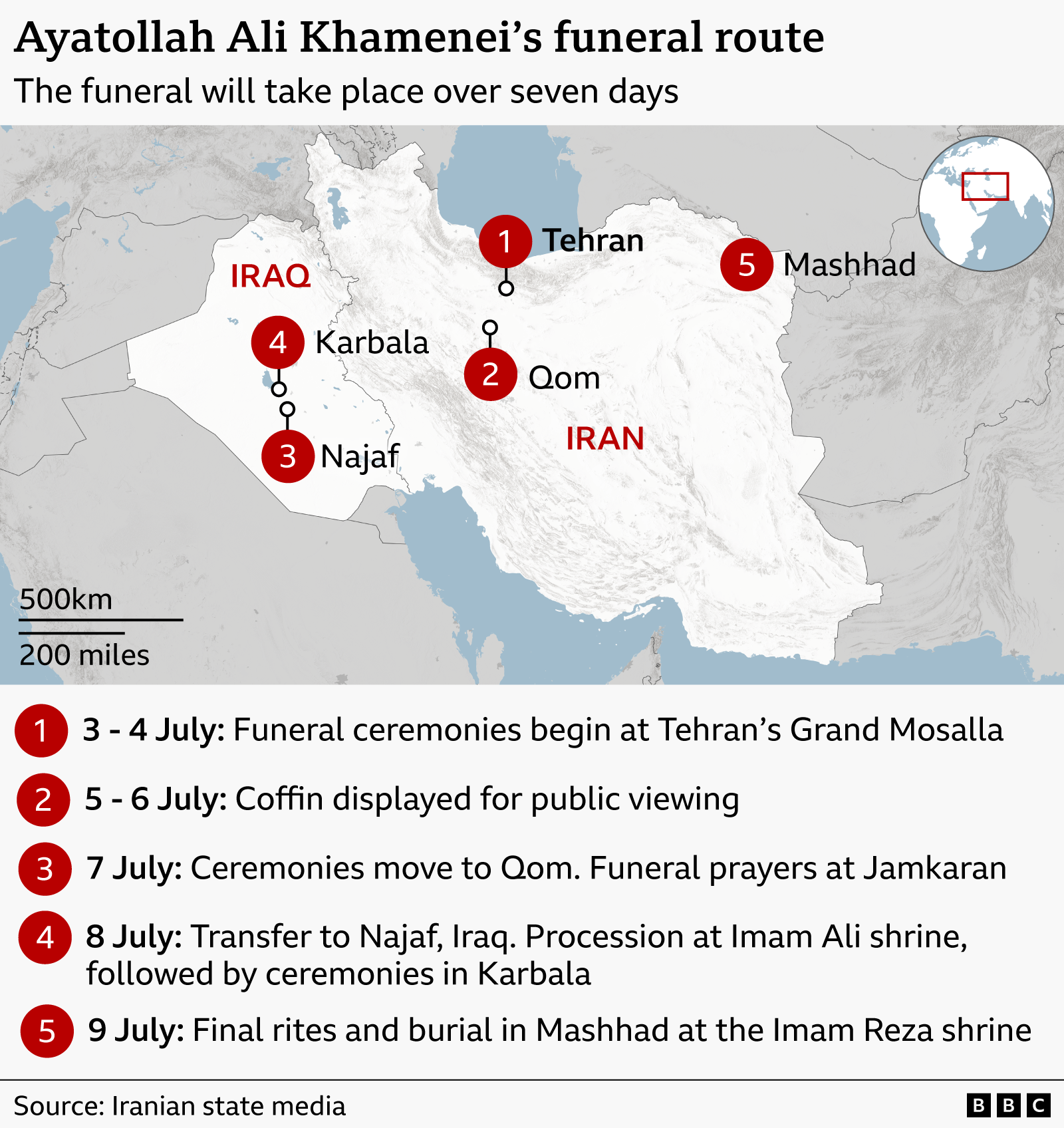
The map illustrates the planned route: Tehran, Qom, Najaf, Karbala, and Mashhad. Each site, from the Grand Mosalla to the Imam Reza shrine, carries deep religious and political significance for Shia Muslims worldwide.
Analysts note that while the funeral could solidify a sense of unity among supporters of the Islamic regime, it also risks escalating tensions with the United States and Israel, where the Ayatollah’s death has already triggered a surge of diplomatic friction.
The global community is closely observing the procession, with some governments calling for calm and others anticipating a possible backlash from Iran’s newly appointed leader.