In brief
Argentina are on the brink of becoming the third nation to win successive World Cups, a feat shared only by Italy and Brazil. Lionel Messi, the team’s talisman, faces an unlikely chance to add a further trophy to his legendary list, while debate swirls over whether his international career will continue into 2030. The cutting‑edge analysis looks at Messi’s statistical record, his age and fitness, the political and cultural sentiment in Argentina, and the prospects that a Vargas‑founded South American crowd could offer him a final grand stage.
Argentina are one victory away from becoming only the third national team to win back‑to‑back World Cups – a record that dates back to Italy in 1938 and Brazil in 1962. Whether the Argentine side can repeat 2022’s triumph hinges on the presence of superstar Lionel Messi, who is at the mythical midpoint of a career that has already reshaped modern football.
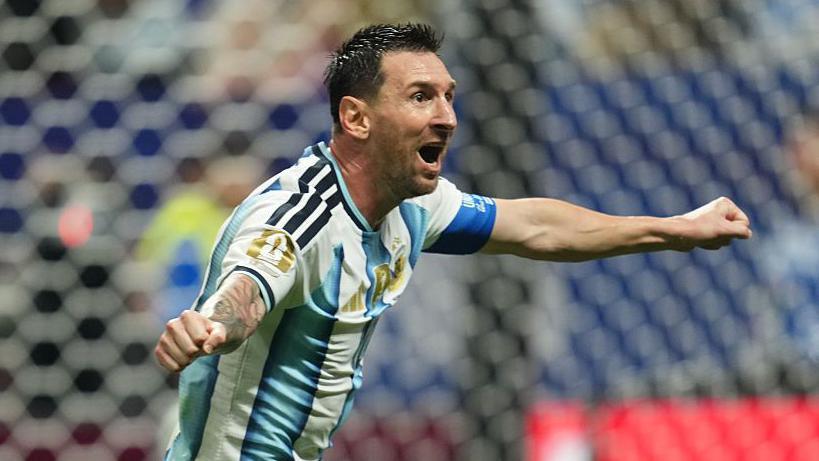
Messi, who celebrated the 2022 final in Qatar with his customary exuberance, is now 34 on the world stage – his 34th appearance at a World Cup tournament. If he chooses to stay on for 2030, he would become the oldest outfield player to appear, eclipsing the current record held by Cristiano Ronaldo, a title that would add new weight to his collection of gold and silver glories.
Statistical Brilliance in a New Era
- 12 World Cup goals from 2022 to 2026 – 15 of those from tournaments after age 35.
- 12 assists, a record for men’s finals; surpassing not only most for any player but also the knockout‑round leading count of eight.
- Three consecutive World Cup finals (2022, 2026, potential 2030) – only the second after Cafu.
- Only player to score or assist in 11 straight World Cup matches, a run that eclipses the 1966 record.
The 2030 Debate: Passion versus Pragmatic Planning
Spanish football expert Guillem Balague highlights Messi’s “passion” as the driver that may keep him in the national squad. He points to Messi’s endurance – covering 6.5 km in a single match – as proof that age has not carried a dramatic decline in his performance. Balague also notes the emotional allure of playing a World Cup at home in Argentina, where fans believe the country will offer the ultimate stage for a possible final field.
In contrast, Argentine coach Lionel Scaloni expressed uncertainty about whether Messi’s 2026 campaign could end on a final. He said, “We haven’t discussed it. Whether it’s a swansong or not, we will enjoy the game.” This balanced stance reflects the broader uncertainty among Argentine fans, some of whom expect a finaltonal send‑off, others who cherish the idea of a prolonged legacy.
Political & Cultural Perspectives
In South America, Messi’s influence is almost mythic; many fans view a future World Cup as a final honour to a national hero whose name has become synonymous with victory. From the European angle, his potential cameo at the 2030 tournament (jointly hosted across Spain, Portugal and Morocco) may inject a narrative of “global legends returning to the global stage.” In the United States, where Messi portrays an MLS icon in Inter Miami, discussions revolve around the balance between club commitments and national duty.
As the tournament draws near, the collective debate revolves around not just whether Messi will again take to a world‑field, but also what legacy he will leave behind – a title that could redefine the narrative of Argentine football for the next generation.