In brief
A virulent wildfire scorched 800 hectares just 60 kilometres southeast of Paris, prompting the French firefighting service to deploy two aircraft from the south of the country—an unprecedented move in the Paris region. The blaze temporarily closed the main north‑south highway, causing up to six‑hour train delays. It reflects the broader climate trend of summer heatwaves and growing wildfire threats across Europe, including deadly fires in Spain and Wales. The emergency response illustrates the intersection of environmental change, transport infrastructure, and emergency management.
By Chris Graham – 13 July 2026, 04:34 BST
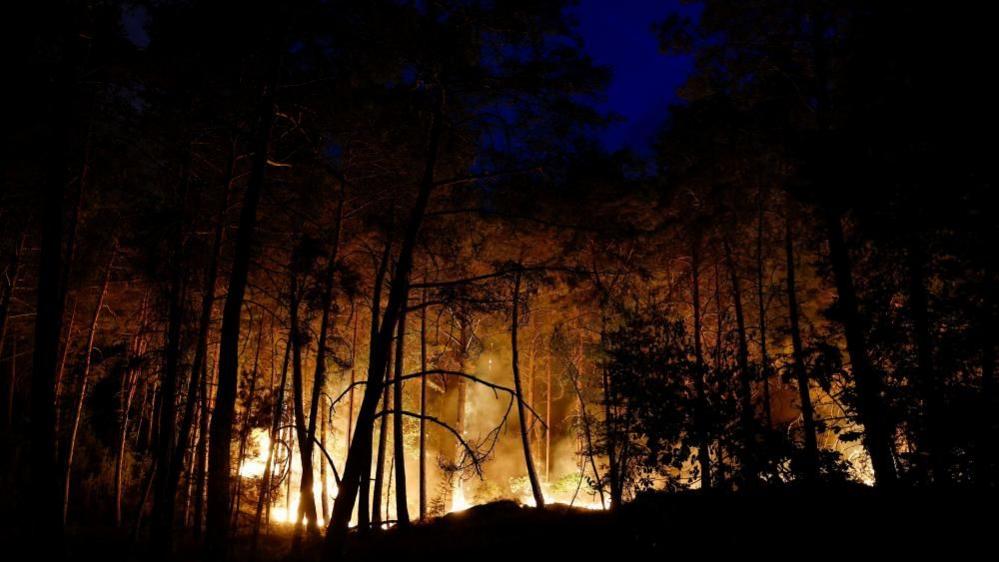
Government officials described the blaze as "virulent" and of "exceptional scale" after it spread across 800 hectares in the Fontainebleau forest. It sits roughly 40 kilometres southeast of Paris and has already shut down the main north‑south route that links the capital with the north of the country.
For the first time, the French fire‑fighting force sent two planes from the traditionally drier, hotter south of the country to aid operations in the Paris region. Additional support—two helicopters and an observation aircraft—has also been deployed, officials said.
Transport Disruption
Early on Monday, the fire forced a partial closure of the A10 autoroute, prompting the Paris‑based SNCF to warn of up to six‑hour delays for trains to or from Gare de Lyon. Similar disruptions were seen on the high‑speed line running south of the capital when a separate blaze blocked an east‑bound route.
Broader Climate Context
This fire is part of a summer in which record‑breaking temperatures have broken across Europe, triggering multiple heatwaves and intensifying wildfire risk. Recent major incidents in Spain, where a wildfire in Almeria killed at least 13 people, and in North Wales, where a large blaze was declared a major incident by emergency services, underscore the growing frequency of dangerous fires.
In response to the heat, France temporarily shut down three nuclear power stations to avoid discharging warm cooling water into already overheated rivers—a precaution underscoring the strain on the country’s infrastructure.
More broadly, the wildfire demonstrates how rapidly the patterns of fire risk are changing, as traditionally dry regions now experience intense heat and long fire seasons, a trend linked to rising global temperatures and altered precipitation patterns.
The aim of the airborne operation, according to Eric Brocardi of France’s national federation of firefighters, is to save lives and protect property as the fire continues to spread.
Looking Ahead
As Europe prepares for the rest of summer, officials are bracing for possible further heatwaves and the threat of large‑scale wildfires that could impose additional transport and energy challenges. Continued monitoring and rapid emergency response remain key to mitigating impacts.