
In brief
The ICC has officially begun its first-ever hearing of a war crimes case in the absence of the accused, Joseph Kony, the notorious leader of the Lord's Resistance Army. Kony, elusive for over two decades despite a standing arrest warrant for various atrocities, faces serious charges including murder, child abduction, and sexual violence. The ICC's decision to proceed without Kony sets a potential precedent for future cases involving fugitives. Survivors in Uganda are closely watching the proceedings, emphasizing the symbolic recognition of their suffering.
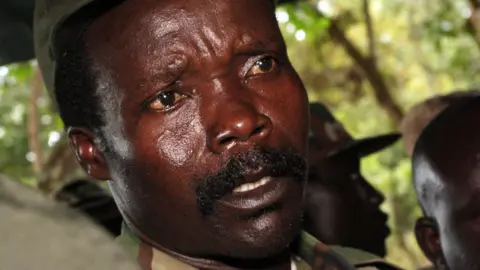
The International Criminal Court (ICC) has opened its war crimes case against fugitive Ugandan rebel leader Joseph Kony in its first-ever confirmation of charges hearing without the accused present.
The proceedings mark a historic moment for the court and could serve as a test case for future prosecutions of high-profile suspects who currently appear to be beyond its reach.
Despite an arrest warrant issued 20 years ago, Kony, the founder and leader of the Lord's Resistance Army (LRA), has managed to evade arrest.
Kony faces 39 counts of war crimes and crimes against humanity, including murder, sexual enslavement, abduction and forcing thousands of children to fight as soldiers in the LRA.
Kony said he wanted to install a government based on the biblical 10 commandments, and he was fighting for the rights of the Acholi people in northern Uganda.
But his rebel group was notorious for hacking off their victims' limbs or parts of their faces.
Kony's notoriety increased in 2012 because of a social media campaign to highlight the LRA's alleged atrocities.
Despite those efforts, and years of manhunts, he remains a fugitive.
There was silence in the courtroom as the catalogue of charges against him were read out.
They also cover gender-based crimes linked to the treatment of thousands of women and girls, including their enslavement, rape, forced marriage and pregnancy.
The atrocities were allegedly committed in northern Uganda between 2003 and 2004.
Unfortunately the tentacles of international justice, even though they are lengthy, have not been sufficient to ensure the efficient arrest of fugitives, said the ICC's deputy prosecutor, Mame Mandiaye Niang, at the opening of the case.
She added, Many victims who had the strength to survive the horrors of civil war have not survived this lengthy wait, others have lost patience, but there are some who have waited for this moment.
According to the prosecution, children were regularly kidnapped on their way to school, from the fields, deprived of their fundamental rights, and forced to kill for Kony's rebel group.
For the first time, the ICC is exercising its power under the Rome Statute, its founding treaty, to move forward without a suspect in custody.
Judges will hear the arguments of the prosecution, defence and representatives of victims. Kony will be represented in absentia by a court-appointed lawyer, before judges decide whether to confirm the charges.
A trial itself, however, cannot begin unless Kony is arrested, and present in court in The Hague.
Legal experts say the hearing could set a precedent for how the ICC handles other fugitives unlikely to be detained.
For survivors of the LRA's violence, the hearing is being watched closely, albeit remotely, on a big screen set up by ICC teams in northern Uganda.
Rights advocates say it validates the suffering of thousands of people who endured the rebel group's reign of terror.
One survivor remarked, This is about recognition. Even if Kony is not in custody, the world is hearing what happened to our communities.
In the case of the LRA, the deputy prosecutor pointed out the scars cut through communities in which the victim became the perpetrator, but Kony, he said, remained the main perpetrator until the end.
The LRA was forced out of Uganda by the army in 2005, and the rebels went into what was then Sudan (now South Sudan) and eventually set up camp in the border area with the Democratic Republic of Congo.
They later moved to the Central African Republic, where it is understood they engaged in poaching and illegal mining.
Attempts by the Ugandan government to strike a peace deal with Kony fell apart in 2008 because he wanted assurances that he and his allies would not be prosecuted.
The ICC's decision to press forward without him present underscores its determination to pursue accountability, even when arrests are difficult to achieve.
This move also highlights that with few other trials in progress, this presents an opportunity to demonstrate that the embattled court is still able to function.
The ICC's top prosecutor is currently on leave while sexual misconduct allegations are investigated, and a series of crippling sanctions have been imposed by the US in response to the ICC issuing arrest warrants for Israeli Prime Minister Benjamin Netanyahu and his former defence minister.

