
In brief
In the wake of violent protests demanding statehood in Ladakh, Indian authorities imposed a curfew in Leh after clashes resulted in multiple deaths. Activist Sonam Wangchuk, who has been leading the movement, denied claims of inciting violence as tensions arose due to longstanding grievances over autonomy and local governance since Ladakh's status change in 2019. The situation remains tense as further discussions between protesters and government officials are anticipated.
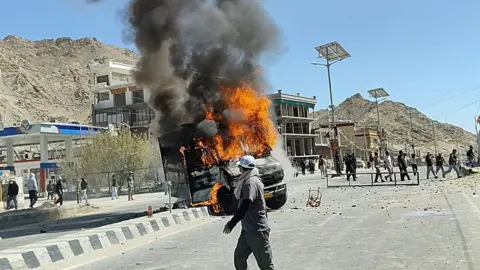
Indian security forces have imposed a curfew in Leh, the capital of the Himalayan region of Ladakh, following violent clashes between police and protesters demanding statehood for the federal territory. The unrest, which resulted in at least four fatalities and numerous injuries, saw local offices of the ruling Bharatiya Janata Party (BJP) set ablaze.
The government attributed the violence to activist Sonam Wangchuk, who has been a prominent figure in the protests. Despite the allegations, Wangchuk denied inciting any riots and called for calm, asserting that the frustration from local youths, many of whom are unemployed, has driven the protests.
Ladakh has been without its semi-autonomy since 2019, when the BJP government restructured its political status, leading to demands for a return to local governance and job quotas for its residents. The region's unique demographics—comprising a diverse Muslim-Buddhist populace—have fueled intricate local tensions, particularly between the predominantly Buddhist Leh region and the Muslim-majority Kargil district.
Details surrounding the igniting incident of the recent violence remain vague as protests have been sporadic for months. Following the unrest, India's home ministry issued accusations against Wangchuk for making provocative statements that allegedly incited the crowd.
In a statement, the government noted that violent demonstrations were loosely compared to protests seen in other global contexts and hinted at external influences behind the tumult. Moving forward, the Lieutenant Governor of Ladakh announced that an investigation would be launched into the events, coinciding with scheduled meetings between government representatives and protest leaders.
As tension continues, the narrative remains fraught with complexities surrounding identity, political representations, and governance in a region caught between historical grievances and contemporary aspirations.
