In brief
In the midst of significant diplomatic meetings, South Korea finds itself navigating protests against US President Donald Trump and Chinese President Xi Jinping. Citizens express opposing views on each country, revealing the complexities of South Korea's position as an ally to the US while maintaining significant economic ties with China.
Protests in Seoul demonstrate the public's divided feelings toward the US and China, coinciding with a diplomatic visit involving both superpowers. As South Korea's President Lee Jae-Myung hosts meetings, citizens voice concerns over US demands amid growing anti-China sentiment.
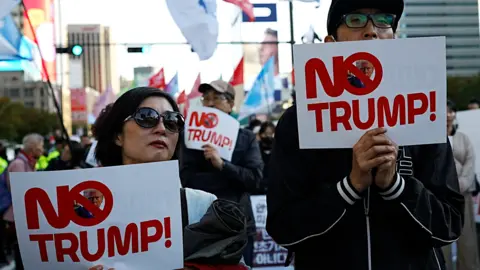
No Trump! rallying cries echoed as demonstrators gathered near the US embassy, signaling their frustrations. Meanwhile, other protesters declared No China outside Gyeongbokgung Palace, illustrating the complex atmosphere surrounding South Korea's relationships with both global powers.
Historically a US ally since the Korean War, South Korea now depends on China as a crucial trading partner. As Lee Jae-Myung tries to navigate this political landscape, he faces pressure from both sides—balancing trade negotiations with the US while also addressing rising anti-China sentiments fueled by recent historical grievances and national security concerns.
The diplomatic events this week represent a pivotal moment for Lee's administration following a difficult transition from his predecessor. With public opinion fluctuating, Lee's ability to maintain South Korea's strategic interests while addressing citizen discontent remains uncertain.
As President Trump and President Xi meet in South Korea, observers highlight Lee's challenging position in fostering stability amidst rising tensions and protests, showcasing the ongoing challenges faced by countries caught in the crossfire of superpower rivalry.