In brief
The last round of Senate debates for the 2026 midterms shows a clear split in how Republican candidates view former President Donald Trump. While senators like Susan Collins openly distance themselves from former President Trump, many others remain close to his policies, drawing both praise and backlash. Personal attacks have dominated many debates, with accusations ranging from anti‑Muslim rhetoric to direct name‑calling. A notable development is that 21 of the 35 Senate contests lack scheduled debates, with candidates like Texas’s Ken Paxton opting for silence rather than confrontation. This trend raises questions about voter engagement and the transparency of the electoral process.
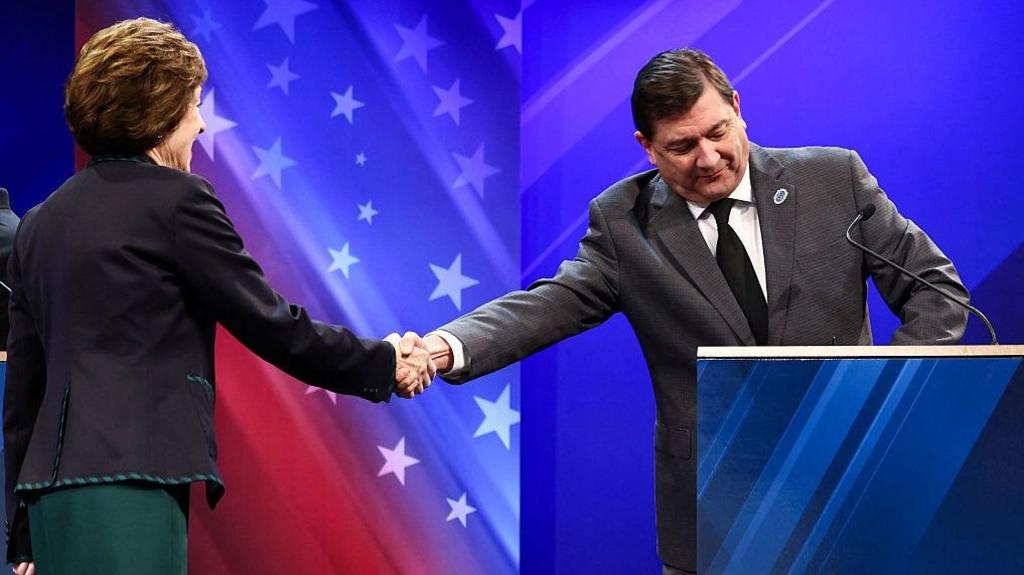
What we learned from heated US midterm Senate debates
The Senate elections approaching in November have seen a range of heated exchanges. Some common themes emerged across the debates, hinting at broader shifts in American politics.
1. Republicans divided over Trump
Many Republican candidates are now being asked how they line up with former President Trump. While a number of senators remain close to his stances, several have pulled away, citing concerns over his approval ratings and policy choices. Senator Susan Collins of Maine watched her record diverge from Trump, noting she voted with President Biden 91% of the time and against Trump 137 times this Congress. Meanwhile, Iowa’s Ashley Hinson has chosen to separate from Trump on specific policy points, avoiding a direct break while still distancing herself on key issues such as the Russian gas deal.
Other candidates, such as Texas’s Ken Paxton, have stayed in sync with Trump’s strategy but have selected to opt out of debate settings.
2. Personal attacks proliferate
The forums also displayed an increase in personal remarks. In Michigan, Democrats Abdul El‑Sayed and Republican Mike Rogers collided over alleged Muslim ties and security concerns. Across different races, politicians insulted each other – from calling a candidate a “sock puppet’’ to labeling another a “bigot’’ or tying them to Nazi ideology. In Washington, Senator Jon Ossoff and Representative Mike Collins clashed over alleged financial ties to data‑center developers, leading to hyper‑personal slurs that amplified the tension.
3. Candidate silence and missed debates
At least 21 of the 35 Senate races this year have no debate scheduled for the main candidates. In Texas, voters have yet to hear Showdowns between Democrat James Talarico and Republican Ken Paxton. While Talarico has accepted four debate invitations from various outlets, Paxton has declined them, even after Red‑state supporters urged a face‑to‑face confrontation. A political scientist notes that not appearing in a debate gives an opponent an unchallenged ability to dominate the discourse.
These dramas reflect broader uncertainties on how the US Senate will shape its future, whether by embracing new leadership or deferring to established factions.