
In brief
With allegations of fraud dominating the political landscape, Biden's calls for transparency echo concerns from the EU, leading to a complex situation in Georgia's democracy.
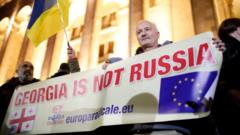
US President Joe Biden has expressed serious concerns regarding the contested elections held in Georgia, calling for the government to address significant allegations of misconduct and to overturn recent legislation perceived as influenced by Russian precedents. Following the announcement of the Georgian Dream party's victory, which officials claim garnered 54% of the vote, Biden remarked on the "deeply alarming" trend of democratic regression in the nation, aligning with the European Union's stance on the matter. The EU has since frozen Georgia's membership application, describing recent developments as "deeply worrying."In a display of support for the opposition, Georgia’s President Salome Zourabichvili rejected the election results, suggesting that a "Russian special operation" may have impacted the vote. She has aligned her protests with four major opposition groups alleging that the ruling party has distorted democracy and is pulling the nation into a closer relationship with Russia, a sentiment echoed by various international stakeholders. The US and the EU have both urged investigations into extensive reports of intimidation, violence, and discrepancies in the voting process.The response from Georgia's Prime Minister, Irakli Kobakhidze, has been to downplay the election irregularities, stating that only minor issues occurred at a few polling stations, while asserting that the elections were largely peaceful. His alliance with Hungarian PM Viktor Orban, who recently praised the elections as "free and democratic," has drawn criticism from multiple EU nations, further deepening divides within the bloc. Orban’s remarks implied a biased view of European electoral standards, suggesting misconceptions around what constitutes legitimate democratic processes.Recent legislation passed by the Georgian Dream government has raised further alarm, particularly a "foreign agents" law that targets media and NGOs funded by foreign entities, alongside laws restricting LGBTQ+ rights. These actions have reinvigorated discussions of the country’s political direction, which many fear aligns closer to Russian governance models.As public demonstrations escalate in response to the disputed election, detailed reports from the monitoring group "My Vote" have surfaced, documenting extensive anomalies, including vote-buying and ballot-stuffing. Observers noted that numerous tactics were employed to undermine the electoral process, such as carousel voting, where individuals could vote multiple times using the same identification. The Georgian electoral commission has countered these allegations by emphasizing the integrity of their voting system and denying claims of widespread irregularities.Despite ongoing protests and increasing scrutiny from both local and foreign sources, Georgian Dream officials maintain their stance on the elections' legitimacy. The electoral commission plans to recount votes from select polling stations in an effort to alleviate concerns, although skepticism remains among critics about the state’s capacity for fair and independent investigations. Activists and organizations pushing for transparent governance continue to voice worries about the influence of ruling parties over electoral processes and oversight bodies.As the situation unfolds, the international community is closely watching Georgia's next steps regarding its democratic practices and political allegiances.


