
In brief
Bahison Ravindran, a web developer born in Tamil Nadu to Sri Lankan refugee parents, recently learned that he is not considered an Indian citizen due to a law requiring at least one parent to be Indian for citizenship by birth. His arrest for holding an invalid passport has drawn attention to the plight of over 22,000 children born in India to Sri Lankan Tamils who remain stateless. The case raises important questions about citizenship policies in India and the status of long-time refugees.
Bahison Ravindran always believed he was Indian.
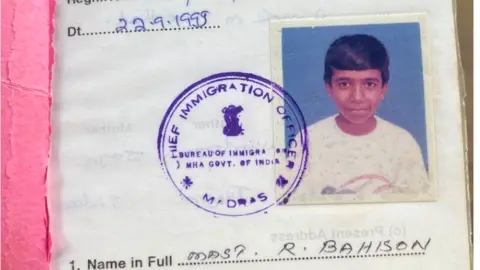
Born to Sri Lankan refugee parents in the southern Indian state of Tamil Nadu, the 34-year-old web developer had studied and worked there, holding various government-issued identity documents, including an Indian passport.
However, a rude shock awaited him in April when police arrested him, claiming his passport was invalid. Authorities insisted he was not an Indian citizen by birth since both his parents were Sri Lankans who fled to India amid the 1990 civil war.
Historically, anyone born in India qualified for Indian citizenship, but the 1987 amendment stipulated that at least one parent must be an Indian citizen for children born after July 1, 1987.
Ravindran, born in 1991, informed the Madras High Court that he was unaware of this requirement and had never concealed his ancestry. Upon learning of his status, he immediately applied for citizenship through naturalization.
Currently, he finds himself labeled stateless. His predicament reflects the struggles of over 22,000 children born in India to Sri Lankan Tamil parents after 1987, whose citizenship remains in limbo.
In Tamil Nadu, more than 90,000 Sri Lankan Tamils, both in and out of refugee camps, have historically sought refuge due to cultural ties and the proximity to their homeland.
India is not a signatory to the 1951 UN Refugee Convention, treating Sri Lankan refugees as illegal migrants. The 2019 Citizenship Amendment Act excluded Tamils from Sri Lanka, leaving many citizenship issues unresolved.
Ravindran's situation became dire after he applied for a new passport to add his wife's name this year, revealing his parents' origins to the authorities and leading to his arrest on charges including illegal possession of an Indian passport.
After spending 15 days in custody, he was released on bail, with the High Court ordering that no coercive measures be taken until a hearing scheduled for October. In all these years, no one told me I was not Indian, he explained, revealing his shock at being classified as stateless.\
His case may set a precedent as he looks to reaffirm his identity and hopes for a ruling that recognizes his allegiance to India.

