
In brief
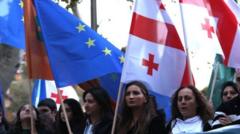
As Georgia heads into a significant election that could redefine its political landscape, the stakes have never been higher. With a history deeply intertwined with Russia's military actions, including the 2008 war, this vote is being framed as a critical choice between aligning with Europe or succumbing to Russia’s influence. Opposition groups vehemently argue that the forthcoming election represents a breaking point from the 12-year rule of the governing Georgian Dream party, which they claim has drifted back towards Moscow.
Mindia Goderdzishvili, a campaign manager for the opposition Coalition for Change in Gori, spoke emotionally about the lasting impact of Russia's aggression: “In these streets we had Russians,” he said, emphasizing the emotional weight of the war in his community. The Georgian Dream party, however, led by billionaire founder Bidzina Ivanishvili, counters that they are the party of peace and that the opposition is inciting fears of war. This narrative is supported by the tragic memory of the 17 Georgian soldiers who lost their lives in the battle for Shindisi, which is located close to the contested region of South Ossetia.Maka Bochorishvili, head of the EU integration committee for Georgian Dream, reflected on the precariousness of Georgia’s status, stating, “We are not members of NATO, we don’t have that umbrella over our head.” Despite promises to join the European Union by 2030, skepticism grows as recent laws perceived to target foreign influence and LGBT rights have soured relations with Europe, prompting EU ambassador Pawel Herczynski to express concern over Georgia's retreat from European integration.President Salome Zourabichvili has taken a clear stance by urging voters to support the opposition, which has proposed a technocratic government to bridge the current political divide. Attention also remains on Ivanishvili, who seeks to suppress dissent by banning the main opposition party, the United National Movement, and has blamed the previous government for the war rather than acknowledging Russia's role in the conflict.For many Georgians like 30-year-old voter Aleksandre from Shindisi, the returning focus to past conflicts is frustrating. He and many of his peers have left their hometown in search of better opportunities and favor initiatives to boost local infrastructure over contentious political narratives. Despite the complexities, there seems to be a shared belief among Georgians that their aspirations lie with the European Union, expressing a desire for a future disconnected from the oppressive memories of the Soviet era, even as the Kremlin openly supports the current government.As citizens prepare to vote, the outcome remains uncertain. Georgia’s political milieu is a microcosm of the broader struggle between Western aspirations and regional influences, raising fundamental questions about national identity and future governance. The prevailing sentiment, however, suggests a yearning for European integration and a rejection of past allegiances, underscoring the critical nature of this electoral moment.

