In brief
Liudmila Zavada, a Russian woman found dead in Spain in 2005, has been identified thanks to Interpol's Operation Identify Me. Her case highlights the challenges of solving cold cases involving unidentified victims, particularly in the context of increased global migration and related issues. This identification brings hope to families of missing individuals and underscores ongoing investigations into gender-based violence.
A woman whose body was discovered in Spain more than 20 years ago has been identified through an international police campaign. The woman was named on Thursday as 31-year-old Russian citizen Liudmila Zavada.
She is the third person to be identified through the Operation Identify Me initiative, which was launched by police in 2023 in an effort to find the names of women who had been murdered or died in suspicious or unexplained circumstances in Europe.
Valdecy Urquiza, secretary general of international policing agency Interpol which leads the campaign, said the latest identification would give fresh hope to the families and friends of missing persons and new leads to investigators. After 20 years, an unknown woman has been given back her name, he said.
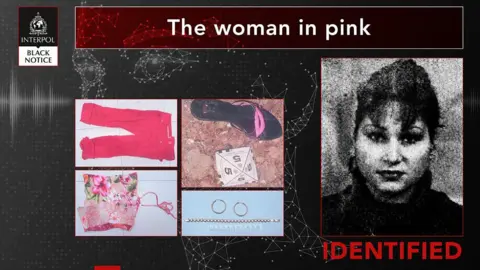
Ms. Zavada's body was discovered in July 2005 beside a road in the province of Barcelona in northeastern Spain. She was referred to by police as the woman in pink, because she was dressed in a pink floral top, pink trousers and pink shoes. Local police said the cause of death was suspicious, as evidence suggested that the body had been moved in the 12 hours before it was found.
Authorities reported that previous investigations failed to uncover her identity. Last year, the case was included in Operation Identify Me, leading to more extensive inquiry and sharing of records globally.
Earlier this year, Turkish police uncovered Ms. Zavada's identity by running her fingerprints through a national database, with a DNA match established with a close relative in Russia.
Police investigations into Ms. Zavada's death and the circumstances surrounding it are ongoing. The challenges of identifying victims in such cases are compounded by factors such as increased global migration and human trafficking, with women frequently being disproportionately affected by gender-based violence.