
In brief
In recent developments, Israeli forces have launched air strikes in southern Lebanon aimed at Hezbollah's infrastructure, coinciding with evacuation warnings issued to local residents. The Lebanese government has called for international intervention to halt what it describes as aggressive actions from Israel, which continues to be in violation of ceasefire agreements post-war with Hezbollah. With increasing tensions, both nations are at a critical juncture that could further destabilize the region.
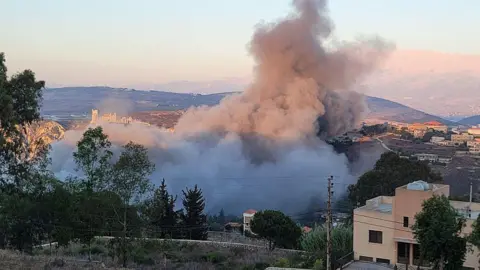
Israel has carried out a large wave of air strikes in southern Lebanon, stating its intent to target positions associated with the Iranian-backed group Hezbollah. The strikes were initiated following evacuation warnings in various locations, with no immediate reports of casualties arising from these military actions.
Despite a ceasefire agreement that ended hostilities with Hezbollah last November, Israel has consistently conducted air strikes against alleged Hezbollah facilities and personnel almost daily.
Lebanese Prime Minister Nawaf Salam has urged the international community to compel Israel to cease what he described as intimidation and assaults, demanding adherence to ceasefire obligations.
Recent footage shared online has shown significant smoke plumes rising from one of the locations struck, Mais al-Jabal. An Israeli military spokesperson indicated the targets were related to Hezbollah's infrastructure and claimed the group's attempts to re-establish their presence in the area necessitated this response. However, no substantiating evidence was offered to support these claims.
The Israel Defense Forces (IDF) Arabic spokesman Avichay Adraee asserted that the operations specifically targeted Hezbollah’s arms depots and violated previously established understandings between Israel and Lebanon. He had previously warned residents in various southern Lebanese villages to evacuate buildings ahead of the strikes.
Following these developments, Prime Minister Salam questioned Israel’s own commitment to the ceasefire mechanisms, calling upon the international community, especially the sponsors of the ceasefire, to exert pressure on Israel to halt its military actions, withdraw from Lebanese territory, and release prisoners.
The ceasefire established by the U.S. and France was framed as a mutual agreement, indicating that Lebanon must prevent Hezbollah and other armed groups from conducting operations against Israel, while simultaneously requiring Israel to abstain from offensive military operations against targets within Lebanon.
Furthermore, the Lebanese government has tasked its military with monopolizing arms within the state. However, Hezbollah has publicly stated its intention to ignore this directive, illustrating the complexities in maintaining peace and security in this volatile region.
