
In brief
Indonesian President Prabowo Subianto has decided to curtail state-funded perks for politicians in light of ongoing protests across the nation. The unrest, fueled by a controversial hike in lawmakers' allowances and the recent death of a ride-sharing driver in a police incident, has led to accusations of excessive force by authorities. While some lawmakers express surprise at the protests, dissent continues, with calls for deeper economic reforms and accountability from the government, marking a critical test for Prabowo's leadership.
Indonesian political parties have agreed to reverse some state-funded perks their politicians receive in a bid to quell nationwide protests, the country's president has said.
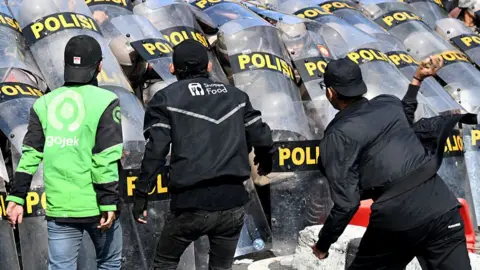
Several cities in the southeast Asian nation, including the capital, Jakarta, have been gripped by anti-government demonstrations in the past week that have sometimes led to clashes between protesters and police.
While the protests have been fueled by a wide range of issues, including the death of a ride-sharing driver, one core complaint concerns a new monthly allowance for lawmakers.
President Prabowo Subianto announced on Sunday that several perks would be reined in, including the size of some allowances.
The Indonesian leader—who recently had to cancel a trip to China due to the unrest—stated some demonstrations had gone beyond what was considered peaceful and may have amounted to treason and terrorism. He ordered police and armed forces to take strong actions against looting and property damage.
The home of Indonesia's finance minister, Sri Mulyani Indrawati, was among several targeted by looters on Sunday.
The protests primarily centered on an increase of 50 million rupiah (approximately $3,030; £2,250) in parliamentarians' allowances—almost ten times the minimum wage in Jakarta.
The unrest escalated after Affan Kurniawan, a 21-year-old ride-sharing driver, was run over by a police vehicle during a protest in the capital, leading to claims of excessive force by law enforcement.
Three individuals were killed after protesters set fire to a regional parliament building on Friday evening, and over the weekend, protests continued with police in central Jakarta firing tear gas to disperse crowds.
Rehayu Saraswati, a member of the ruling party, said the protests were unexpected and indicated that the government had indeed listened to the public by cutting the parliamentary budget and allowances. However, she acknowledged the situation was difficult due to economic challenges faced by citizens.
Despite the government's concessions, dissent persists, with leaders of student organizations asserting that it is insufficient and indicating further protests aimed at achieving comprehensive reforms.
Prabowo's administration is now confronting one of its first significant challenges in leadership since he took office, amid lingering concerns about authoritarianism and human rights abuses.
