
In brief
As the Israeli military intensifies its operations in Jabalia, harrowing stories emerge from fleeing Palestinians regarding widespread casualties and abandonment. The UN agency calls for a temporary truce to facilitate humanitarian aid as local hospitals face dire shortages.
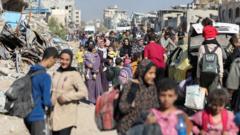
Palestinian civilians escaping the violence in Jabalia are sharing distressing narratives of tragedy as Israel's military operations continue. Reports indicate that tens of thousands have evacuated under dire circumstances, with a growing tally of casualties since the ground offensive began on October 6, aimed at eliminating Hamas militants.Eyewitness accounts from those who fled highlight scenes of distress and chaos. A man described encountering bodies lying in the streets after obeying evacuation orders from the Israeli military. Many families fled in panic; some parents inadvertently left their children behind in shelters. Engy Abdel Aal, who evacuated from Abu Rashid Pond, emphasized the bewildering nature of the situation, stating, “It’s tragic and catastrophic in every sense.”The United Nations Relief and Works Agency (UNRWA) has urgently called for a temporary ceasefire to allow safe passage for civilians wishing to escape the combat zone. Hospitals in the area report critical shortages of supplies and personnel contributing to an increasingly dire humanitarian crisis. Philippe Lazzarini, head of UNRWA, expressed the bleak conditions, highlighting the "smell of death" permeating the area where bodies remain undisposed amid ongoing shelling.The Israeli military maintains that it is facilitating civilian evacuations while targeting Hamas operatives in the region. Still, critiques arise regarding the safety and practicality of these evacuations. Eyewitness Saleh recounted receiving evacuation messages via Israeli drones that instructed civilians to move south or west, indicating limited escape routes.Simultaneously, U.S. Secretary of State Antony Blinken has arrived in Israel to advocate for renewed diplomatic efforts towards a ceasefire and to improve humanitarian aid access to Gaza. His discussions with Israeli Prime Minister Netanyahu aim to seize what he sees as a potential moment for progress in negotiations following the recent turmoil.As alarm over human rights violations grows, reports suggest that some humanitarian efforts to aid those trapped under debris are continually obstructed. The director of one of the last remaining hospitals near Jabalia described an environment marked by fear, with the institution facing ongoing threats from nearby military actions and rampant shortages of critical resources.The conflict escalated following a major attack by Hamas on Israel, which resulted in over 1,200 Israeli casualties. This has since triggered a harsh Israeli response, resulting in significant loss of life in Gaza—over 42,710 deaths have reportedly been recorded since the flare-up began, as asserted by a health ministry operating under Hamas administration.The ongoing crisis in Jabalia serves as a grim reminder of the urgent need for peaceful resolutions to mitigate further suffering and protect vulnerable populations amid relentless violence. As the international community observes, the circumstances demand immediate attention and intervention to prevent a humanitarian catastrophe.
