
In brief
Ryan Routh, facing federal charges for allegedly attempting to assassinate Donald Trump, is set to deliver his closing argument in a Florida court. Representing himself, Routh has pleaded not guilty and has been warned by the judge to stick to evidence presented at trial. The prosecution accuses him of plotting for weeks before aiming a rifle at Trump during a golf game in September 2024. Routh rested his case after minimal witness testimony, contrasting sharply with the prosecution's extensive presentation.
FORT PIERCE, Fla. (AP) — Ryan Routh, representing himself in a federal court, is preparing for his closing arguments on Tuesday in a trial concerning charges of attempting to assassinate former President Donald Trump at a Florida golf course last year. The judge, U.S. District Judge Aileen Cannon, has warned Routh that his closing presentation could be restricted if he does not adhere to the courtroom rules.
Prosecutors argue that Routh had spent weeks planning to kill Trump, culminating in an incident on September 15, 2024, where he allegedly aimed a rifle through shrubbery at Trump as he played golf in West Palm Beach.
Facing charges that include attempting to assassinate a major presidential candidate, Routh has pleaded not guilty and has also been charged with assaulting a federal officer and several firearm violations.
On the final day of trial proceedings before closing arguments, Judge Cannon reminded Routh that his statements must be grounded in the evidence and testimony shared during the trial, warning him that deviating from this could lead to the loss of his argument time.
After resting his case, Routh had only called three witnesses, in stark contrast to the prosecution's exhaustive approach, which included 38 witnesses across seven days.
Routh claimed his understanding of courtroom protocols; however, previous instructions about keeping to relevant topics led to interruptions during his opening statement where he veered off into unrelated discussions. Cannon highlighted this point, advising Routh against using closing arguments for personal testimony.
Routh's defense strategy has been notably minimal, opting not to testify himself, leaving the prosecution with a significantly stronger case presenting extensive evidence and witness testimonies.
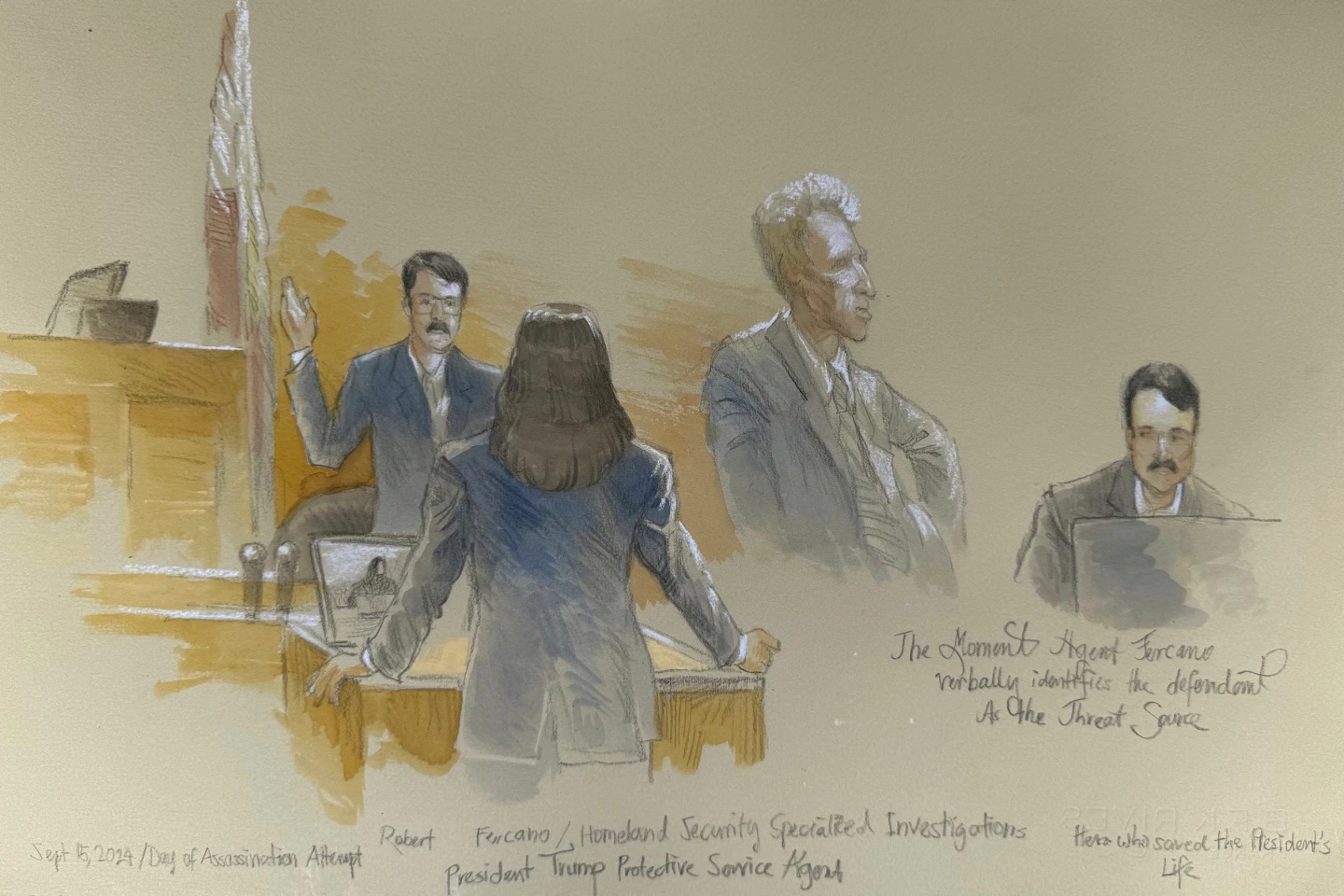
In the context of the alleged incident, a Secret Service agent provided testimony about seeing Routh's actions prior to Trump arriving and described how he had to discharge his weapon at Routh, who then fled the scene.
Routh's past also raises concerns; he has been linked to several incidents that reflect a violent disposition, including previous arrests for firearms offenses. Despite this, he has expressed intentions of self-representation, a right upheld by the Supreme Court for competent defendants.
The trial remains a focal point of public interest as the events surrounding Trump's presidency and potential risks to political figures continue to be prominent in discussions about national security.

