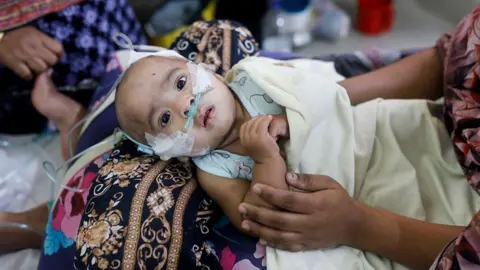
Bangladesh has launched an emergency vaccination campaign after a fast-spreading measles outbreak is suspected of killing more than 100 people, mostly children, in what may be the country’s most lethal wave of the disease in recent history.
The campaign, which began on Sunday, comes amid more than 7,500 suspected measles cases since 15 March, according to health ministry data. More than 900 of these cases have been confirmed - a sharp increase from 2025, when just 125 measles cases were recorded over the entire year, local media report.
While Bangladesh has long vaccinated children against the highly contagious disease, the recent outbreak has exposed gaps in its programme, raising concern. Vaccines are foundational to child survival, Rana Flowers, the Unicef representative in Bangladesh, said in a statement on Sunday, adding that the current measles outbreak was putting thousands of children, especially the youngest and most vulnerable, at serious risk.
In Bangladesh, a nation of 170 million people, routine measles vaccines are given to children as young as nine months old. However, Shahriar Sajjad, deputy director of the Health Department, informed BBC Bangla that approximately one-third of those infected in the recent outbreak were under nine months old, raising alarms over the efficacy of the vaccination program.
The emergency vaccination campaign, launched with the cooperation of international organizations like Unicef and WHO, aims to immunize more than 1.2 million children between six months and five years old, prioritizing those who missed routine vaccinations. The initiative will cover 30 upazilas, including densely populated areas such as Dhaka and Cox's Bazar, home to crowded Rohingya refugee camps.
The surge in measles cases has been attributed to several factors including vaccine shortages, disrupted vaccination campaigns since 2020, and gaps in public health initiatives. Global health organizations have cautioned that measles outbreaks can occur when vaccination rates decline, further underscoring the urgent need for coordinated health responses in Bangladesh.