In brief
At the age of 70, Biana Watre Momin transformed her life from a quiet educator in Meghalaya to a prominent actress in the Malayalam film industry with her role in 'Eko'. Despite her initial hesitations, her performance has garnered critical acclaim and sparks discussions about representation in cinema. Momin's journey illustrates the power of believing in oneself and embracing new challenges, reflecting her matrilineal heritage and personal strength.
At 70, Biana Watre Momin took a leap far from home. The retired college teacher left the Garo Hills in north-eastern India's Meghalaya state, where she led a quiet family life - caring for four dogs and doting on her grandchildren - and travelled more than 3,000km (1,864 miles) south to Kerala to act in a film.
She was dealing with a language she did not understand, embracing a role whose meaning would only reveal itself once the camera began to roll. The film was Eko, a Malayalam-language film that would change the course of her life.
For Momin, a member of the Garo tribe - one of the indigenous communities of Meghalaya, a largely tribal state - acting had never been an ambition, or even a distant curiosity. Growing up, my town did not have a cinema or theatre, she told the BBC. She was never trained in the performing arts, unless you'd call teaching in a classroom a kind of performance, she adds with a laugh.
A retired English literature teacher from Tura Government College, with a fondness for Romantic poetry, Momin had little reason to believe that a camera would one day frame her face. Yet when Eko entered her life, it offered an unexpected adventure.
She was initially hesitant as she had no experience in acting and was concerned about the long travel from home. But her daughter nudged her, saying, 'Have faith in yourself and try something new.'
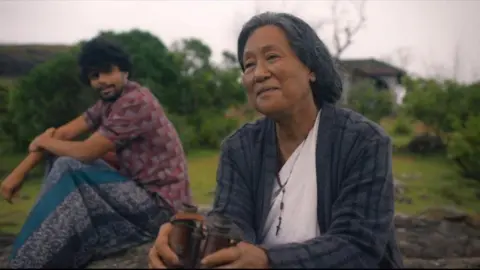
In Eko, a title that plays on the word echo, Momin plays Mlathi Chettathi, an enigmatic elder living alone in the Western Ghats, a vast mountain range along India's western coast known for its dense forests and mist-covered hills. Shot on a modest budget and completed in 45 days, Eko, showing on Netflix, has emerged as a critical success.
Much of the intrigue surrounding the film centres on Momin's performance, both for its quiet power and for her unusual profile. The search for the right actor led the Eko team to reach out to friends in the fledgling film industry and even the Indian army stationed across the eight north-eastern states, looking for someone whose features might plausibly pass as Malay.
Despite her age and inexperience, she impressed the director and writer with her audition, displaying spontaneity and emotive restraint. This is a self-reliant character who outwits those trying to exploit her with silent grit and steely determination, remarked the writer, highlighting Momin's fitting into the role's feminist folklore.
Following Eko's success, filmmakers from Bollywood and beyond have approached Momin with scripts. Talks are on, she says carefully. Acting is strenuous work. Let's see what surprises are in store. For now, she enjoys her return to family life and her book club, reflecting on her unexpected journey into cinema and expressing hope for greater representation of indigenous actors in the film industry.
I am proud, as an indigenous person, that there are creative people willing to take a chance on me at this age, Momin stated poignantly. Old age should burn and rage at close of day, she quotes Dylan Thomas, embodying the spirit of her newfound film career.