The White House has announced the first members of its Gaza 'Board of Peace', with a lineup that raises eyebrows regarding its effectiveness and representation. Critics argue that this initiative reflects a colonial-style imposition over Palestinian interests.
Currently, the two unveiled boards lack Palestinian representation, which raises doubts about the approach's viability. The ‘founding Executive Board’ focuses on investment and diplomacy, whereas a separate 'Gaza Executive Board' oversees ground operations. The latter consists of apolitical Palestinians led by Dr. Ali Shaath.
However, 6 of the 7 members on the founding Executive Board are American, with notable names like Secretary of State Marco Rubio and Jared Kushner, underscoring the U.S. influence over the plan. Ajay Banga, an Indian-born U.S. citizen and President of the World Bank, stands out among the predominantly American members. The inclusion of Tony Blair, former UK Prime Minister, garners significant criticism due to perceptions of his controversial past in Iraq and the UK's history in the Middle East.
The announcement has met opposition from Palestinian leaders and analysts. Critics claim Blair’s role undermines trust in the peace process. Trump's former remarks acknowledging concerns about Blair’s suitability suggest awareness of the skepticism surrounding his involvement.
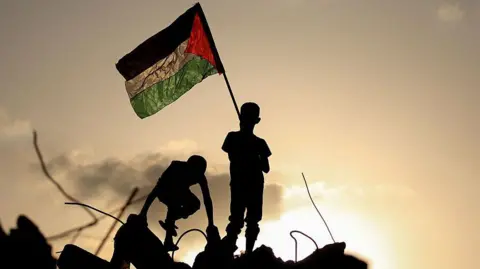
While some members of the 'Gaza Executive Board' hail from Turkey, Qatar, and the UAE, the U.S. remains a dominant force in the efforts. The overarching aim is to promote stability and rebuild Gaza, yet numerous challenges loom large. The United Nations reports 80% of Gaza’s structures severely damaged, necessitating urgent humanitarian response amid allegations of Israeli obstruction and inadequate aid delivery.
Major progress faces obstacles, including debris removal involving the hazardous task of recovering bodies and unexploded ordnance. The task of ensuring a lasting ceasefire remains a primary concern, along with the demilitarisation of Hamas, as the group prefers disarmament to be part of a broader settlement, complicating negotiations.
As the situation evolves, the effectiveness of the 'Board of Peace' will be closely watched, requiring immediate and tangible improvements in humanitarian conditions to demonstrate accountability and commitment to lasting peace in the region.