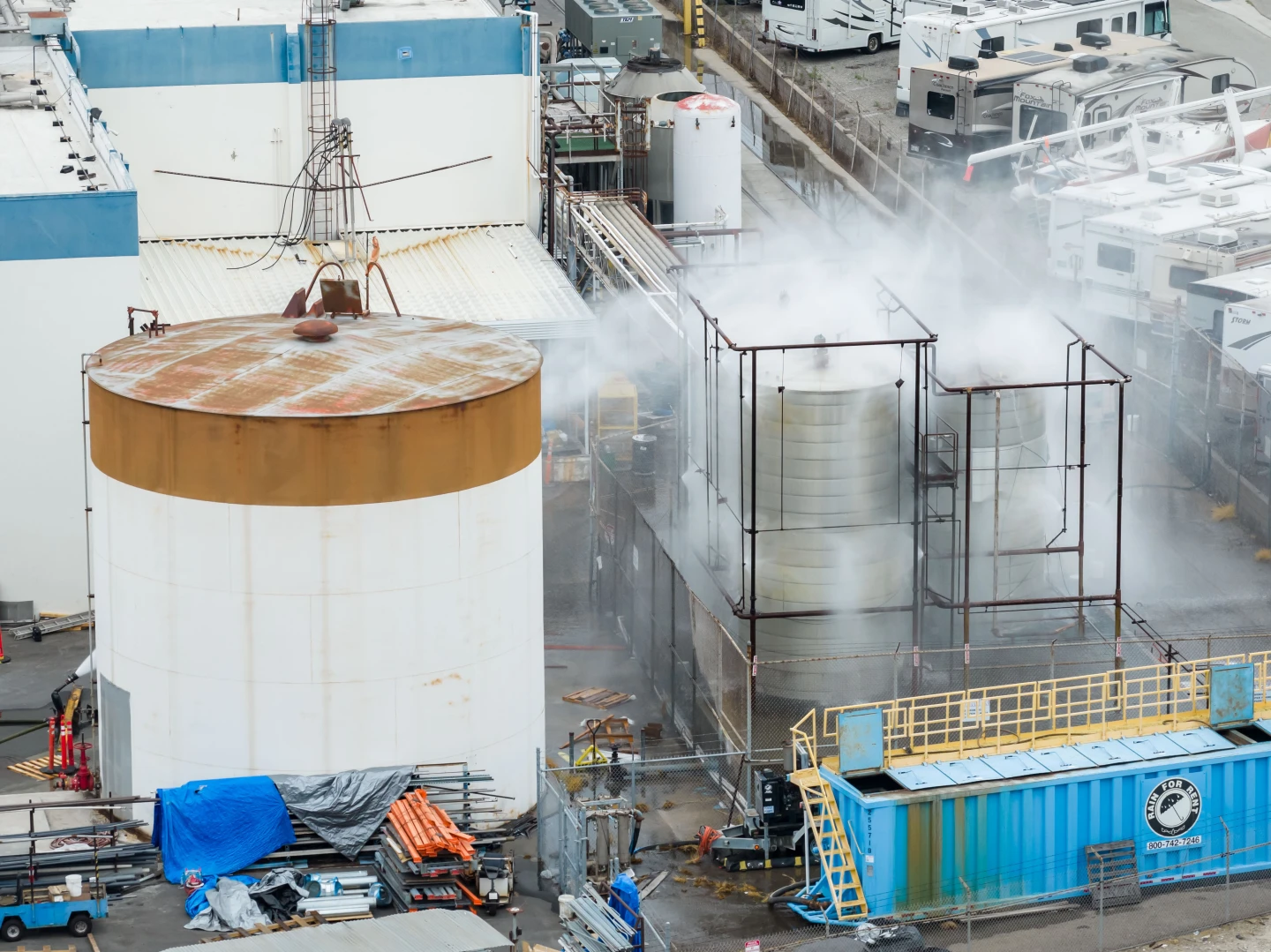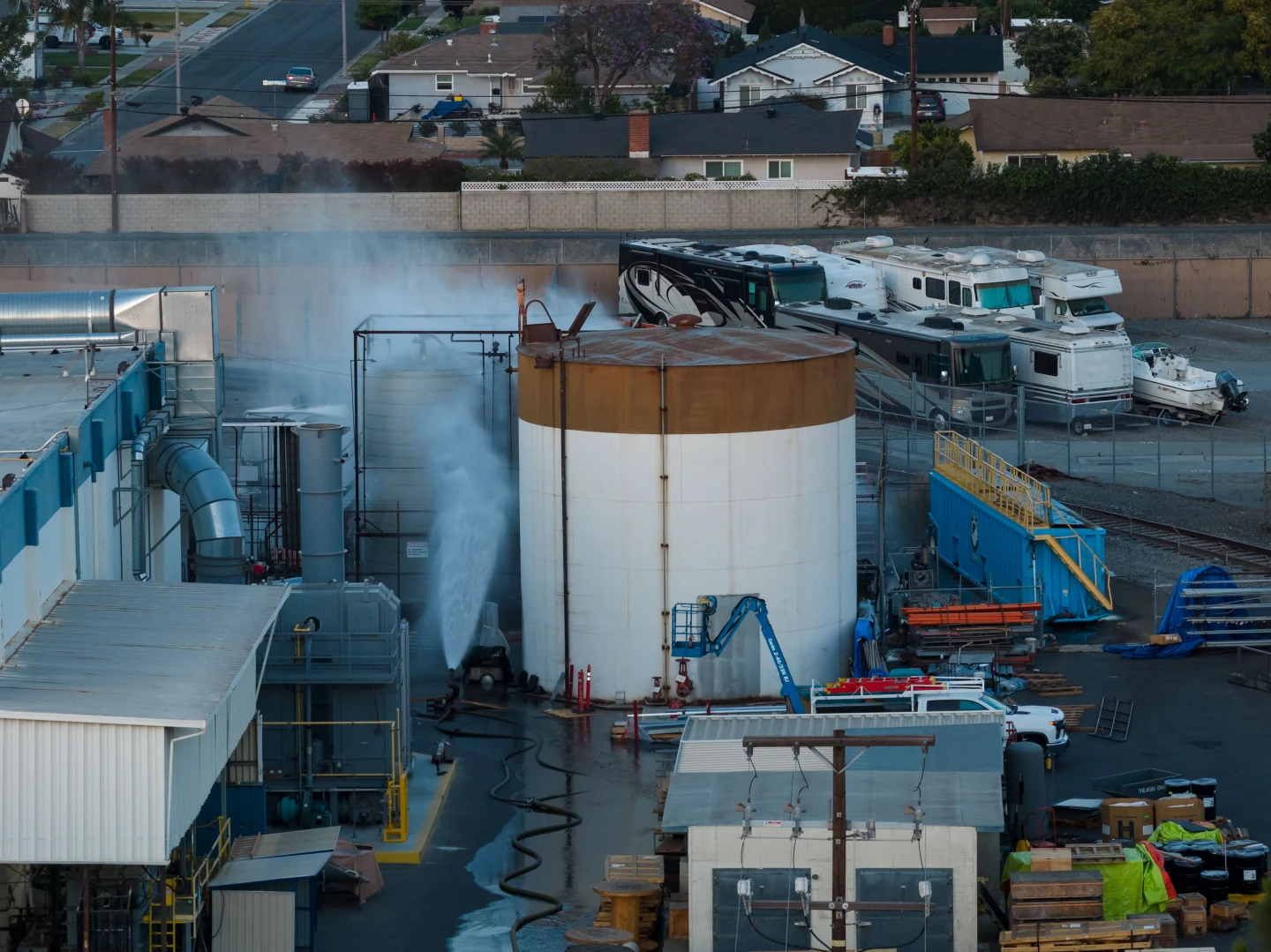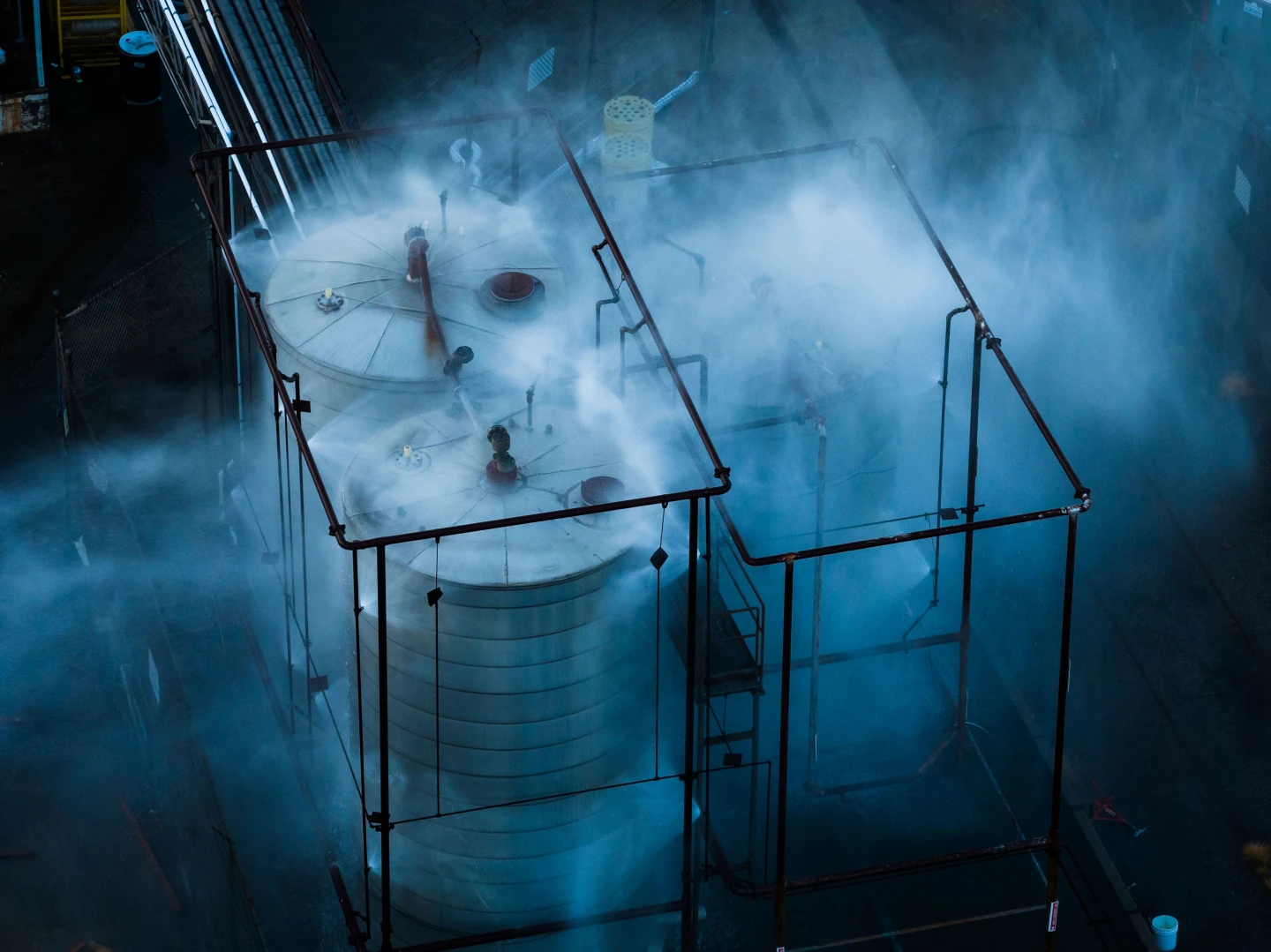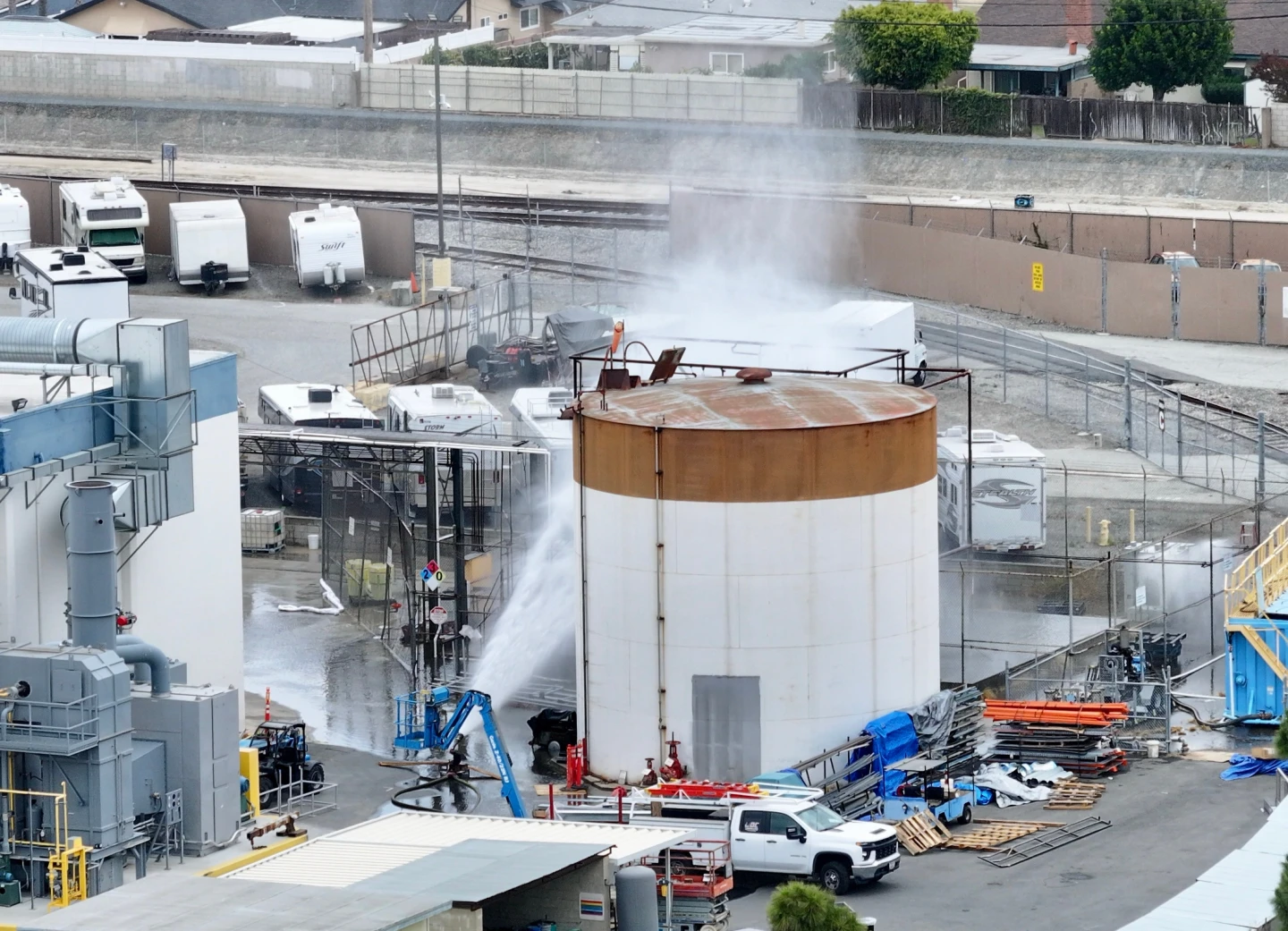
Orange County authorities are racing against time to prevent a catastrophic failure at a chemical storage facility in Garden Grove, where a 6,000-7,000 gallon tank of methyl methacrylate—a hazardous compound used in aerospace plastics manufacturing—overheated Thursday. The incident has triggered the largest evacuation in Southern California's recent history, displacing approximately 40,000 residents as officials scramble to prevent an explosion or toxic vapor release.
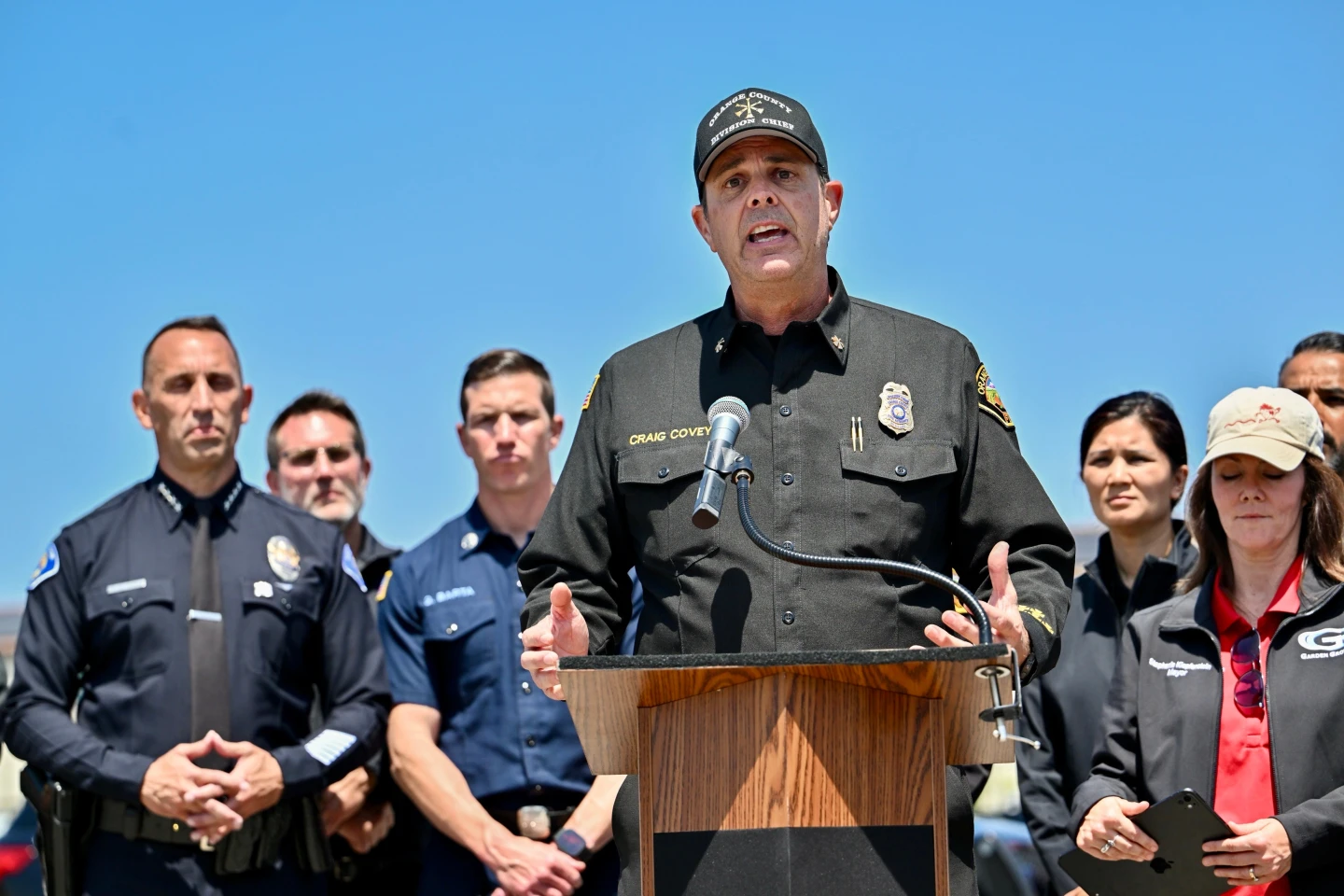
According to the Orange County Fire Authority, the tank began venting dangerous vapors Thursday morning, creating an 'immediate threat' that could lead to either a tank rupture or explosive decompression. Division Chief Craig Covey emphasized the precarious situation: 'This thing is going to fail, and we don’t know when. We’re doing our best to figure out when or how we can prevent it.' Authorities expanded evacuation orders Friday to include residents of Cypress, Stanton, Anaheim, Buena Park, and Westminster after failing to contain the leak overnight.
The facility, operated by GKN Aerospace—which produces components for commercial and military aircraft—holds significant strategic importance for regional manufacturing. Located approximately 38 miles south of downtown Los Angeles, the plant sits less than a mile from Disneyland, though the theme parks remained unaffected by evacuation orders. Garden Grove, home to one of the largest Vietnamese communities in the U.S., has become the epicenter of the crisis.
Environmental and public health concerns remain severe. Dr. Regina Chinsio-Kwong, the county health officer, warned that vapor exposure can cause 'respiratory issues, itching and burning eyes, nausea and headaches.' Crews have constructed sandbag barriers to prevent chemical runoff into storm drains or waterways, but officials admit the situation remains volatile. While initial efforts succeeded in neutralizing one compromised tank, Covey confirmed Friday morning that the remaining vessel 'is in the biggest crisis,' with temperatures still dangerously high.
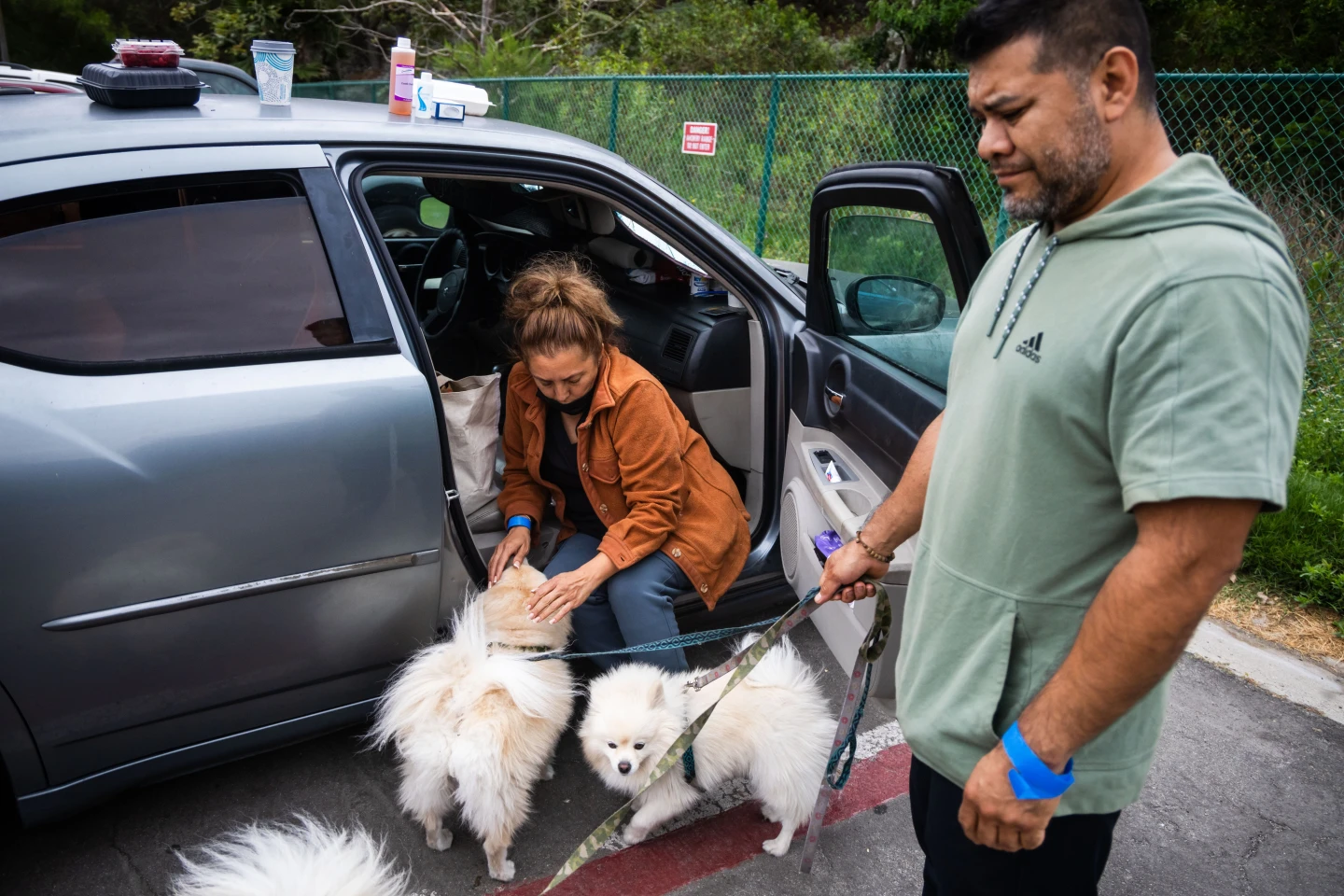
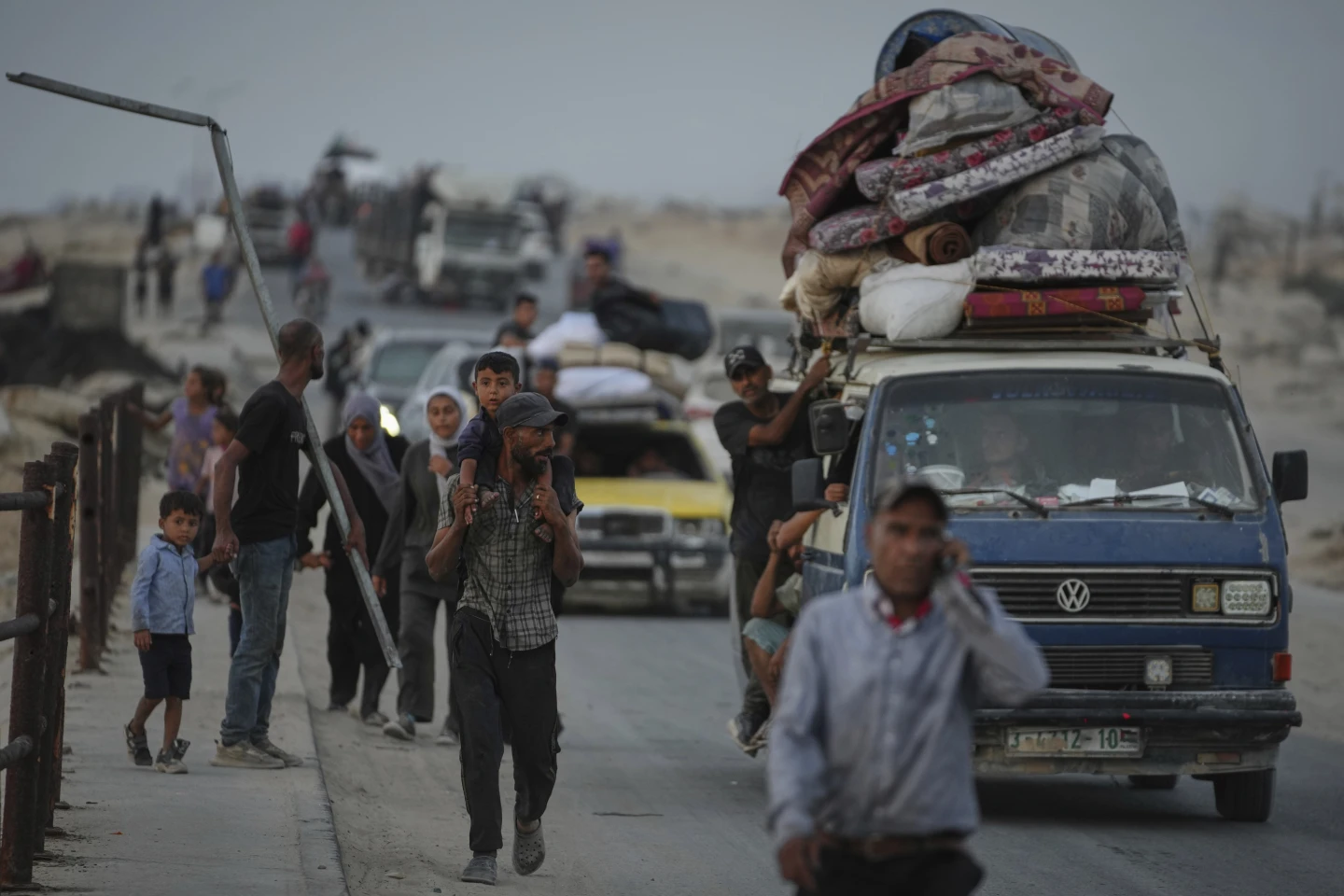
The evacuation process exposed critical community vulnerabilities. Danny Pham, a Vietnamese restaurant worker, described being abruptly awakened Friday morning with only minutes to flee his home: 'I never knew that a thing like this could happen.' Kim Yen, a retiree from Vietnam who lives two blocks from the facility, noted language barriers created additional anxiety: 'I’m hoping they stay alert and listen to the news and the authorities. This is scary.' Vietnamese television stations subsequently translated evacuation alerts to address these concerns.
From a political perspective, the incident reveals ongoing tensions in industrial safety regulation. Environmental advocates have long criticized lax oversight of chemical storage facilities, while business groups argue stringent safety protocols could increase operational costs. Mayor Stephanie Klopfenstein reiterated the evacuation orders' necessity: 'We understand that this is frightening, but the evacuation orders are in place for your safety.'
GKN Aerospace confirmed it deployed specialized hazardous material teams and pledged transparency: 'There are no reports of injuries at this time and our priority remains the safety of our employees, responders, and the surrounding community.' The company also acknowledged language challenges in communicating with residents, stating it would 'provide verified updates as soon as more information becomes available.'
As officials continue temperature stabilization efforts, residents like Pham remain in limbo: 'By then her neighborhood was a ghost town,' Yen recalled, 'and she was comforted to see police officers going door to door.' With the tank's integrity in limbo and community trauma mounting, the crisis underscores persistent systemic issues in industrial safety, emergency communication, and equitable crisis response.}
According to the Orange County Fire Authority, the tank began venting dangerous vapors Thursday morning, creating an 'immediate threat' that could lead to either a tank rupture or explosive decompression. Division Chief Craig Covey emphasized the precarious situation: 'This thing is going to fail, and we don’t know when. We’re doing our best to figure out when or how we can prevent it.' Authorities expanded evacuation orders Friday to include residents of Cypress, Stanton, Anaheim, Buena Park, and Westminster after failing to contain the leak overnight.
The facility, operated by GKN Aerospace—which produces components for commercial and military aircraft—holds significant strategic importance for regional manufacturing. Located approximately 38 miles south of downtown Los Angeles, the plant sits less than a mile from Disneyland, though the theme parks remained unaffected by evacuation orders. Garden Grove, home to one of the largest Vietnamese communities in the U.S., has become the epicenter of the crisis.
Environmental and public health concerns remain severe. Dr. Regina Chinsio-Kwong, the county health officer, warned that vapor exposure can cause 'respiratory issues, itching and burning eyes, nausea and headaches.' Crews have constructed sandbag barriers to prevent chemical runoff into storm drains or waterways, but officials admit the situation remains volatile. While initial efforts succeeded in neutralizing one compromised tank, Covey confirmed Friday morning that the remaining vessel 'is in the biggest crisis,' with temperatures still dangerously high.
The evacuation process exposed critical community vulnerabilities. Danny Pham, a Vietnamese restaurant worker, described being abruptly awakened Friday morning with only minutes to flee his home: 'I never knew that a thing like this could happen.' Kim Yen, a retiree from Vietnam who lives two blocks from the facility, noted language barriers created additional anxiety: 'I’m hoping they stay alert and listen to the news and the authorities. This is scary.' Vietnamese television stations subsequently translated evacuation alerts to address these concerns.
From a political perspective, the incident reveals ongoing tensions in industrial safety regulation. Environmental advocates have long criticized lax oversight of chemical storage facilities, while business groups argue stringent safety protocols could increase operational costs. Mayor Stephanie Klopfenstein reiterated the evacuation orders' necessity: 'We understand that this is frightening, but the evacuation orders are in place for your safety.'
GKN Aerospace confirmed it deployed specialized hazardous material teams and pledged transparency: 'There are no reports of injuries at this time and our priority remains the safety of our employees, responders, and the surrounding community.' The company also acknowledged language challenges in communicating with residents, stating it would 'provide verified updates as soon as more information becomes available.'
As officials continue temperature stabilization efforts, residents like Pham remain in limbo: 'By then her neighborhood was a ghost town,' Yen recalled, 'and she was comforted to see police officers going door to door.' With the tank's integrity in limbo and community trauma mounting, the crisis underscores persistent systemic issues in industrial safety, emergency communication, and equitable crisis response.}