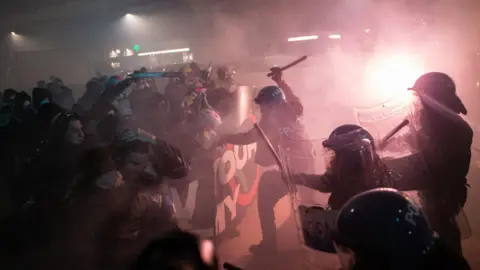
Six people have been arrested after police clashed with protesters in Milan, one of the hosts of the Winter Olympic Games, during the first day of the competition.
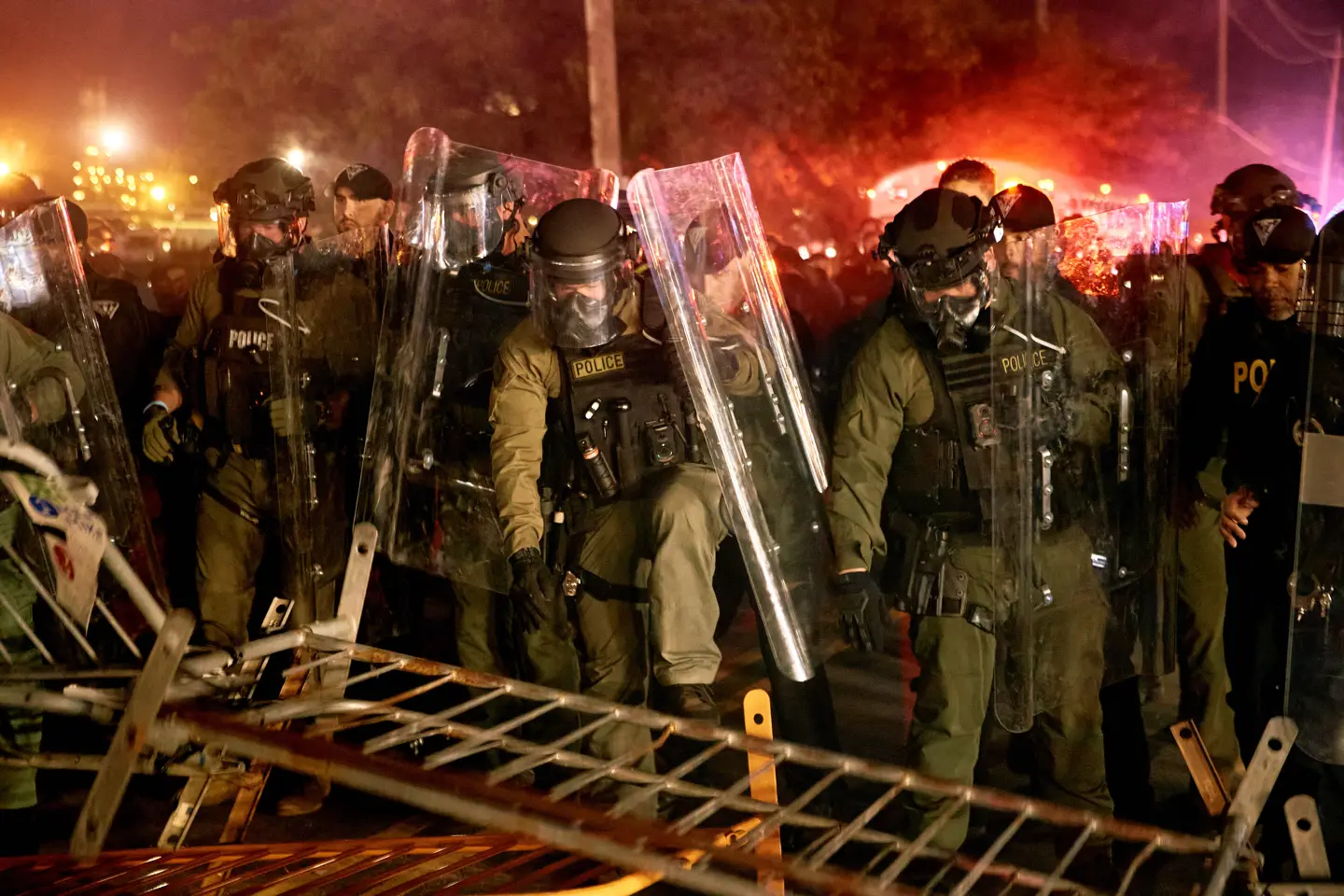
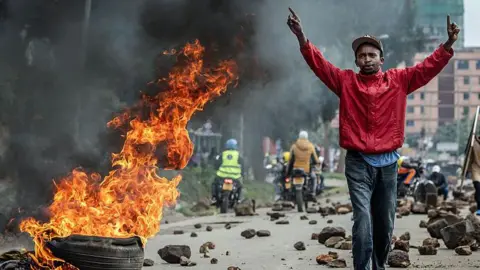
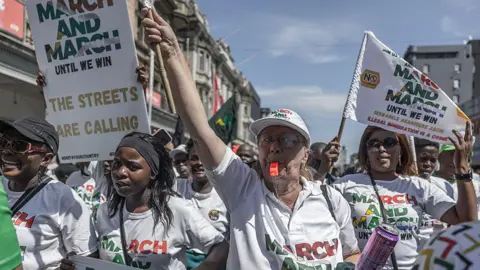
Thousands took to the streets of the city in northern Italy on Saturday to protest against a range of issues including the cost of living. Some fired flares and threw stones at police, who responded with water cannon.
It comes after the government tightened protest laws in the wake of a demonstration last weekend in Turin that left more than 100 officers injured, according to government figures.
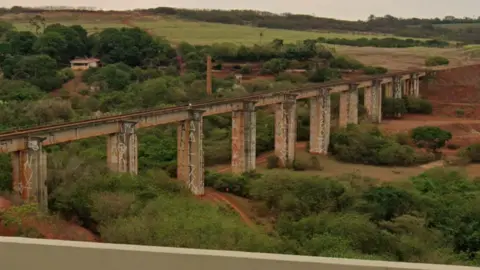
Meanwhile, officials are investigating suspected sabotage on northern Italy's railway network on Saturday.
Deputy Prime Minister Matteo Salvini described those involved in confrontations in Milan as criminals. Just days after the shameful violence in Turin, more clashes, more attacks on law enforcement, he said. We're proud to have pushed for a new security package that will allow for even more effective interventions against thugs and criminals.
The Turin demonstration, which was called in response to the eviction of an unofficial social centre, started peacefully but later turned violent when armed groups confronted police. More than 30 people were arrested.
One officer was attacked with a hammer, which Prime Minister Giorgia Meloni described as attempted murder.
A new security package, which was adopted on Thursday after being fast-tracked as a result of the violence in Turin, allows police to detain suspected troublemakers for up to 12 hours before demonstrations to stop them from spreading unrest. Critics have called it repressive.
Most people involved in Saturday's protest in Milan marched peacefully. One woman, Francesca Missana, told AFP news agency that the Olympic Games were no longer sustainable from an environmental or a social point of view, their time is up.
These Games were promoted as sustainable and cost-neutral, protest organiser Alberto di Monte said. He added that because the Games were spread across multiple sites, billions had been spent on roads instead of protecting the mountains.