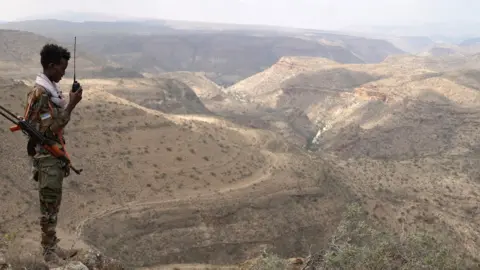
In Somalia's remote al-Miskad mountains, a group of soldiers huddles around a small hand-held screen, tracking Islamic State group fighters on a drone feed. A figure appears in the picture, moving through a valley. He has been to fetch water for his friends, says the drone operator.
The Puntland Defence Forces have about 500 soldiers stationed at this base. Ten years ago, this barren landscape was home to only a few nomadic communities, but it changed when IS established a foothold here, shifting focus to Africa as its fighters were driven out of strongholds in Syria and Iraq.
In recent years, the U.S. has supported Somalia's fight against IS, with 60 reported airstrikes in 2025 alone. Although IS's capacity to stage attacks in Somalia has degraded, it still plays a crucial role in supporting other Islamic State affiliates globally. The group operates from Puntland, led by a Somali national who pledged allegiance to IS in 2015 after previously being part of the militant group al-Shabab.
The impact of IS extends to local communities, who faced violence and strict regimes, mandating rules prohibiting men and women from mixing in public and enforcing harsh penalties. With personal testimonies indicating deep scars left by IS's presence, residents grapple with the pain of loss and trauma from kidnappings and violence.
The fight continues with the Puntland Defence Forces claiming to have killed hundreds of IS members over the past 16 months. Yet, international oversight raises concerns about the treatment and due process of detainees accused of militancy.
Soldiers, including a few women like Muna Ali Dahir, fully dedicate themselves to reclaiming their homeland, expressing their commitment to defeat IS militants and restore safety to their communities. As they prepare for future confrontations, resilience remains central to their fight against an adversary that has proven difficult to fully eradicate.