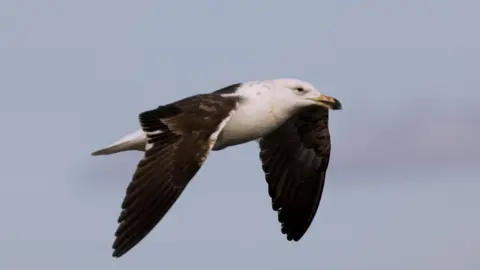
In the waters off South Africa, seabird enthusiasts are witnessing a troubling sight: the majestic black-browed albatross and other endangered species are increasingly falling victim to commercial fishing methods. These birds, known for their vast wingspans and acrobatic flying, depend heavily on the ocean for food, but that dependence leads them into dangerous waters where fishing practices threaten their survival.
As bird watchers venture out from Cape Town into the Atlantic, they encounter vibrant seabird communities following fishing trawlers. These birds, having learned to associate boats with discarded fish, often dive in pursuit of meals. However, this behavior exposes them to lethal hooks from long lines used in commercial fishing, which can stretch for kilometers, each bearing thousands of hooks. Tim Appleton, a British conservationist, emphasizes the peril: They get caught on what they call long lines... and end up getting caught on the hooks, dragged under and drowned. This highlighted issue places the albatross among the most endangered groups of birds globally, with 15 out of the 22 species facing dire threats from fishing activities.
Andrea Angel, leading the Albatross Task Force at BirdLife South Africa, explains the reproductive struggles these birds endure, raising one chick every two years amidst their life-long partnerships. Injuries or deaths of either parent not only endanger the chick’s survival but also complicate their mating habits, leading to extended disruptions in population regeneration.
To mitigate these troubling trends, the Albatross Task Force is advocating for the adoption of bird scaring lines—effective tools that deter birds from diving into fishing gear, drastically reducing bycatch rates. These lines are crafted through cooperative efforts with local communities, including individuals with disabilities, thereby providing economic and social benefits as well.
The collaboration aims to create cost-effective bird deterrents while fostering a sense of purpose and productivity in disadvantaged groups. Furthermore, the economic rationale for fishermen to utilize these lines is strong, as they can prevent losses associated with damaged catches.
Since its inception in 2004, the Task Force has succeeded in reducing seabird fatalities by 90% in southern African waters. Conservationists hope similar approaches can be adopted worldwide, safeguarding the future of the albatross and other seabirds, ensuring they continue to grace our oceans for generations to come.