In brief
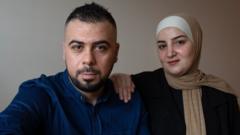
Abdullah Al Nofal shares his traumatic experiences from Al-Khatib prison, reigniting discussions on the horrific realities of Syria’s past as he and his wife, Douna Haj Ahmed, advocate for awareness and justice for victims of the civil war.
In December, Douna Haj Ahmed, a Syrian refugee settled in London, recognized the depth of her husband Abdullah Al Nofal’s wartime trauma while watching news coverage of prisoners escaping Syria’s brutal regime. In a poignant moment, Abdullah revealed that he had once been detained at Al-Khatib prison, infamously referred to as "Hell on Earth." This revelation compelled Douna to revisit and understand the pain her husband had endured during Syria's civil war, a journey that brought tears as Abdullah recounted his past. Douna shared that her husband's emotional barriers were evident; he preferred to present himself as strong, never fully disclosing the agony he experienced in detention. "Abdullah does not like to share things emotionally," she observed. Yet, as he wept and openly acknowledged the trauma he faced, she recognized this moment as a pivotal turning point, a revelation leading to a shared recovery narrative—highlighting a need for broader understanding of Syrian suffering.Abdullah, 36, was captured while working in Damascus in July 2013, shortly after the uprising against Bashar al-Assad began in 2011. Although he initially participated in peaceful protests, he distanced himself from violence, recognizing the complexity of the conflict developing around him. However, on that fateful day at a checkpoint, he was singled out, handcuffed and blindfolded, eventually landing in solitary confinement before being transferred to Al-Khatib with around 130 other detainees. The facility, notorious for unimaginable torture, has seen countless accounts of abuse and death.The Syrian Observatory for Human Rights estimates that nearly 60,000 detainees have suffered torture or death under the Assad regime’s watch. In stark reflections of this, Abdullah recalled the haunting silence of his cell and the sounds of agony echoing through the facility, with diseases rampant among the ill-fated prisoners. He vividly described the horror of seeing fellow inmates, covered in blood and torture wounds, a consistent image during his imprisonment.Following 12 harrowing days, Abdullah faced interrogation involving beatings and accusations of weapon transport. He recounted the strategy of fabricating a false story to secure his life, navigating a precarious environment where denial equated to intensified punishment. Miraculously, he was released after a month, but not without scars embedded deep within his essence. Abdullah later resettled in London, seeking scholarships and a life away from trauma, yet processing the weight of his past lingered.With time and safety allowing him to speak freely, Abdullah now embraces this opportunity to share the horrors that so many have endured in silence. He expressed a profound sense of relief, "We finally finish[ed] with the regime, we can say, we are really free right now." Together, he and Douna aim to amplify the voices of countless Syrians who remain unheard, emphasizing the privilege of sharing their stories amidst the collective silence of many who suffered and perished without acknowledgement.Douna, who is entrenched in human rights advocacy, expressed her own devastation at hearing her husband's account for the first time, reflecting on the ongoing struggles faced by survivors amidst the shadows of a wounded nation. The couple's story uncovers the necessity of storytelling amid the chaos of political upheaval, ensuring that the experiences of past atrocities are recorded and recognized as part of Syria's collective history.