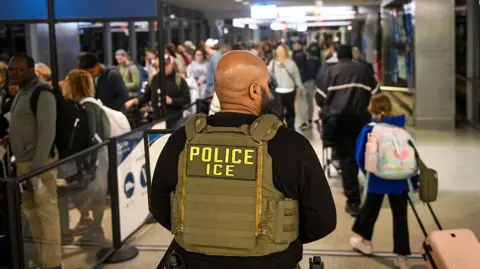
The Democratic Republic of Congo has agreed to accept migrants deported from the US who are not themselves Congolese under a deal effective from this month, officials said.
The Ministry of Communication stated that a temporary reception system was established, with specific facilities chosen in the capital, Kinshasa, for accommodating arrivals.
In a statement released on Sunday, the government noted that logistical and technical support would be provided by the US, ensuring that the Congolese government would incur no financial cost for the initiative.
However, the government did not specify the number of deportees it would accept. The US has an ongoing policy to deport individuals to various countries in Africa as part of its broader immigration strategy.
Officials expressed concerns that deportees might face persecution upon their return to their home countries, asserting that there are no plans for such transfers.
This arrangement aims to align with DR Congo's dedication to maintaining human dignity and international solidarity in protecting migrant rights.
Moreover, officials clarified that this scheme is not a permanent relocation mechanism nor an outsourcing of migration policies.
While the US State Department refrained from commenting on the diplomatic conversations surrounding this issue, they emphasized their commitment to tackling illegal immigration and enhancing border security.
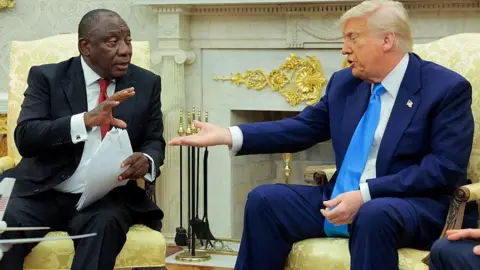
Since taking office, the Trump administration has executed numerous deportations, affecting various nationalities, which has drawn criticism from human rights advocates questioning the legality of these practices.
DR Congo joins several other countries in Africa, including Eswatini, Ghana, and South Sudan, in facilitating the acceptance of deportees from the US.
Last week, eight individuals deported from various African nations were sent to Uganda as part of this controversial program.
Additionally, it has been noted that the Trump administration has likely invested over $40 million in these third-country deportations to date, although costs remain difficult to ascertain.
In parallel to these developments, the US is negotiating a minerals deal with DR Congo for access to critical resources such as cobalt and lithium, highlighting the intertwined nature of immigration policy and economic interests.
Under the Trump administration, efforts have also been made to facilitate a peace accord between DR Congo and Rwanda, despite ongoing challenges in its implementation.