In brief
FIFA has initiated a disciplinary investigation into several Argentine players and staff following the 1‑0 loss to Spain in the 2026 World Cup final. Alleged assaults, unsporting conduct and earlier misconduct during the tournament have been cited. The process illustrates FIFA’s commitment to fair play and raises questions about cultural differences in handling heated sports moments.
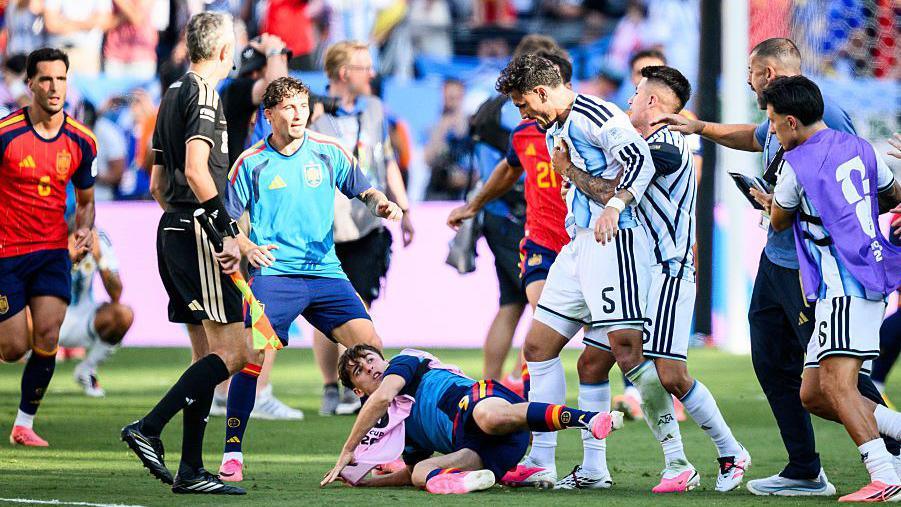
In a decisive move, the Fédération Internationale de Football Association (FIFA) has opened disciplinary proceedings against members of the Argentine national team, following the country’s 1‑0 defeat to Spain in the 2026 World Cup final held at MetLife Stadium in New Jersey.
The investigation was spearheaded by a FIFA-appointed disciplinary and ethics prosecutor who was asked to review the conduct that erupted after the final whistle. Multiple Argentine athletes—including midfielders Nahuel Molina, Leandro Paredes, and teammate Thiago Almada—as well as assistant coach Roberto Ayala, are alleged to have engaged in assault under Article 14 of FIFA’s disciplinary code, with Molina also facing an additional unsporting‑behaviour charge.
Should the allegations be upheld, sanctions could include a minimum one‑match ban for unsporting conduct and at least three matches for assault, a standard previously applied in other high‑profile cases such as the 2022 incident involving a calico police striker. The prosecutor’s report points to a pattern of behaviour that extends beyond the final, citing earlier games where Argentine players were accused of ‘late kick‑offs’, ‘discriminatory chants’, and even the display of a banner supporting a political claim over the Falkland Islands.
The banner—“Las Malvinas son Argentinas”—was showcased during a semi‑final victory over England. FIFA’s Code of Ethics (Article 13) prohibits sporting events from being used as platforms for non‑sporting political demonstrations, emphasizing the delicate balance between freedom of expression and the integrity of the sport.
From a global perspective, this case reflects how FIFA continually confronts the challenge of applying consistent disciplinary measures across differing cultures. In previous years, controversies involving players from Brazil and Nigeria on claims of dissent or violence have drawn scrutiny, yet the outcry over Argentine conduct demonstrates that even contextual motives—regional rivalry, national emotions—are weighed under the same regulatory framework.
Argentine officials have yet to comment, but the association faces potential sanctions across multiple categories: misuse of sport for political banners, team misconduct, discrimination, and breaches of tournament security. The outcomes will not just determine individual player bans but could influence the national federation’s standing in future international fixtures.
The disciplinary process is ongoing. FIFA has asked the Argentine Football Association to provide documented evidence and a detailed explanation of its internal disciplinary actions. While the ten‑round appeals course remains open—mirroring the process that upheld sanctions against a former Portuguese defender in 2024—this case is expected to prompt discussions on how sporting organisations can deter aggressive post‑match behaviour while respecting cultural nuances.