In brief
Authorities in Indian-administered Kashmir issued a sweeping order requiring all educational institutions to review and remove books that could be deemed objectionable. The move followed protests over earlier blanket restrictions on literature that critics say erodes academic freedom. While officials argue the directive safeguards national security and religious sentiment, opposition parties, scholars and students warn it risks rewriting Kashmir’s contested history. The ban comes after the 2019 revocation of the region’s autonomous status and amid ongoing tensions between India and Pakistan over Kashmir.
In a move that has drawn criticism from scholars, students and opposition politicians, authorities in Indian‑administered Kashmir have issued an order requiring all schools, colleges, universities and coaching centres to examine the books and other printed material on their premises for "objectionable" content. The directive, announced last week, calls for the removal of any material that could "violate religious sentiments, laws, educational values or established norms" and for institutions to report books that the government deems unsuitable.
The order applies to published books, research papers and academic theses, and cites a list of content that could be disallowed, including material that promotes, glorifies or justifies terrorism, violent extremism, secessionism, or radicalisation, or that is deemed "factually inaccurate" or unlawful. The government states the directive is not a blanket ban on reading, but rather a safeguard against material that could threaten national security.
Opponents argue the measures constitute an attack on academic freedom and the right to a free exchange of ideas. Academics and students say the new rules risk erasing Kashmir’s turbulent history from the curriculum and give the state an unwarranted authority to shape historical narratives. A political scientist, Noor Mohammad Baba, said such restrictions run counter to India’s constitutional guarantee of freedom of speech and expression.
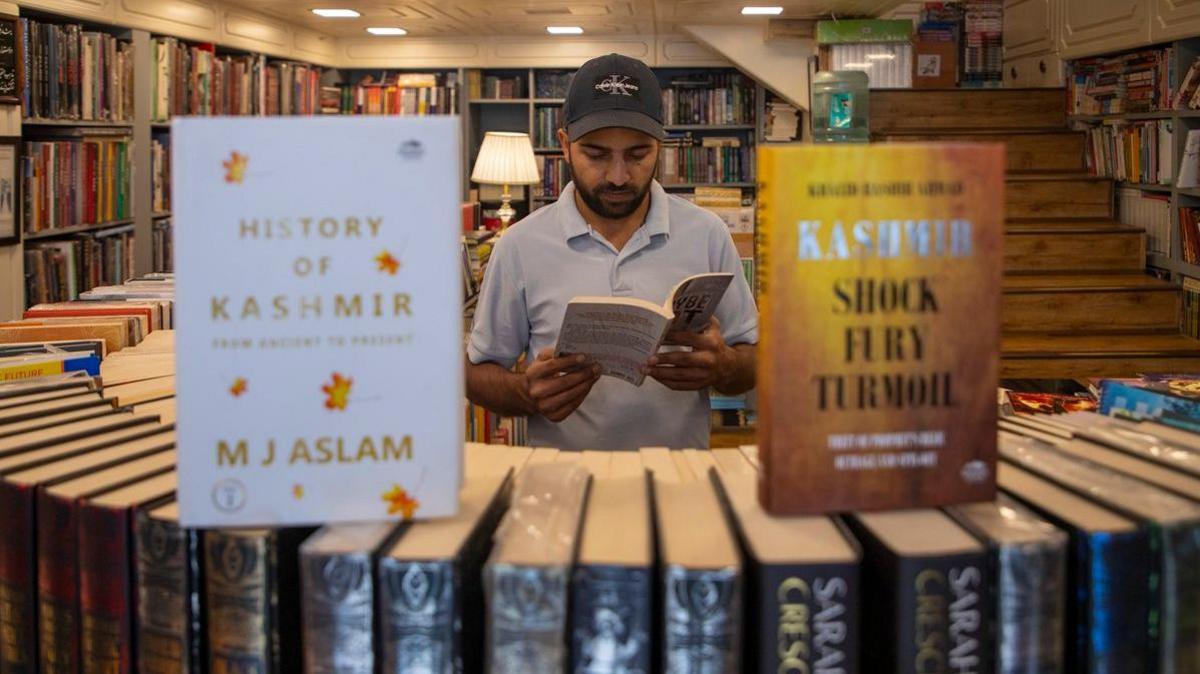
The crackdown follows a series of incidents. Last year, authorities banned 25 books—including works by Arundhati Roy and scholar A.G. Noorani—claiming they promoted "false narratives and secessionism"; the ban is currently being challenged in court. Earlier this year, the ruling Bharatiya Janata Party (BJP) protested two textbooks that had portrayed Kashmir’s separatist leaders in a favourable light. Those books were removed from school libraries, and investigators arrested several individuals tied to their publication.
The order also has a broader backdrop. In 2019, Delhi revoked Kashmir’s special status and integrated the region under central rule, sparking a decline in civil liberties and an increase in state control. Since then, security forces have maintained a prominent presence in the area, frequently citing the need to prevent extremism and secessionist sentiment after incidents such as attacks on tourists in Pahalgam.
Government officials diplomatically describe the directive as a measure to "keep controversial material out of classrooms" and to "avoid unnecessary controversies". BJP spokesmen maintain that the removal of books glorifying separatists preserves peace. Opposition parties, however, are concerned that the policy could set a precedent for broader surveillance and suppression of dissent.
The new ruling is said to be accompanied by a committee that will review books across schools and libraries, though the definition of "objectionable" material remains vague. Critics argue that without a clear framework for assessment, the decision risks being used to suppress academic discourse on contentious subjects rather than genuine threats to public order.
As the region grapples with its contested identity and complex history, the book ban highlights ongoing tensions between state control and academic autonomy. The outcome of legal challenges and further responses from the educational community will determine whether this measure signals a new era of censorship or a temporary measure aimed at managing sensitive content.