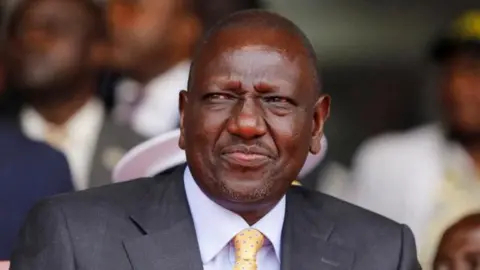
Kenyan President William Ruto has faced a social media backlash after publicly suggesting that Nigerian-accented English was incomprehensible and required a translator. Addressing Kenyans living in Italy on Monday, Ruto said: If you listen to a Nigerian speaking, you don't know what they are saying - you need a translator, while boasting that Kenyans spoke some of the best English in the world.
His remarks drew fierce condemnation from Nigerians and other Africans online who accused the Kenyan leader of demeaning a fellow African nation. English is a colonial language, not a measure of intelligence, capability, or national progress, wrote Hopewell Chin'ono, a Zimbabwean journalist.
As former British colonies, both Kenya and Nigeria share English as an official language, but each country has developed distinct spoken varieties with different phonetic structures. These differences reflect the influence of indigenous languages - Nigeria has more than 500 languages which shape its cadence and intonation, while Kenya's Bantu, Nilotic and Cushitic mix give rise to its own accents.
But in his address to the diaspora gathering, Ruto said Kenya's education system produced strong English proficiency and that it was difficult to understand Nigerians when they spoke English. Our education is good. Our English is good. We speak some of the best English in the world. If you listen to a Nigerian speaking, you don't know what they are saying. You need a translator even when they are speaking English, he said, sparking laughter in the room.
We have some of the best human capital anywhere in the world. We just need to sharpen it with more training, Ruto added. His remarks have sparked widespread reactions on social media, with many users criticizing the Kenyan leader for showcasing a deep inferiority complex rooted in colonial conditioning.
Ruto is mocking the English of the country with a Nobel Prize for literature winner. The Nation of Achebe and Chimamanda, former Nigerian senator Shehu Sani posted on X, referring to Wole Soyinka - the country's only Nobel Prize winner - along with acclaimed authors Chinua Achebe and Chimamanda Ngozi Adichie.
Other social media users urged Ruto to focus on addressing pressing issues facing his citizens - such as the cost of living and unemployment - rather than engaging in what they described as distractions.
Online barbs between Kenya and Nigeria are a frequent occurrence, often marked by intense, humorous and sometimes volatile cyber wars on platforms like X. These exchanges typically revolve around economic comparisons, pop culture and sport and, more recently, political remarks.
Earlier this month, Nigerian President Bola Tinubu faced a backlash from Kenyans online after stating that Nigerians were better off than those in Kenya and other African countries despite rising fuel prices at home. While Ruto did not make a direct reference to any specific comment, some online interpretations suggested his remarks may be in response to Tinubu's comments.
There has been no official response from Ruto's government, but some Kenyans have defended him online, arguing that critics have misunderstood the intent of his remarks and missed the humour.
His remarks drew fierce condemnation from Nigerians and other Africans online who accused the Kenyan leader of demeaning a fellow African nation. English is a colonial language, not a measure of intelligence, capability, or national progress, wrote Hopewell Chin'ono, a Zimbabwean journalist.
As former British colonies, both Kenya and Nigeria share English as an official language, but each country has developed distinct spoken varieties with different phonetic structures. These differences reflect the influence of indigenous languages - Nigeria has more than 500 languages which shape its cadence and intonation, while Kenya's Bantu, Nilotic and Cushitic mix give rise to its own accents.
But in his address to the diaspora gathering, Ruto said Kenya's education system produced strong English proficiency and that it was difficult to understand Nigerians when they spoke English. Our education is good. Our English is good. We speak some of the best English in the world. If you listen to a Nigerian speaking, you don't know what they are saying. You need a translator even when they are speaking English, he said, sparking laughter in the room.
We have some of the best human capital anywhere in the world. We just need to sharpen it with more training, Ruto added. His remarks have sparked widespread reactions on social media, with many users criticizing the Kenyan leader for showcasing a deep inferiority complex rooted in colonial conditioning.
Ruto is mocking the English of the country with a Nobel Prize for literature winner. The Nation of Achebe and Chimamanda, former Nigerian senator Shehu Sani posted on X, referring to Wole Soyinka - the country's only Nobel Prize winner - along with acclaimed authors Chinua Achebe and Chimamanda Ngozi Adichie.
Other social media users urged Ruto to focus on addressing pressing issues facing his citizens - such as the cost of living and unemployment - rather than engaging in what they described as distractions.
Online barbs between Kenya and Nigeria are a frequent occurrence, often marked by intense, humorous and sometimes volatile cyber wars on platforms like X. These exchanges typically revolve around economic comparisons, pop culture and sport and, more recently, political remarks.
Earlier this month, Nigerian President Bola Tinubu faced a backlash from Kenyans online after stating that Nigerians were better off than those in Kenya and other African countries despite rising fuel prices at home. While Ruto did not make a direct reference to any specific comment, some online interpretations suggested his remarks may be in response to Tinubu's comments.
There has been no official response from Ruto's government, but some Kenyans have defended him online, arguing that critics have misunderstood the intent of his remarks and missed the humour.