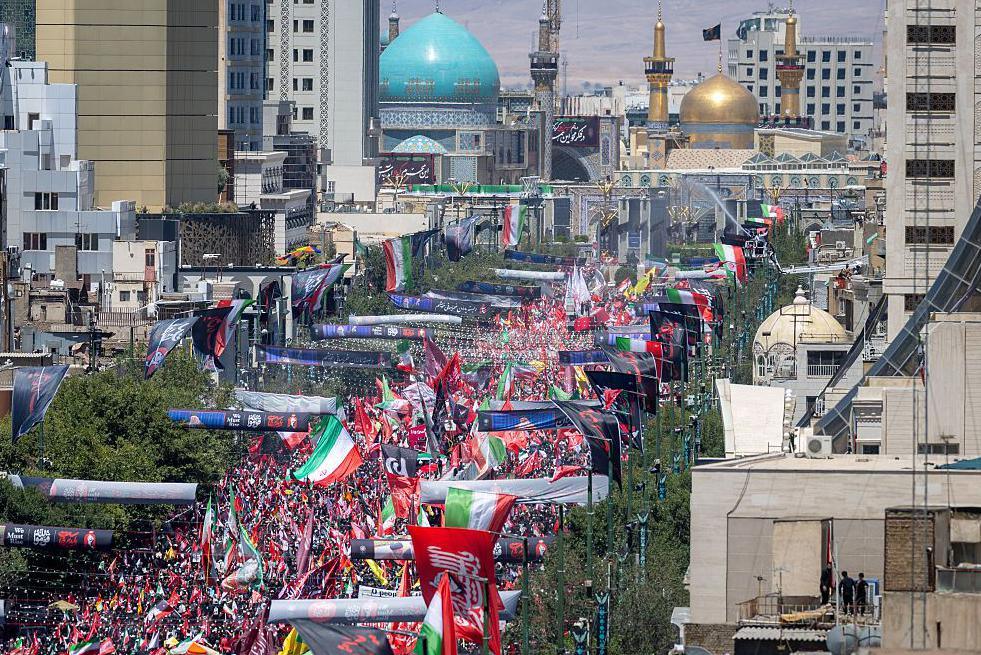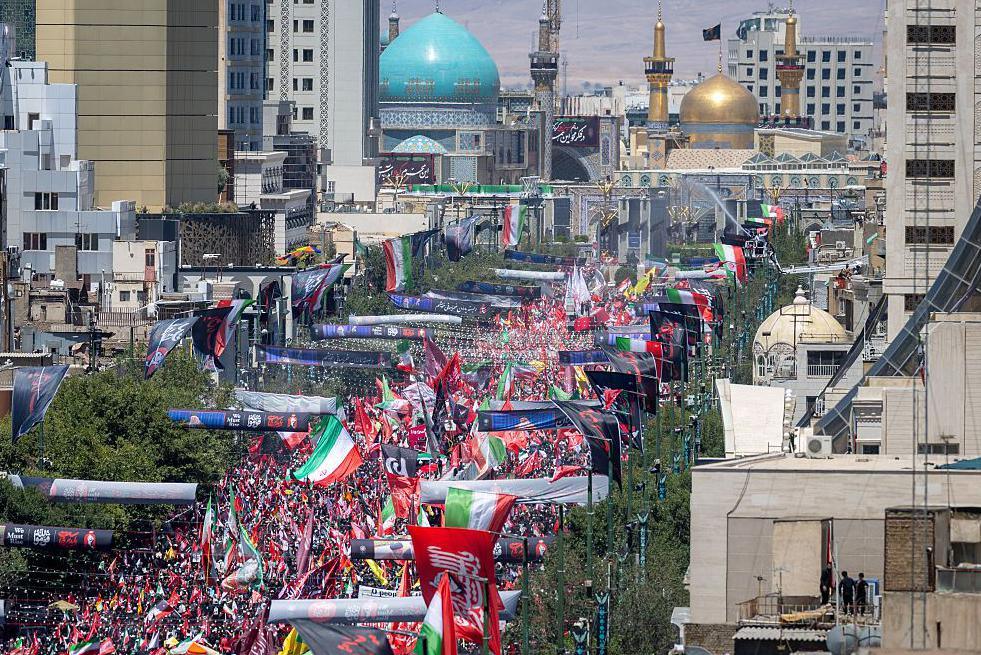
Huge crowds lined the streets of Mashhad, Iran’s historic Shia city, for the burial of former Supreme Leader Ayatollah Ali Khamenei. The funeral took place at the Imam Reza shrine – the holiest site for Shia Muslims – and closed a six‑day mourning period that spanned Tehran, Qom, and other Iranian cities, as well as Iraqi shrines in Najaf and Karbala.
According to Iran’s state news agency IRNA, the burial followed an exchange of aerial strikes between Iran and the United States, a conflict that threatens a preliminary agreement to end the hostilities in which the late leader had been killed. Iran’s Revolutionary Guards accused the U.S. of bombing railway bridges from Tehran to Mashhad overnight, claiming it aimed to disrupt the funeral.
The day’s procession saw thousands dressed in black, waving Iranian flags and red banners expressing vengeance, while some held photographs of Khamenei and placards demanding the death of U.S. President Donald Trump and Israeli Prime Minister Benjamin Netanyahu. Local mourners described the loss as heavier than that of their parents, noting that only the deaths of Trump and Netanyahu could relieve their pain.
The coffins, carried by a lorry through the crowds, eventually reached the Imam Reza complex as night fell. The mausoleum, dating to the ninth century, is visited by millions of pilgrims each year and is the only site believed to enshrine a Shia Imam in Iran.
Khamenei, born in Mashhad in 1960, rose to power in 1989 after the death of Iran’s founder, Ayatollah Ruhollah Khomeini. He has been a hard‑line political figure and the long‑standing commander of Iran’s armed forces, earning a reputation for suppressing domestic challenges with force. His tenure saw Iran in conflict with the United States and Israel, culminating in a strike on his Tehran residence in February 2026 that killed him and wounded his son Mojtaba, who remains a key figure in the country’s leadership.