In brief
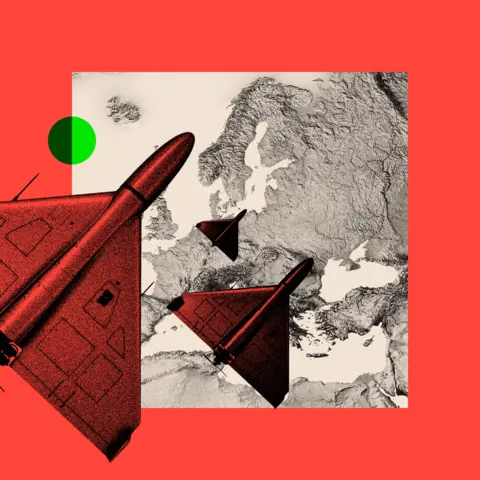
Recent reports highlight the presence of mysterious drones near airports, military installations, and power plants across Europe, stirring fears about potential threats linked to Russia's hybrid warfare strategies. The incidents follow drone incursions into Poland and provoke discussions on Europe's air defense and the proposed 'drone wall.' Experts share insights on the effective management of aerial threats and the complexity surrounding response mechanisms in the evolving landscape of drone technology.
The presence of unidentified drones near airports, military bases, and critical infrastructure throughout Europe has sparked fears of a new hybrid warfare tactic potentially orchestrated by Russia. Reports have noted drone sightings in countries like Poland, Belgium, and Denmark, raising alarms over national security.
These incidents follow a significant event in September, where around 20 Russian drones crossed into Polish airspace, leading to airport closures and military responses. Such breaches are seen as a wake-up call for NATO allies, prompting discussions on enhanced air defenses.
Experts are now deliberating on the effectiveness of a proposed drone wall—an integrated defense system designed to protect European airspace from potential drone incursions. This multilayered system aims to utilize radars, sensors, and other technologies for real-time detection and interception of drones, although critics question its feasibility and cost-effectiveness.
The potential implications of these mysterious drones extend beyond airspace violations; they pose surveillance risks and may be part of a broader strategy to assess NATO countries' preparedness in aiding Ukraine amidst its conflict with Russia.
Given the evolving complexity of drone warfare, the conversation surrounding air defense and response mechanisms has never been more urgent. While some advocate for proactive measures against the drone threat, others highlight the risks involved in escalating military actions against launch sites. The unfolding situation necessitates a coordinated strategy that balances immediate aerial defense with broader geopolitical considerations.