NASA Announces Crew for Artemis III but Mission Skips Moon Landing
NASA has named the crew for its next major Moon program, Artemis III, and confirmed that the astronauts will not walk on the Moon’s surface. The flight will only operate in low‑Earth orbit, docking with prototype lunar landers and conducting a technology demonstration.
Astronauts selected for the mission:
- Commander – Randy Bresnik (NASA).
- Pilot – Luca Parmitano (European Space Agency), who has logged more than 300 days in space.
- Mission specialists – Andre Douglas and Frank Rubio (both NASA).
- Backup crew member – Bob Heintz, a test pilot with 170 days in space who can fill any role if required.
NASA Administrator Jared Isaacman said the mission will be “the most complex ever” and would require unprecedented coordination of heavy‑lift launches and the collaboration of government and private spaceflight teams.
The shift to low‑Earth orbit follows February revisions and was prompted by several setbacks:
- Limited progress on SpaceX Starship in‑orbit refuelling and cryogenic propellant storage, a technology essential for a lunar transit.
- In September 2016, SpaceX’s Starship prototype exploded, taking 15 months to return to service, whereas all launch pads were operational.
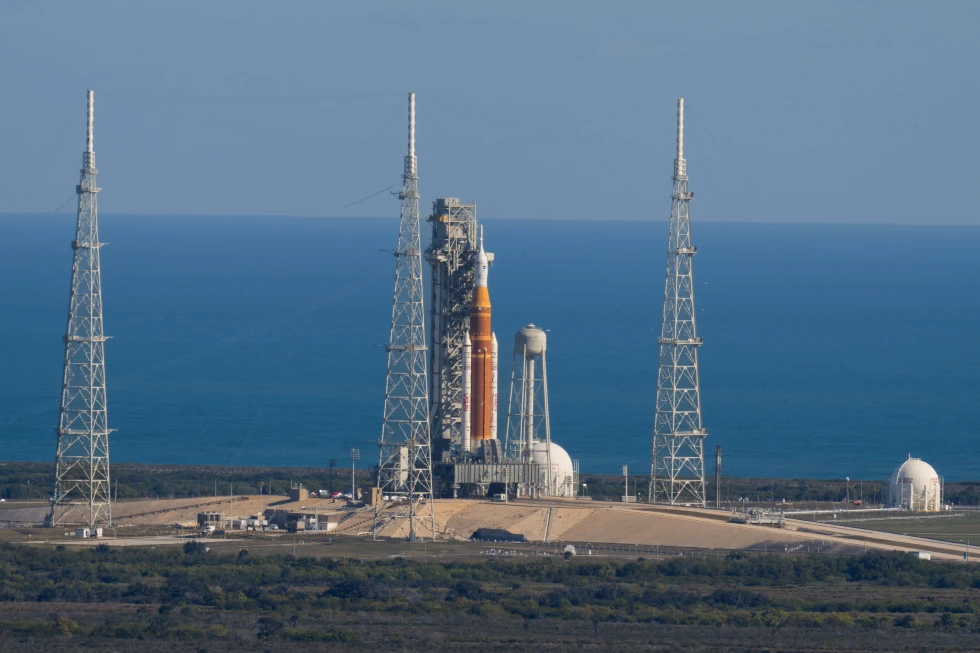
- On 28 May, Blue Origin’s New Glenn rocket exploded during a hot‑fire engine test, destroying launch‑pad hardware and delaying any pending cargo ligning or crewed lunar lander launches.
These events have stalled the progression from Artemis II (looping the Moon) to Artemis III and further to Artemis IV, the first crewed Moon landing. NASA’s optimistic timeline still places Artemis III in 2027, Artemis IV lunar surface landing in 2028, and Artemis V—designed for a second landing and the start of a lunar base—in 2028‑2029, though most experts view the schedule as ambitious.
Underlying urgency is partly geopolitical: China has announced a crewed Moon landing goal by 2030, while a Trump executive order in December 2025 directed NASA to return astronauts to the Moon by 2028 and begin base operations by 2030. The margin for error is thin, with unproven Starship refuelling, a damaged Blue Origin launch pad, and a series of unprecedented steps all needing to succeed in order.
NASA Administrator Jared Isaacman has pledged support for Blue Origin’s recovery efforts, but the time required remains uncertain and may pressurise the launch calendar further.