
In brief
With the Trump administration moving forward with its plan to send National Guard troops to cities like Chicago and Memphis amid rising crime concerns, significant opposition has emerged from local leaders. While Republicans support the initiative, claiming it will support law enforcement, Democrats accuse the federal government of using troops for political purposes and infringing on state rights. Legal battles over the deployment are underway in various states as communities grapple with the implications of military presence on domestic soil.
ELWOOD, Ill. (AP) — The Trump administration is advancing its initiative to position National Guard troops in urban areas, with troops already located outside Chicago and expected to be arrived in Memphis soon. This move comes as part of a broader strategy aimed at combating crime in major cities, despite local leaders' vocal opposition to these actions.
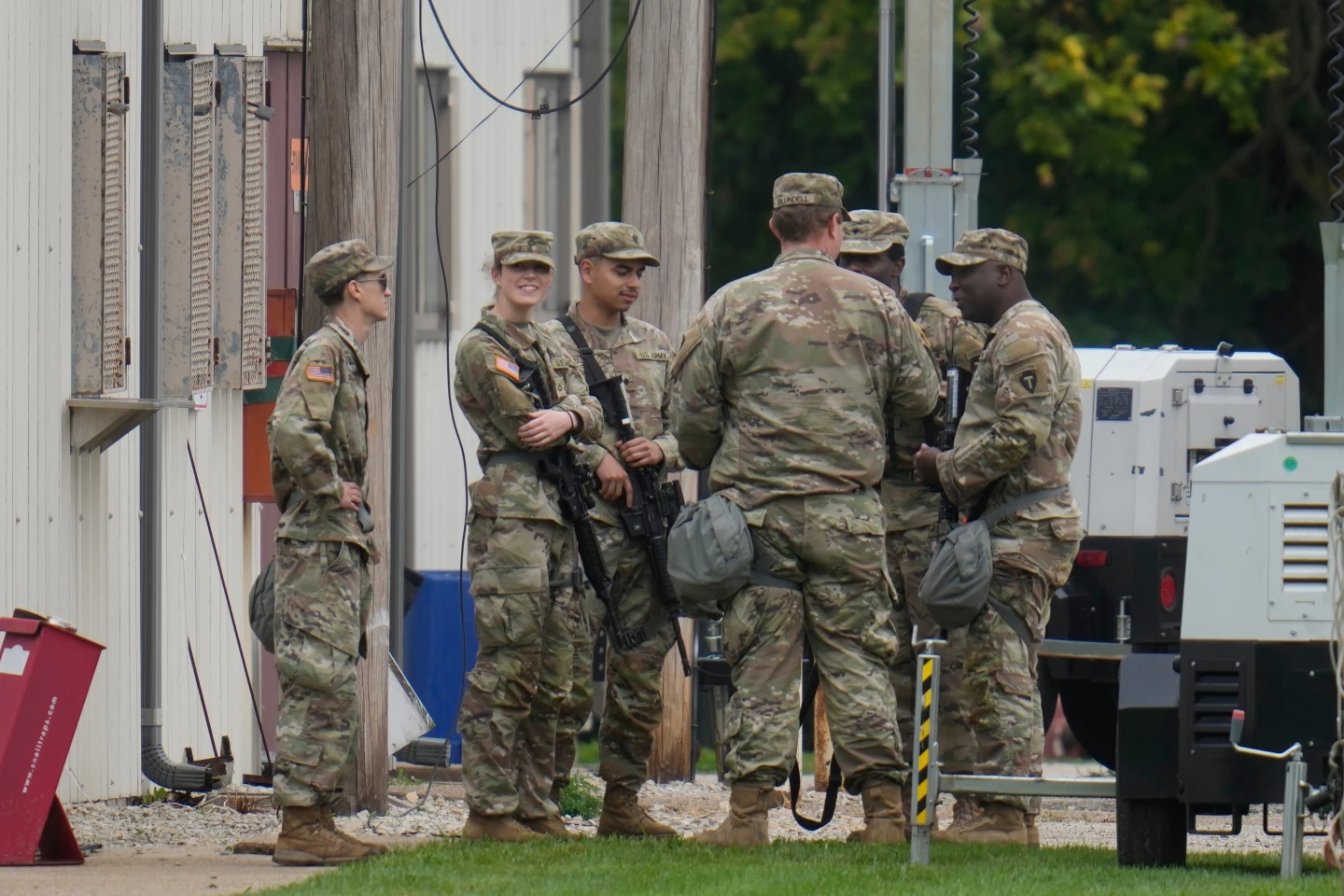
National Guard members arriving from Texas have set up at an Army Reserve center in Illinois, prompting a legal challenge led by Democratic elected officials who argue that the deployment is unnecessary and politically motivated. They accuse President Trump of labeling Chicago as a 'hell hole' despite evidence showing decreases in violent crime statistics, including homicides.
Memphis's police chief, Cerelyn Davis, has announced that plans are in motion for the Guard's arrival, with Republican Governor Bill Lee mentioning that troops will be deputized by the U.S. Marshals Service. However, the specifics of their role have yet to be clarified, leading to further debates surrounding their purpose.
Moreover, this maneuver has heightened tensions between the federal government and blue state governors, with Illinois Governor JB Pritzker indicating a possible activation of state National Guard troops as the state seeks legal remedies against what they deem an infringement on state sovereignty.
The concerns over deploying military personnel domestically stem from longstanding legal constraints such as the Posse Comitatus Act, which limits military involvement in civilian law enforcement. Nevertheless, Trump has suggested that if necessary, he could employ the Insurrection Act to bypass these limitations.
As the situation develops, Chicago local officials have launched their initiatives to safeguard the city, marking a contentious chapter in the ongoing dialogue between state and federal authorities over urban law enforcement strategies.

