In brief
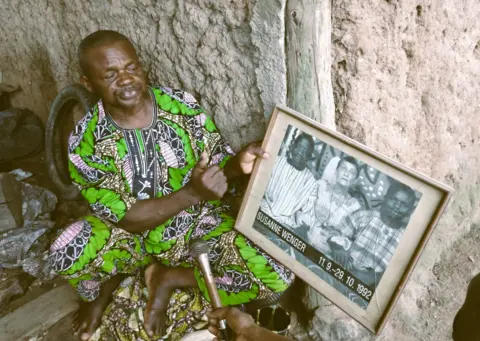
Kasali Akangbe Ogun, a distinguished wood carver from Nigeria, has recently been buried following his death. He was celebrated for his unique artistic contributions and as a vital figure in the New Sacred Art Movement. Ogun's legacy is deeply intertwined with the preservation of Yoruba culture, particularly through his work in the UNESCO-recognized Osun Groves. Despite his fame, he remained committed to local traditions and the environment, emphasizing the importance of heritage in his craft. His influence extends beyond his native country, serving as an inspiration to many worldwide.
Renowned Nigerian master wood carver Kasali Akangbe Ogun has been buried following his death last week after a brief illness.
He came from a long line of wood carvers from the Yoruba people, and took the tradition from his birthplace of Osogbo in the country's south-west to the global art space.
Akangbe Ogun was famous for his unique artistic style, characterised by lean, elongated faces and dynamic, flowing forms, noted Nigerian art patron Olufemi Akinsanya.
He was one of the leading lights of the New Sacred Art Movement, founded by the late Austrian-Nigerian artist and Yoruba priestess, Susanne Wenger, in the 1960s, to help protect the 75-hectare Osun Forest and its river.
We will continue to plant trees because heritage must not be left naked, Akangbe Ogun told me when I visited him in 2020.
The grove, on the outskirts of Osogbo city, was designated a UNESCO World Heritage Site in 2005 for its cultural significance in the cosmology of the Yoruba, and as the largest protected high primary forest in the region.
Regarded as the abode of the goddess of fertility Osun, the landscape of the grove and its meandering river is dotted with sanctuaries and shrines, sculptures and art works in honour of Osun and other deities, as per UNESCO.
Works from the New Sacred Art Movement are currently on show in the landmark Nigerian Modernism exhibition at Tate Modern.
Kasali Akangbe Ogun was a vital figure within the New Sacred Art Movement, whose work brought spiritual depth to Yoruba devotional practice. His art stands as a testament to a life committed to faith, community, and visual poetry, said exhibition curator Osei Bonsu.
Speaking on behalf of the Adunni Olorisha Trust, Akinsanya said the carver's craftsmanship is visible in the ritual figures, majestic pillars, and beautifully crafted roofs adorning many of the shrines.
With a career spanning numerous exhibitions, including the National Black Theatre in Harlem throughout the 1990s, Akangbe Ogun's work transcends the traditional boundaries of sculpture, structural design, folklore, and environmental preservation.
Despite his global acclaim, he lived a humble life in Osogbo, dedicated to sharing his culture and environment's beauty with future generations. He often stated that one of his greatest pleasures was teaching his children the art of wood carving, ensuring the legacy would live on.
His commitment to Yoruba traditions and the environment will continue to inspire generations of artists as tributes pour in recognizing his significant impact on both local and global art communities.