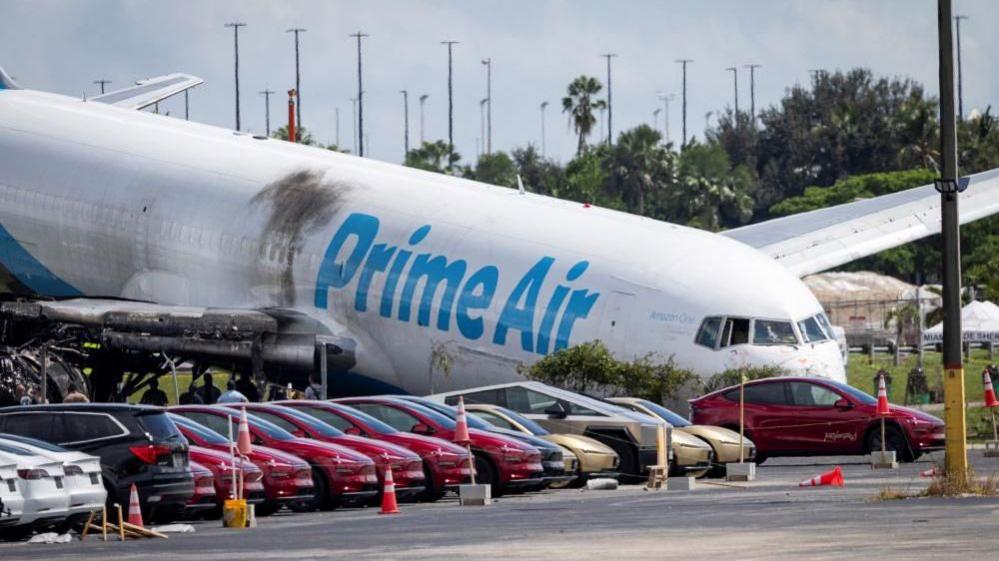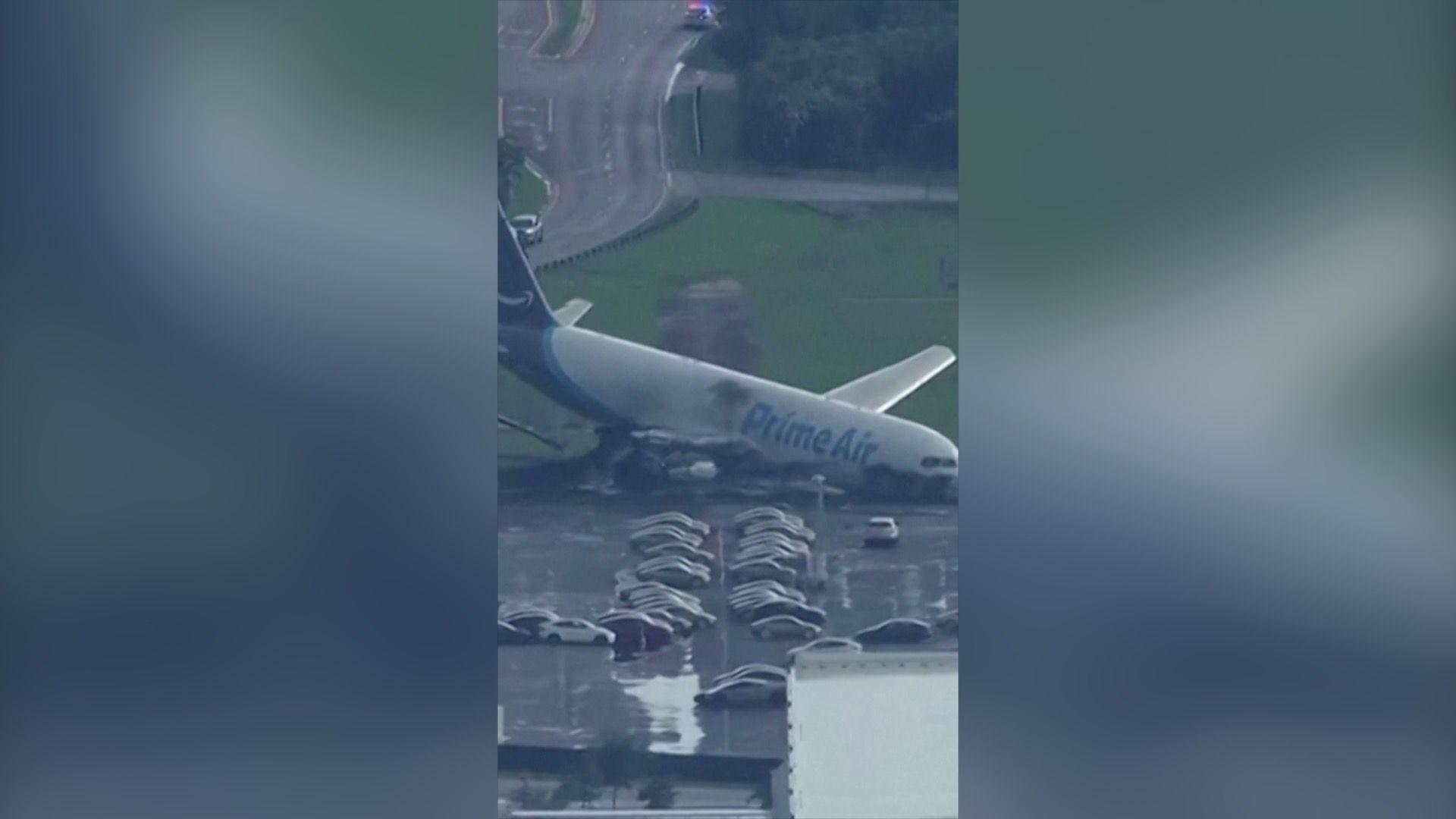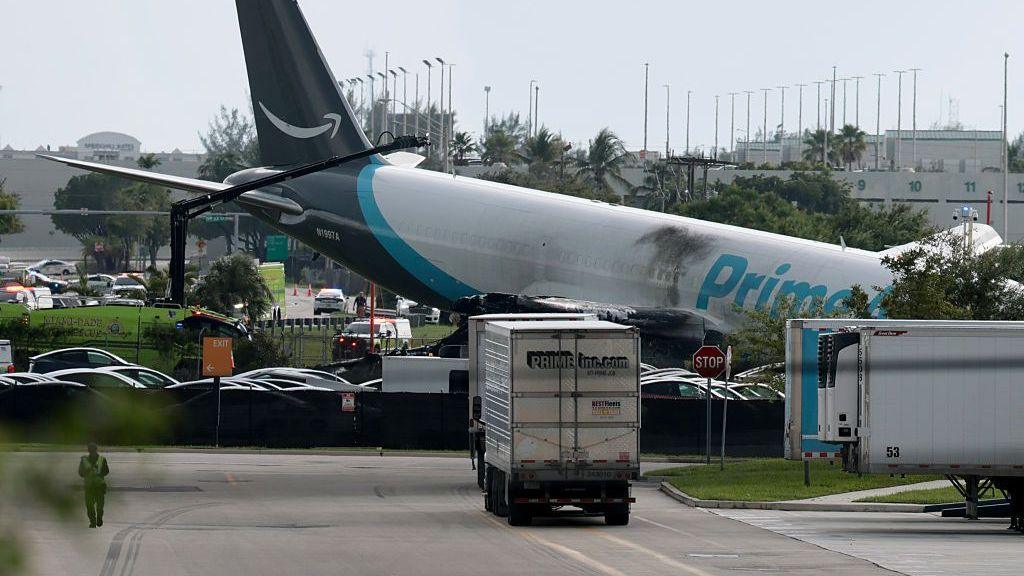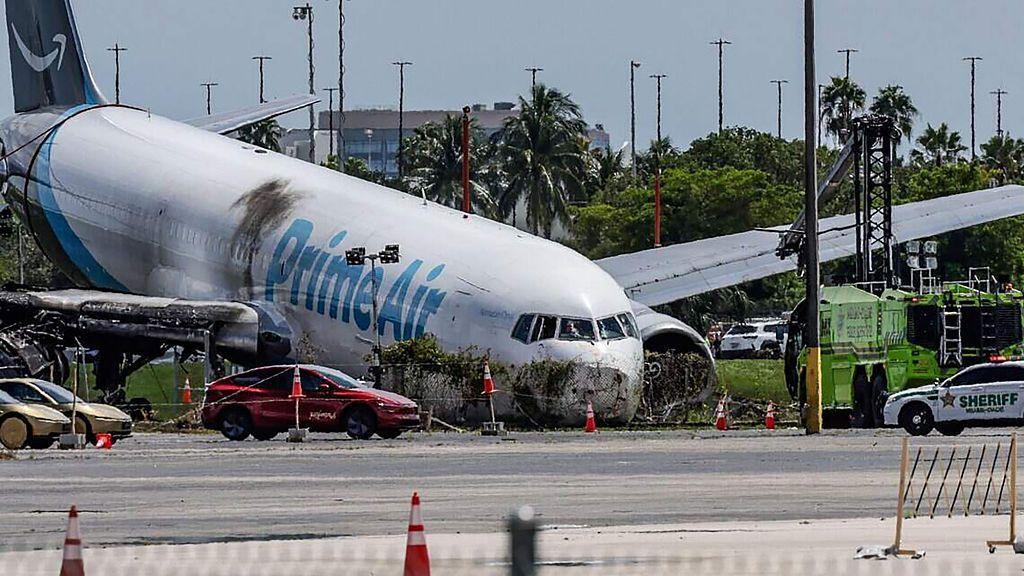
On Sunday a Boeing 767‑300 freight aircraft operating for Amazon struck a startup team car and veered into a demolition, igniting a blaze at Miami International Airport.
The National Transportation Safety Board now confirms that the pilot in the cockpit repeatedly cautioned his co‑pilot about the aircraft’s excessive speed, citing a landing speed of 158 knots—well above the typical margin. Despite an altitude alarm, the speed warning was not consistently answered.
Data recovered from the flight recorders revealed delayed flap deployment and a quick surge in descent rate. An automated “sink‑rate” warning sounded during the final minutes, followed by a “too‑low terrain” alert, indicating the plane was approaching the runway too fast and too low.
Five passengers from the plane‑cleaning crew in a white Ford van lost their lives, with six additional victims sustaining injuries after the collision. Investigators are examining whether delayed flap adjustment, pilot‑communication gaps, and the rapid approach contributed to the tragic overrun.
Experts note that the speed misjudgment and inconsistent responses may signal a “doomed approach” before the aircraft could properly decelerate. The incident has prompted calls for clearer cockpit communication protocols and more rigorous monitoring of approach speeds for freight operations.