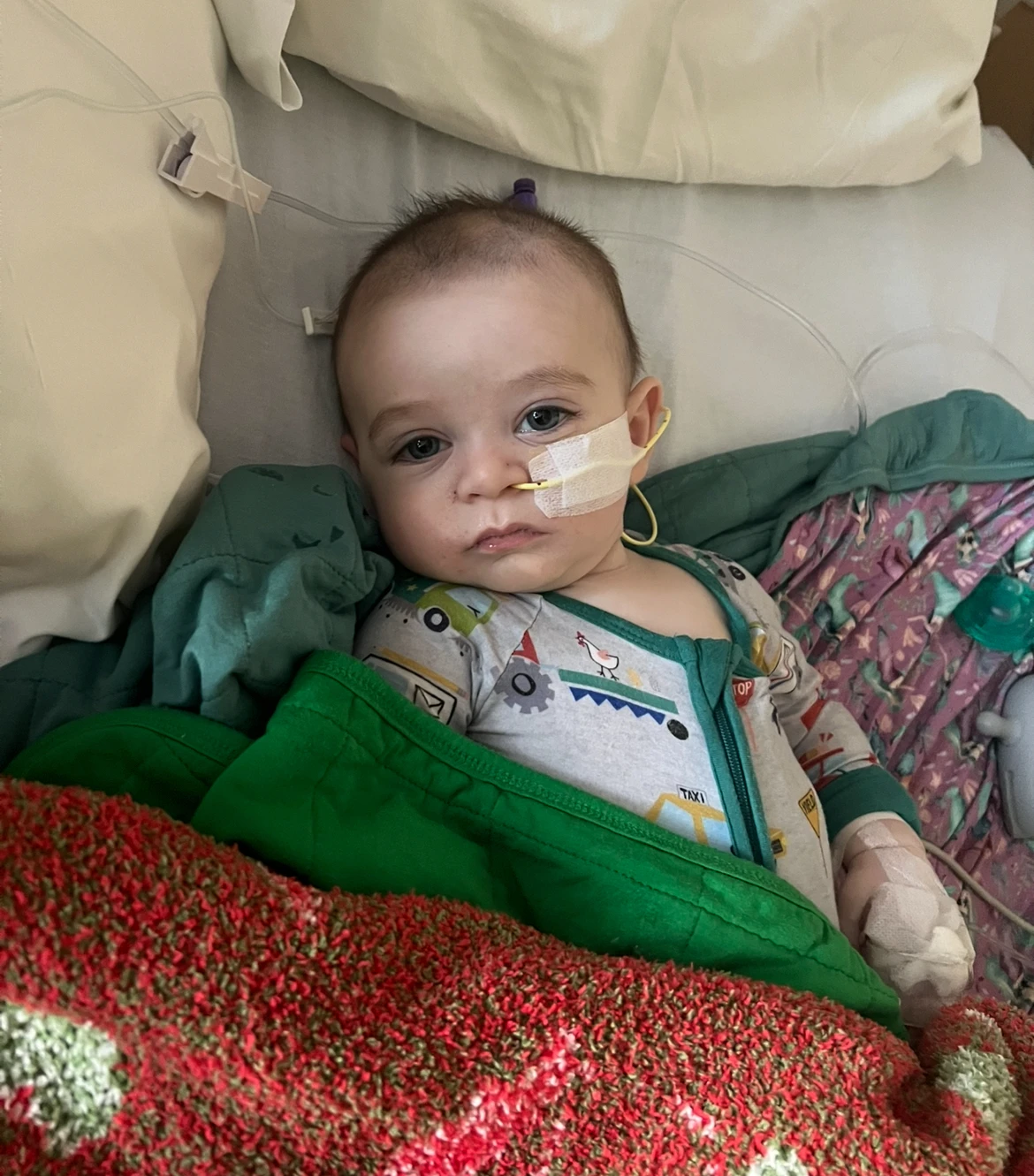
A Portland, Oregon, boy is struggling to recover from infant botulism after drinking contaminated ByHeart baby formula donated through a program that aims to help poor and homeless families. Ashaan Carter, now 10 months old, was hospitalized twice and remains on a feeding tube after contracting the dangerous infection that has sickened more than 50 babies across the U.S.
His mother, Angel Carter, said she received a can of ByHeart formula from a case worker with the Oregon Department of Human Services in early November, days before a nationwide recall of the product. Carter, who receives state food and housing assistance, said she had been exclusively breastfeeding her son, but her milk supply was waning. The case worker told the 27-year-old that the ByHeart formula “was closest to breast milk” and could help, she said.
“ I accepted it thinking, ‘OK, I’m hoping my baby can get on a bottle,’” Carter said. “It’s been all downhill since then.”
State officials wouldn’t comment on Carter’s case, but they acknowledged that the agency received ByHeart formula from PDX Diaper Bank, part of ByHeart’s initiative to support families in need. Since June 2022, nearly 24,000 cans of formula have been distributed to various nonprofit groups, but all products have since been recalled due to contamination risks.
Shortly after consuming the ByHeart formula, Ashaan developed severe constipation and muscle weakness, becoming so limp that he couldn’t move his head. After an emergency room visit, he was diagnosed with presumed infant botulism. Doctors treated him with BabyBIG, an IV medication that provides antibodies against the infection.
After nearly two weeks in the hospital, Ashaan was discharged but soon experienced severe health deterioration, requiring another hospitalization and feeding tube replacement. His doctor expressed concern for vulnerable families that rely on safe products to nourish their children.
ByHeart, which partnered with Baby2Baby to distribute formula, claims to have acted promptly to rectify the situation. Meanwhile, more than 30 families are reportedly seeking legal action against ByHeart following the incidents. Conversations surrounding food safety regulation and corporate responsibility in donating formula to at-risk populations are intensifying as the cases unfold.
His mother, Angel Carter, said she received a can of ByHeart formula from a case worker with the Oregon Department of Human Services in early November, days before a nationwide recall of the product. Carter, who receives state food and housing assistance, said she had been exclusively breastfeeding her son, but her milk supply was waning. The case worker told the 27-year-old that the ByHeart formula “was closest to breast milk” and could help, she said.
“ I accepted it thinking, ‘OK, I’m hoping my baby can get on a bottle,’” Carter said. “It’s been all downhill since then.”
State officials wouldn’t comment on Carter’s case, but they acknowledged that the agency received ByHeart formula from PDX Diaper Bank, part of ByHeart’s initiative to support families in need. Since June 2022, nearly 24,000 cans of formula have been distributed to various nonprofit groups, but all products have since been recalled due to contamination risks.
Shortly after consuming the ByHeart formula, Ashaan developed severe constipation and muscle weakness, becoming so limp that he couldn’t move his head. After an emergency room visit, he was diagnosed with presumed infant botulism. Doctors treated him with BabyBIG, an IV medication that provides antibodies against the infection.
After nearly two weeks in the hospital, Ashaan was discharged but soon experienced severe health deterioration, requiring another hospitalization and feeding tube replacement. His doctor expressed concern for vulnerable families that rely on safe products to nourish their children.
ByHeart, which partnered with Baby2Baby to distribute formula, claims to have acted promptly to rectify the situation. Meanwhile, more than 30 families are reportedly seeking legal action against ByHeart following the incidents. Conversations surrounding food safety regulation and corporate responsibility in donating formula to at-risk populations are intensifying as the cases unfold.