In brief
Newly released photographs of Rosa Parks from the Selma to Montgomery march in 1965 provide a deeper understanding of her influence beyond her famous bus boycott. Taken by photographer Matt Herron, many of these images were previously unknown and capture Parks' role among a community of activists. The release coincides with the gathering of participants and descendants from the Montgomery Bus Boycott to commemorate its 70th anniversary, emphasizing the need to remember and understand the collective struggle for civil rights.
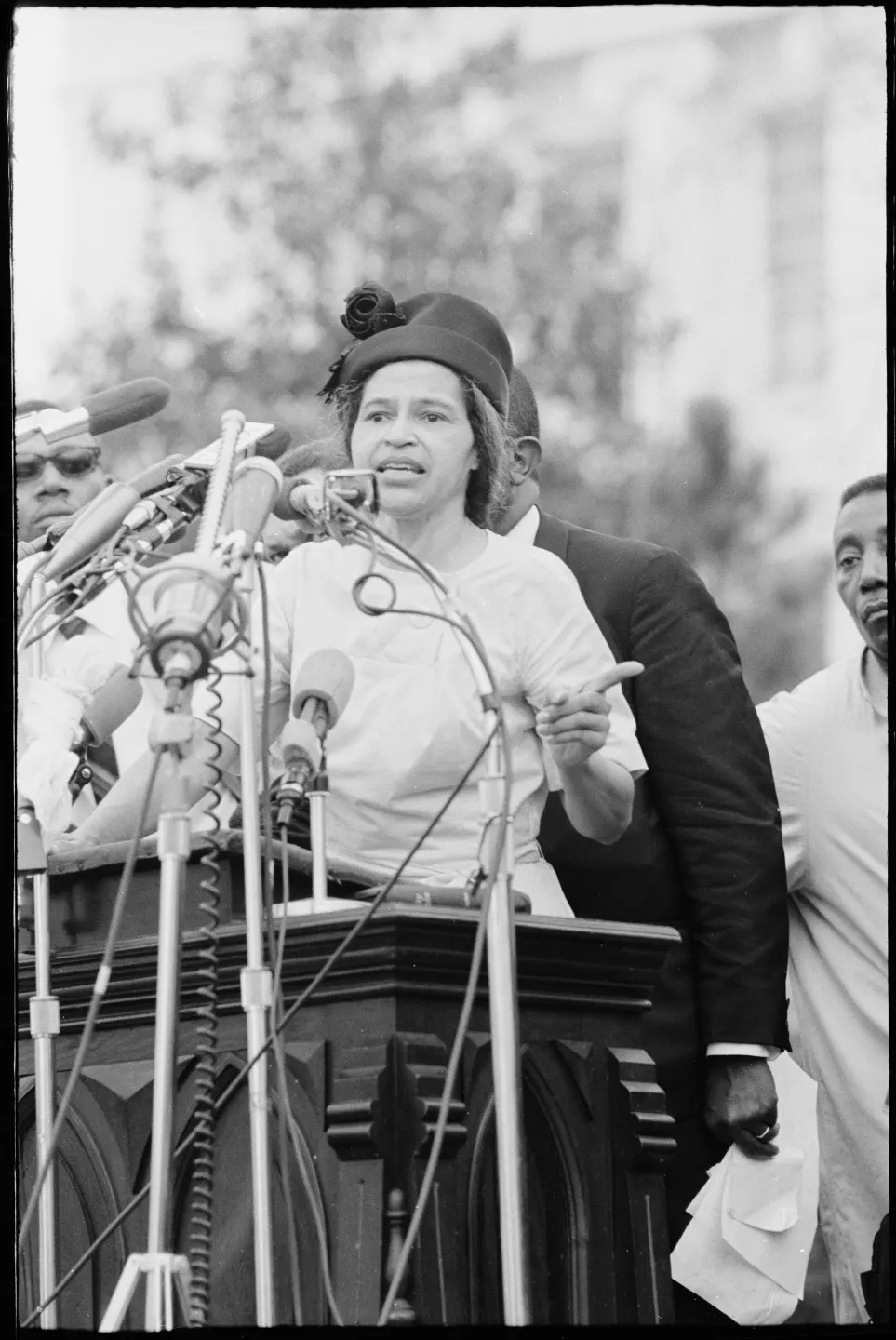
MONTGOMERY, Ala. (AP) — Seven decades after Rosa Parks was thrust indelibly into American history for refusing to give up her bus seat in Montgomery, Alabama, new photos of the Civil Rights Movement icon have been made public for the first time, illuminating aspects of her legacy that are often overlooked.
The photos were taken by the late Civil Rights photographer Matt Herron, depicting Parks at the historic march from Selma to Montgomery in 1965. This five-day, 54-mile trek is credited with galvanizing political momentum for the U.S. Voting Rights Act.
While history lessons often focus on Parks' courageous act of civil disobedience on December 1, 1955, that spurred the Montgomery Bus Boycott, the recent release of these previously unreleased images serves as a reminder of her extensive activism that transcended her most iconic moments, according to Donna Beisel, director of the Rosa Parks Museum.
“This is showing who Ms. Parks was, both as a person and as an activist,” Beisel stated.
Many photos feature Parks alongside other Civil Rights icons, though several had never been printed or displayed during Herron’s lifetime. After discovering these images from a contact sheet at Stanford University, Herron’s widow, Jeannine, aims to reconnect the work with the communities depicted in them.
Jeannine Herron believes it’s crucial for local people to grasp their families’ roles in this historical narrative and understands the power of visual storytelling to bring history to life.
The reunion with the past took on a personal touch during an event showcasing Herron’s work, where 80-year-old Doris Wilson, a participant in the march, saw her image for the first time and met June Finer, the doctor who treated her feet during the historic march. Such moments underline the unique connections forged during moments of shared struggle.
Meanwhile, Cheryl Gardner Davis reflected on her family’s role during the march, which had lasting repercussions, including threats and loss of livelihood. The newly surfaced images validating her family's sacrifices offer a critical perspective on this consequential period.
The release of these images at a time commemorating the 70th anniversary of the Montgomery Bus Boycott serves not just as a history lesson, but a call to acknowledge the unsung heroes behind the movement for civil rights.