The African fishermen who blame Chinese trawlers for their woes
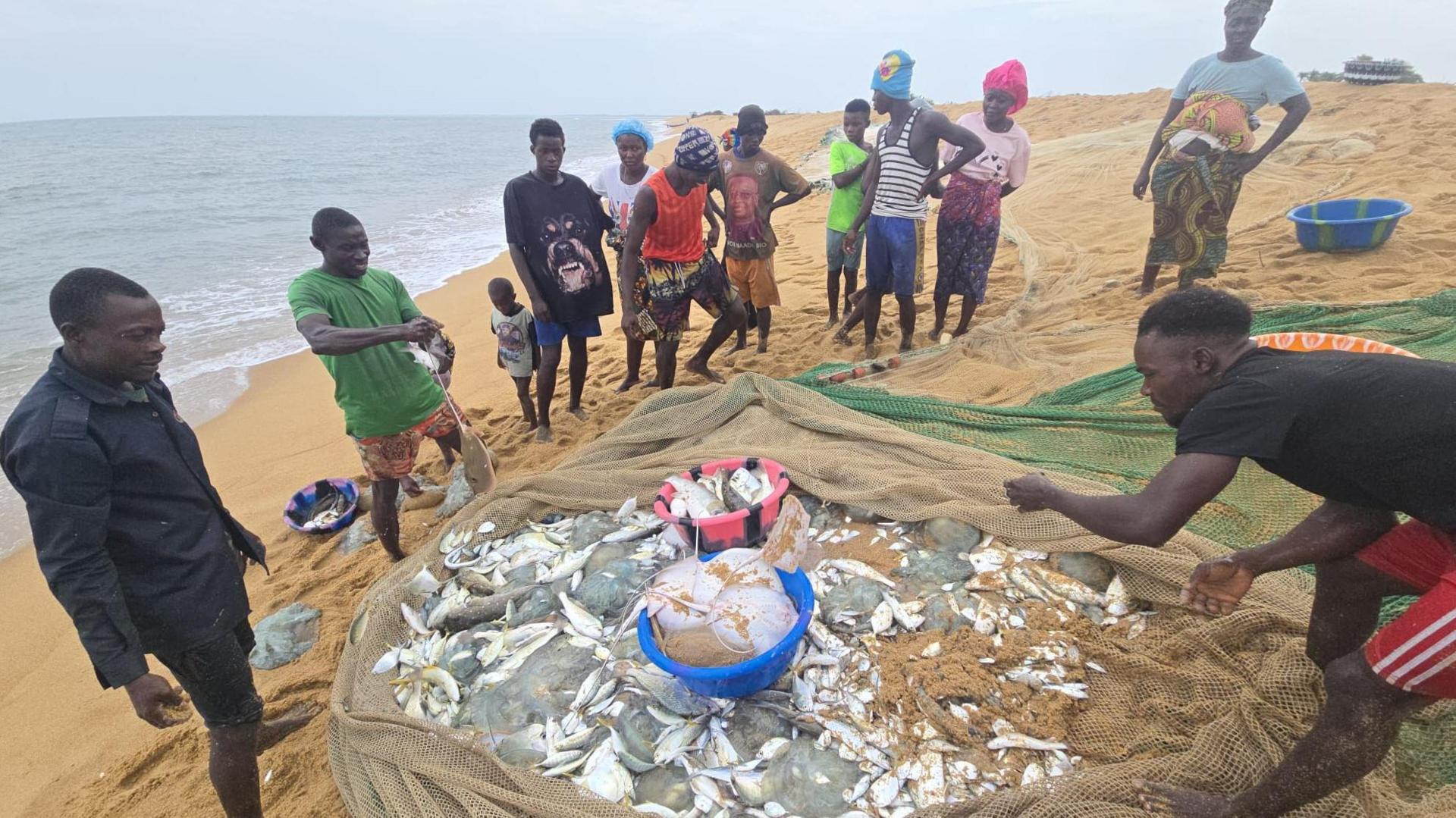
On Sierra Leone’s remote Sherbo Island, a shared tradition of shoreline fishing faces a growing crisis. Fish crews, sometimes a dozen strong, haul up floating nets filled with snapper, mackerel, barracuda and several other species. But the fishermen say the catch has dropped sharply in recent years.
Marie Pierre picks sardines from discarded jellyfish, remarking that international trawlers increasingly enter the coastal waters, despite a legally defined exclusion zone. Another local, Musa Gassimo, claims the nets have often been cut overnight by the large foreign vessels, costing him an estimated $250 (£189) each time for replacements.
President of the Sierra Leone Fishermen’s Union, Thomas Turay, estimates a 40‑percent decline for its members and points to the seven‑mile exclusion zone violations by foreign trawlers, primarily from China but occasionally from South Korea, Taiwan and Europe.
An independent report in 2024 pegged West Africa as the world’s epicentre for illegal fishing, estimating a $10 bn loss for the region, yet said the situation had not improved in the two years that followed. The Ministry’s spokesperson, Sheku Sei, insists that all international vessels now carry transponders and are routinely inspected; he further claims that penalties for breaching the zone “are a strong deterrent,” though it has been a decade since any have been applied.
The Chinese Chamber of Commerce in Sierra Leone refrained from commenting. A similar fishing controversy in Latin America prompted a blanket denial from the Chinese Foreign Ministry, which reiterated that its fishing activities obey international law and cooperate with other states.
Steve Trent, CEO of the Environmental Justice Foundation, criticises the Chinese government’s “head‑in‑the‑sand” approach, urging better vessel tracking and increased international pressure, noting that the fish harvested in West Africa ends up in global markets. He challenges consumers to decide whether they wish to support a sustainable supply chain.
The debate sits at the crossroads of local livelihoods, regional governance, and the imperatives of a globalized fishing market. The fishermen’s plight underscores the need for transparent enforcement, equitable resource sharing and a more robust global framework to manage oceanic spaces.