In brief
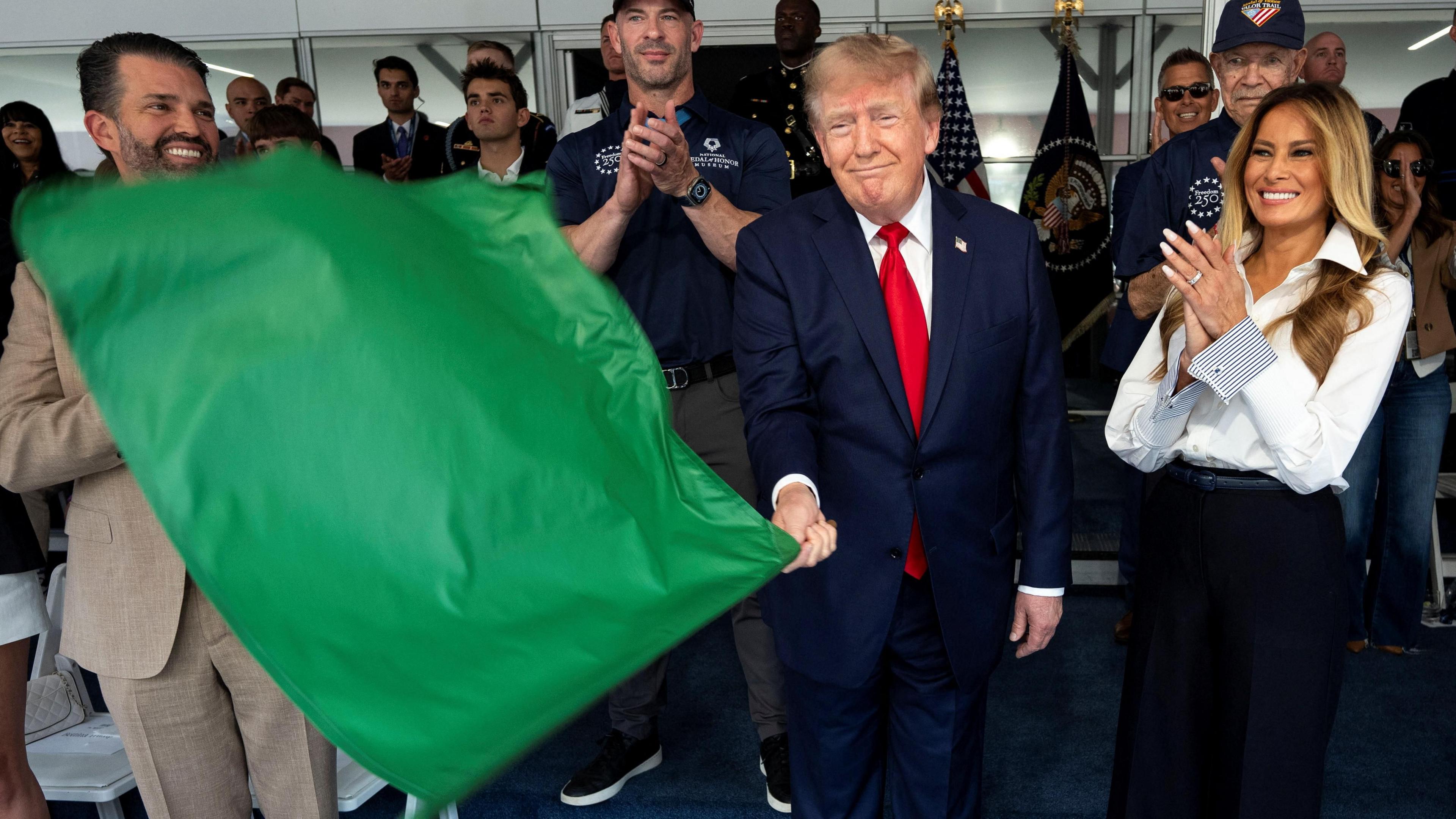
In a stark display of presidential flair, Donald Trump and First Lady Melania led the Freedom 250 IndyCar Grand Prix through Washington DC’s iconic streets, waving a green flag at the start and boarding the presidential limousine for a ceremonial lap. The 1.7‑mile, 250‑mile course showcased a high‑speed spectacle, with drivers reaching up to 190mph while the city’s 55mph speed limit remained in place. The event, which attracted an estimated 140,000 spectators, was the first professional road‑race to run through the capital and involved extensive logistical work including road closures, manhole reinforcement, and a three‑hour airspace ban over Ronald Reagan Washington National Airport. American driver Josef Newgarden praised the unique opportunity to celebrate the 250th anniversary in such a grand setting, while perennial events hosted by Trump earlier that summer had already shown his penchant for public spectacles. The race’s importance was underscored by the vibration tests conducted at the National Gallery of Art, and the close proximity of the racers to the U.S. Capitol and the Washington Monument added an historic backdrop to the daring stint. High‑profile attendees, including Trump, announced sponsors, and premium ticket packages were available for $5,000, with much of the public receiving free admission through a lottery. Air Force One performed a flyover after the finish line, adding an encore to the day's historic unfoldings.
In a moment that fused motorsport with political pageantry, U.S. President Donald Trump and First Lady Melania welcomed thousands of spectators to the first IndyCar race through Washington DC’s streets, marking the culmination of a summer of events celebrating the nation’s 250th anniversary. The Freedom 250 Grand Prix began in a ceremonial lap around a 1.7‑mile circuit, with the president and first lady aboard the presidential limousine, The Beast, before a flyover from the new Air Force One crossed the capital’s iconic skyline.
While Washington’s normal speed limit of 55mph (89km/h) leaves a stark contrast to the 190mph (306km/h) speeds the 25 professional drivers posted, the course’s 147 laps, featuring seven turns, demanded remarkable skill. The race’s 250‑mile total was a deliberate nod to the country’s quarter‑century milestone.
The event attracted an estimated 140,000 attendees, many of whom secured free general‑admission tickets through a lottery system – an effort by organizers to democratise access to the spectacle. Premium packages, however, sold for $5,000 for a pair of passes; this stark pricing contrast highlights the broad appeal and public appetite for the race.
Logistical preparations were extensive: roads were closed, manholes were bolted down, and sections resurfaced to accommodate the high‑sway racing cars. The Ronald Reagan Washington National Airport had to close its airspace for three hours to allow for the U.S. military flyover that marked the race’s finish.
Even the National Gallery of Art took precautions, conducting vibration tests to ensure the collection could withstand the roar of engines. Despite potential concerns, the buzzing crowd’s enthusiasm seemed to drown out any unease.
American driver Josef Newgarden expressed how unique the event was: ''It’s super unique. You might never see this again, and as an American driver, it’s very special celebrating the 250th anniversary of the country,'' he said. His statement underscores the symbolic nature of racing through a city that embodies national identity.
The Freedom 250 was just one of several high‑profile events Trump sponsored earlier this summer. He hosted an Ultimate Fighting Championship event at the White House lawn and organized a July 4th fireworks display, showing his continued interest in using public spaces for large‑scale spectacles.
(Image courtesy of Reuters)